 עברית
עברית

Magazine
Gad Elbaz: Faith, Miracles, Music, and Destiny
The world-renowned singer shares his near-death childhood experience, promise to dedicate his music to God, his journey of faith and family, and a lifelong mission to inspire Jewish souls through song
- Avner Shaki
- |Updated
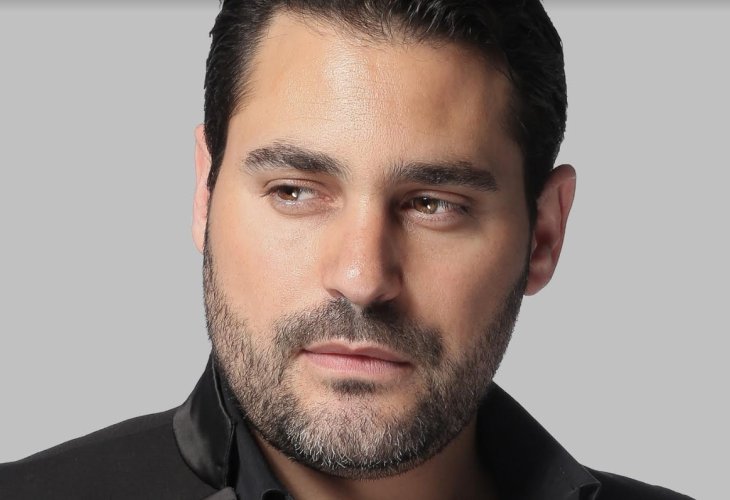 Singer Gad Elbaz (Photo: Lior Pinkas)
Gad Elbaz lives in Miami and is a singer and songwriter.
What is your earliest memory connected to singing?
“I started performing at the age of four. My father, the singer Benny Elbaz, brought me into the industry at a very, very young age. The first songs I sang were ‘Gadi’ and ‘Father, I Love You,’ which at the time — around 1986 — were big hits. In the song ‘Father, I Love You,’ there’s a line that says: ‘Gadi, you will grow up and understand that being a star is not easy.’ I feel that although my father introduced me to the music world at a very young age, he also prepared me for it.
“At the same time, as Jews, we know that the only real stars are in the heavens, and that each one of us has a special soul that was sent into this world to change, to learn, to experience, and to leave behind some kind of mark and legacy. Every person has his own story and unique journey.”
 (צילום: לוי טייטלבוים)
A childhood story that has stayed with you?
“When I was nine years old, I experienced clinical death. A few months before it happened, my father returned from abroad with a beard and a kippah. Before he left, he was clean-shaven and had long hair. I didn’t understand why he looked like that, and a moment later he told my mother: ‘Dalia, I became religious.’ My mother started crying and said, ‘What? Why? You understand that I’m not going to keep Shabbat now, right?’ My father hugged us and told her everything would be okay.
“After my father became religious, he and I went every week for several months to a synagogue near our house, and when we came back, my mother would be sitting in front of the TV. She refused to begin keeping Shabbat. Every week my father would ask her not to turn it on during Kiddush at least, but she wouldn’t agree.
“One Shabbat, the usual argument between them got heated, and my father told her that if she wasn’t even trying, they would divorce. That same Shabbat he told her he had a very bad feeling and asked her — especially that day, not to turn on the television. But my mother chose to turn it on anyway.
“That Shabbat, around Mincha time, I was racing downhill with some friends. One of them pushed me, I fell hard on my temple, and lost consciousness. We were living on the second floor, and when my father heard what happened, he jumped off the balcony, ran to me, and saw that I had no pulse. They called an ambulance, and despite all of their resuscitation attempts, I didn’t wake up. At a certain point the paramedics told my father they were sorry — there wasn’t much more they could do.
“My father picked me up and cried out to God: ‘I am not Avraham our father… I cannot withstand the binding of Yitzchak… return my child to me and I will dedicate my life — and his — to You.’ Half a second after he cried that out — like an electric shock — I suddenly came back to life. We went to the hospital, and after a short exam they told us everything was fine.
“When we got home, I told my father how I saw myself lying on the ground, I saw the ambulance, and I saw them holding me — we realized that I had truly seen everything from above.
“I also told my parents that at some point I felt myself rising upward, entering a blinding light, and moving toward a very bright room where slowly an elderly rabbi approached me. He bent down, smiled, and said: ‘My son, this is not your time to die. But you must promise me that in your singing you will choose to sing to the Holy One, blessed be He, and to illuminate souls through your music.’ I nodded and agreed — and then I descended back into this world.
“When I returned, I heard my father saying the words ‘I am not Avraham our father…’ — and that’s the moment I woke up.
“My father was shocked and asked me who the rabbi was that I saw. I said I didn’t know. He asked whether I could recognize him, and I said probably yes — so he brought out pictures of rabbis we had in the house and went through them one by one. When he reached a picture of the Baba Sali in our living room, I ran in fear to my room and told him I didn’t want to look at it — I was scared he would take me back again.
“Later we discovered that the Elbaz family is actually part of the Abuhatzeira family — and that’s probably why specifically the Baba Sali came to me.
“After that happened, my father took his guitar and composed the song that brought countless people back to faith: ‘Thank You, My God.’ We performed that song — and others — across Israel, and many times I even sang sitting on the knees of Rabbi Ovadia Yosef and Rabbi Kadouri.”
A figure from the Jewish world who inspires you?
“King David — despite his difficult life, he always sang and praised his Creator.”
 (צילום: סיגל אשכול)
What do you fear most?
“Losing someone dear to me.”
A song that deeply influenced you?
“‘My soul thirsts for You,’ and my two songs — ‘Stronger’ and ‘From the Depths’ — lift me up and immediately reconnect me to my spiritual roots.”
Tell us about a meaningful experience connected to a mitzvah you performed
“One Chanukah, I was in Thailand and planned to fly from there to Australia. The day before my flight, the Chabad emissary in Koh Samui contacted me and asked whether I could stop by their Chabad House before leaving — to perform voluntarily and light candles with them.
“It wasn’t simple — I had to move my flight — but somehow the rabbi convinced me. I flew there alone, without a manager or production assistant.
“I arrived half an hour before candle-lighting and saw that they only had one speaker and a microphone — less than a karaoke setup. I told the rabbi that I was sorry but I couldn’t perform like that. They tried to arrange something else but couldn’t. People were already arriving, and I didn’t know what to do.
“We lit the candles, and the rabbi invited me to sing. I saw maybe ten people there and asked God: ‘Why did You bring me here — to be embarrassed?’
“I stepped outside for a moment — and then suddenly I understood where I was and why. I realized I was there on a mission, even if I didn’t know how or why. I went back inside, sang two songs a cappella, and then began telling them about my childhood and the things I had gone through in life. They were moved, they cried, they asked questions — I felt I was really reaching their hearts.
“Some of the girls there took upon themselves to start keeping Shabbat. Two boys accepted to wear tzitzit. And then I understood exactly why I had come.”
 (צילום: משה קנן)
Professionally — are you where you imagined you’d be? How does that feel?
“At the beginning of my career I dreamed of reaching the place I am today — and after getting here, I still have more dreams. A Jew always strives for more.”
Where do you want to be in ten years?
“In Israel — with harmony among my children and my brothers and sisters. And once a year I want to tour major cities — and to have artists under my record label who will succeed even more than I have.”
What are your dreams?
“I dream of winning a Grammy — the most prestigious award in the music world — because I want to represent the Jewish people and the State of Israel, knowing that I am bringing joy to God with true reverence for Heaven.”
How present is God in your life — and how does that affect your work?
“God is always with us. At the root we are one — our soul is literally a piece of the Divine above. You have to see God in everything — in the small things, like when you miss a turn and arrive late somewhere, and also in the big and important things.
“My friends call me ‘the man of miracles,’ because my whole life is one great display of Divine providence.”
A painful life lesson you learned?
“I didn’t want it to happen — but in the end my career collided with my family life. The travel, the distance — and the fact that each of us grew in different directions — weighed on us and resulted in my divorce.
“We married young, without really understanding responsibility or what family means — we just jumped in. For years, because of my lack of maturity and chasing success and income, I forgot the simple truth: at home you must give more than you give outside.
“I never imagined that after almost 16 years of marriage I would find myself alone, starting a new life. For years we tried to bridge the gaps, but eventually we understood that we had grown too far apart and the pain was too great.
“For a long time I took things for granted and thought, ‘This won’t happen to me.’ I also believed that money fixes everything — but it doesn’t. In the last years of our marriage I tried to make up for the time I had lost at home — but it was too late.
“And within all of this — I am grateful that the mother of my children is a woman of great strength and character, that we have a good relationship, and that the wellbeing of our children is always our top priority. I bless her that she should merit fulfillment, joy, blessing, and love.”


