

Wonders of Creation
Do the Sun and Stars Have Consciousness? Maimonides and Modern Science
From Rambam’s teachings to Rupert Sheldrake’s theories on cosmic consciousness and the limits of materialist science
- Yosef Yabece
- | Updated
 (Photo: Shutterstock)
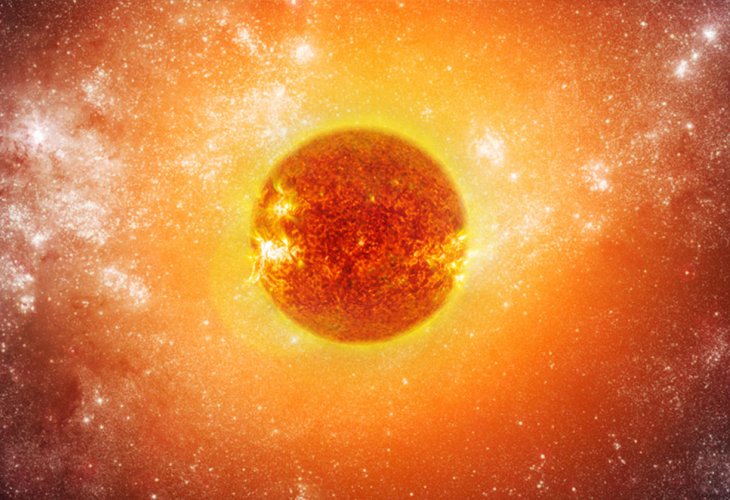
According to the Rambam (Maimonides), the sun, as well as the stars and constellations, possess a soul that is responsible for their functioning. He based this view on many expressions found in Scripture and in the words of the Sages, such as the description of the celestial bodies as “rejoicing and glad to do the will of their Creator.”
A Modern Scientific Parallel
Interestingly, a similar idea has appeared in recent years among contemporary scientists. One prominent figure is Rupert Sheldrake, who has published influential work developing this theory. Sheldrake is a graduate of Cambridge and Harvard Universities and has worked as a researcher in biochemistry and cell biology at Cambridge University, as well as a plant physiologist at the International Crops Research Institute for the Semi-Arid Tropics (ICRISAT).
Morphic Resonance and Consciousness in Nature
Sheldrake is best known for his research into what he calls morphic resonance. According to this theory, entities in nature that are usually considered inanimate or lacking consciousness behave as if they are aware of the behavior of other entities. From this, Sheldrake argues that such systems possess a certain level of consciousness.
The Consciousness of the Sun and the Stars
In an article published in the Journal of Consciousness Studies in 2021, Sheldrake argued that the sun and all other stars possess consciousness. He writes that “consciousness, awareness, or experience may be present in self-organizing systems at many levels of complexity.”
According to his view, human beings themselves may be influenced to some extent by the cosmic consciousness present in the universe and may even have an intuitive sense of what is beneficial for the universe as a whole.
Resistance from the Scientific Establishment
It is hardly surprising that the scientific establishment has strongly resisted Sheldrake’s ideas. As Oren Farber describes, he recently read Sheldrake’s fascinating book The Science Delusion (also published as Science Set Free). The book presents numerous examples showing how the scientific establishment can become rigidly attached to certain beliefs, assumptions, and paradigms that prevent it from advancing toward a deeper understanding of reality.
From the establishment’s perspective, however, the directions Sheldrake proposes are considered “pseudoscience.” In 1981, the senior editor of Nature went so far as to call for the burning of Sheldrake’s book A New Science of Life, claiming that it distorted the public’s understanding of what “real science” is.
Science, Belief, and Intellectual Openness
Dr. Sheldrake is a biologist and a scientist who works within the scientific method. The ideas he proposes are indeed far-reaching and revolutionary by today’s standards. His criticism of the scientific establishment is sharp, but also thoughtful and well argued. This is not the place to delve deeply into the substance of his theories, but rather to reflect on what he identifies as an overtly anti-scientific mindset that characterizes, unfortunately, many scientists today.
Ironically, this mindset resembles the kind of extreme religious conservatism that some scientists are quick to mock. One of the main reasons for this, Sheldrake argues in his book, is the dominance of a materialistic and atheistic belief system that has come to control much of modern science.
For this reason, it is important to distinguish between science, technology, medicine, and genuine knowledge, on the one hand, and opinions and ideological assumptions that take hold of scientists and are presented as if they were science itself, on the other.

