

Facts in Judaism
The Yitro Feast: A Cherished Tunisian Tradition
Once a year, children take center stage at a feast designed just for them. Why? The answer lies in a Tunisian Jewish tradition connected to Parashat Yitro.
- Naama Green
- | Updated
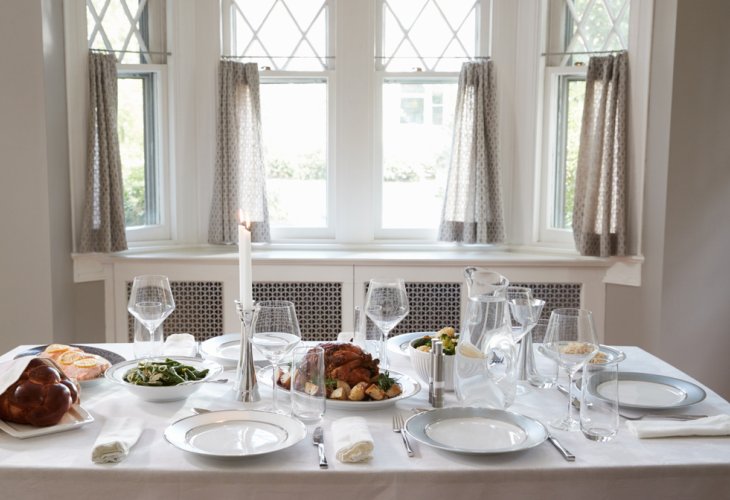 (Photo: shutterstock)
On the Thursday of the Torah portion Yitro, many Tunisian Jewish families gather for a festive meal. This special event is known as the Yitro Feast, a unique and meaningful custom passed down through generations.
Why Is the Yitro Feast Celebrated?
The tradition of the Yitro Feast is based on three main reasons.
First, the feast serves as an expression of gratitude for the end of a devastating plague in Tunisia. The illness claimed many lives, particularly among young boys. The plague came to an end during the week when the Torah portion of Yitro is read, and in response, families established a celebratory meal during that week. At the time, sick children were commonly fed roasted pigeon, which was believed to help restore their strength. As a result, eating pigeon became a central part of the Yitro Feast.
Second, another reason for the celebration is connected to the reading of the Ten Commandments, which appears in the Yitro portion. In Tunisia, it was customary for children who were learning Torah reading to chant the Ten Commandments publicly for the first time during this week. To honor this milestone, parents would host a festive meal in their children’s honor. This custom continues today, and the feast remains centered around celebrating the children.
Third, the Torah portion of Yitro itself mentions a special meal. The verse states, “And Aaron and all the elders of Israel came to eat bread with the father in law of Moses before God.” To commemorate this gathering described in the Torah, the community holds a feast during the week of Yitro.
A Feast Designed for Children
One of the most distinctive features of the Yitro Feast is that children are the focus of the celebration. It is even referred to as the “Holiday of Boys.” To emphasize the importance of the children, everything at the meal is prepared in miniature.
The dishes are very small, often no larger than a coffee saucer. Forks are the size of dessert utensils, and cups resemble tiny liquor glasses. Wine or drinks are served in small bottles holding a quarter or third of a liter. The table is decorated with small candlesticks holding colorful miniature candles. The overall effect is joyful, playful, and unforgettable for the children.
Traditional Foods of the Yitro Feast
The centerpiece of the Yitro Feast is roasted pigeon. It is customary to prepare one pigeon for each boy in the family, and these are served to the guests.
All other foods are also served in small portions. In addition to pigeon, some families serve chicken and small green beans.
At the end of the meal, sweets and cakes are served, many of which are similar to traditional Purim treats. These include colorful marzipan sweets shaped into small designs such as hearts and bells.
Songs, Torah, and Blessings
As with other special Jewish meals, the Yitro Feast includes singing hymns, sharing words of Torah, and studying sacred texts. Here too, the focus remains on the children.
All the prayers, blessings, and songs for the evening are printed on a special sheet known as “V’yarakhtah Yitro,” also called the “Yitro Sheet.” This sheet includes blessings over the food, Birkat Hamazon, the Shema for children, the Torah blessings, and hymns, including the Ten Commandments from that week’s Torah portion.
Through its food, customs, and focus on children, the Yitro Feast beautifully connects gratitude, Torah, and tradition, making it a highlight of the year for Tunisian Jewish families.

