

Wonders of Creation
From Fingers to the Moon: Discovering the Hidden Design in Nature and Life
How the human body, the mystery of life, the lunar cycle, and the natural world point to purpose, wisdom, and a Creator
- Ariel Kadouri
- | Updated

Have you ever asked yourself why we have fingers on our hands? Why exactly five fingers? And why are they different sizes? Let’s take a closer look.
Fingers make it possible to grasp objects. If our hands were flat, without fingers, we would not be able to hold anything. Try holding a cup with your hand clenched into a fist. Did it work? It is impossible.
Why five fingers and not fewer or more? Five fingers allow a complete and stable grip around an object, thanks to the balanced spacing between them. Notice that almost any object can be fully surrounded using five fingers. Fewer fingers would grip an object only partially, while more than five would be crowded and unnecessary.

Why are the fingers different sizes? Different lengths allow flexibility when holding objects of various shapes and sizes, whether small or large, narrow or wide. This variety enables a stable grip in many situations. Thanks to this design, a flutist, for example, can play with precision.
In addition to bones, the fingers contain tendons, nerves, and blood vessels. Together, these allow complex actions such as gripping, writing, and fine motor skills that we use every day.
Is it possible that such a remarkable system, which clearly reflects careful planning and purpose, came into existence on its own, without a creator or designer? By observing the human body, one can sense that it points to a superhuman Creator with infinite wisdom and immense power.
Life and Death
Life and death are a profound mystery. Before us lie two human bodies: one alive and one dead. From the outside, there seems to be no difference between them. Both are made of flesh and blood. Both have the same organs. Both appear whole.
Why is one alive and the other dead? What truly distinguishes them? Science and medicine struggle greatly to answer this question.

Modern medicine can restore the human body in astonishing ways. It can perform complex heart surgeries and implant advanced pacemakers. But all of this is possible only as long as the wondrous force called life, or soul, is still present within the body. Once that force departs, medicine, despite all its advances, can do nothing.
There is no doubt that life is a mysterious power that is very difficult to explain in purely natural terms. How did we receive this power? Who placed it within us? And who has the power to take this soul back from the body?
“He Made the Moon for the Appointed Times”
The farther an object is from us, the harder it is to see, while the closer it is, the easier it is to see. We can recognize a person from about one hundred meters away. But could we see that same person from a thousand meters? What about ten kilometers? Clearly not.
And yet, there is an object that we can see clearly from hundreds of thousands of kilometers away: the moon.
The moon is about 384,000 kilometers from Earth? And yet, in the middle of the Hebrew month, we can see it in its full splendor. This is an extraordinary wonder. How can we see the moon so clearly when it is so far away?
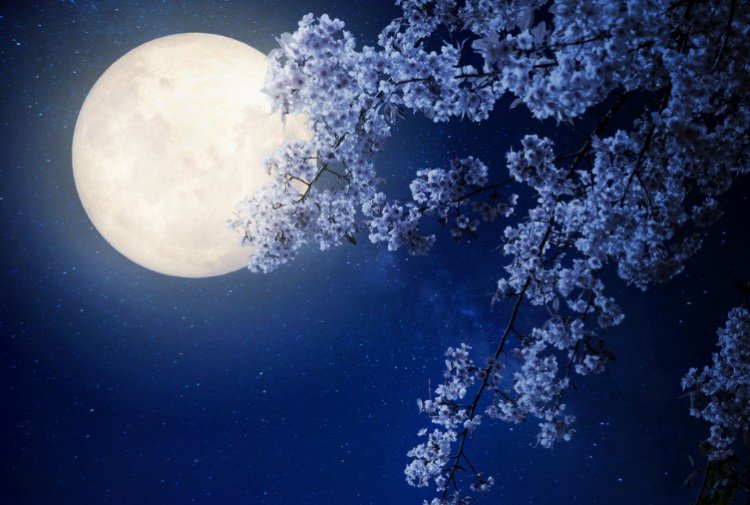
Some may argue that we see the moon simply because it is very large. But then why, among all the celestial bodies in our solar system, is the moon the only one we can see so clearly? There are stars much larger than the moon, yet we cannot see them with the naked eye. Why is the moon the only body whose changing shape throughout the month is visible to us?
Could it be that the Creator commanded us in the Torah to observe festivals throughout the year that depend on the renewal of the moon, without giving us the ability to see it? Therefore, despite its great distance, the Creator arranged matters so that we can observe the moon as if it were hanging outside our window. The moon thus became the basis for the earliest calendars in human history, allowing people to know when to celebrate the festivals of Israel. As the verse says, “He made the moon for the appointed times.”
Is it possible that such a precise and purposeful phenomenon came into existence on its own, without a Creator and Planner?
The Ship of the Desert
The camel has an extraordinary ability to adapt, which has drawn the attention of many researchers who have studied its unique traits, perfectly suited to the harsh desert environment.
A camel can survive in desert conditions for about ten days, depending on the season, without drinking and without harm to its body. This is possible because it loses only a minimal amount of water.
Camels have long eyelashes and highly developed eyelids that protect their eyes from sandstorms. Their nostrils can also narrow and widen, preventing sand from entering.

Their legs are long and slender, their toes are connected, and their wide feet distribute weight evenly. This allows camels to walk easily on desert sand without sinking. Their long legs also keep their bodies away from the scorching ground and enable them to take long strides.
A camel can eat thorny desert plants thanks to its tough tongue, which is not injured by sharp vegetation.
Between the hairs of the camel’s coat, air is trapped and acts as insulation. The fur reduces heat transfer between the hot environment and the camel’s body, effectively protecting it from extreme heat.
The camel’s hump stores fat. Since food and water are scarce in the desert, this stored fat provides nourishment for long periods.
Here we see a systematic harmony between two very different systems in nature: the animal, the camel, and the environment, the desert. Such a sophisticated match rules out the possibility of random development and clearly demonstrates that a single Creator planned and created them all.
“Place Understanding in Our Hearts”
Recently, I encountered many people who say that they believe in the Creator and in His Torah, and yet, these people do not observe Torah and mitzvot. They do not keep Shabbat, they do not observe dietary laws, and more. How does this make sense? If you believe in the Creator, why do you not listen to His voice?
This gap can be understood through a line we recite daily in the morning prayer: “Place understanding in our hearts, to understand, to gain insight, to listen, to learn, and to teach.” At first glance, this sentence seems puzzling. What is the connection between the mind and the heart? What does it mean to place understanding in the heart? Aren’t intellect and emotion two different things?
The reality is that many people understand intellectually how they should behave, but they do not internalize this understanding emotionally. As a result, their behavior does not change. How many people know that obesity harms their health and yet continue to overeat unhealthy food? How many understand that physical activity is essential and still avoid exercise? How many know that smoking is harmful and yet continue to smoke?
This is what we pray for: the ability to connect thought and emotion. When understanding reaches the heart, real change follows. That is why, in order to truly draw close to the Creator, we must take the knowledge that there is a Creator and place it within our hearts. As the verse says, “You shall know today and take it to your heart.”
This is the secret of genuine change and true closeness to the Creator. In my view, this is what is missing for those who describe themselves as believers, yet do not observe Torah and mitzvot.

