

World News
Iran Threatens Tel Aviv as U.S. Moves Forces Into Strike Position
Shamkhani warns any U.S. strike would trigger immediate retaliation as Trump deploys carrier group and demands Iranian concessions
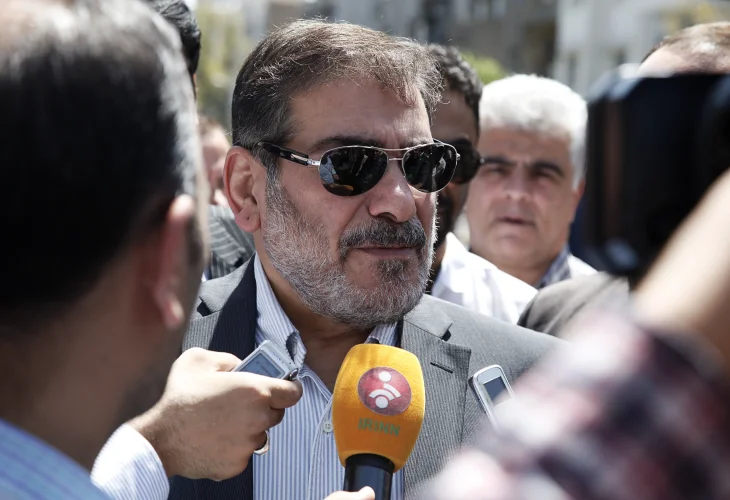 Ali Shamkhani (Shutterstock)
Ali Shamkhani, a senior adviser to Iran’s Supreme Leader Ayatollah Ali Khamenei, warned that any U.S. military action against Iran would be treated as the opening of a war, with retaliation aimed “at the heart of Tel Aviv” and at anyone supporting the attack.
In a post on X, Shamkhani wrote that “a limited strike is an illusion,” adding that any U.S. military action, “from any source and at any level,” would prompt an “immediate, extensive, and unprecedented” response directed at Israel and U.S. allies. Iranian officials have repeatedly framed recent American moves as preparation for war rather than deterrence.
The warning came as the United States sharply escalated its military posture in the Middle East, with President Donald Trump publicly threatening Iran with force unless it agrees to sweeping demands tied to its nuclear program, missile capabilities, and regional activities. Earlier in the day, Trump intensified the pressure by announcing that a “massive Armada,” led by the aircraft carrier Abraham Lincoln, was moving into striking distance of Iran, comparing the deployment to the force buildup near Venezuela last year and warning Tehran that “the next attack will be far worse” if it does not accept a “NO NUCLEAR WEAPONS” deal.
According to a New York Times report, U.S. and European officials have conveyed three central demands to Iran in recent talks: a permanent end to all uranium enrichment, limits on the range and number of Iran’s ballistic missiles, and a complete halt to funding and support for regional proxy groups, including Hamas, Hezbollah, and the Houthis in Yemen. Officials however said negotiations have made no progress in recent days and that there are no indications Iran is prepared to accept those terms.
Other Iranian officials also responded with both military threats and firm diplomatic pushback. The Revolutionary Guards said the deployment of an aircraft carrier and the creation of a “climate of war” amounted to psychological warfare, claiming Iran controls the situation on the ground. The Guards said the experience of the 12-Day War demonstrated the “failure of military options against Iran” and that Iran’s armed forces have operational plans for all scenarios and full monitoring of enemy movements.
Iranian Foreign Minister Seyed Abbas Araghchi echoed that message while also rejecting U.S. claims that Tehran is seeking talks under pressure. “Our brave Armed Forces are prepared, with their fingers on the trigger, to immediately and powerfully respond to ANY aggression against our beloved land, air, and sea,” Araghchi wrote on X. He added that Iran remains open to a “fair and equitable” nuclear deal that guarantees peaceful nuclear technology and “NO NUCLEAR WEAPONS,” while insisting such negotiations cannot occur under threats.
In Washington, U.S. Secretary of State Marco Rubio told lawmakers that the American military buildup around Iran is defensive. He said approximately 40,000 U.S. troops stationed at nine sites across the Middle East are within range of Iranian missiles and drones and that the deployments are intended to protect U.S. forces and bases from potential Iranian attacks. Rubio added that the United States retains the capability to act preemptively if necessary.
An Israeli defense assessment reported by Maariv indicates that U.S. officials are expected to provide Israel with only short advance notice before any American strike on Iran. According to the report, Israeli authorities do not plan to inform the public during that window, out of concern that leaks could jeopardize the operation. During the warning period, the IDF would be able to carry out discreet readiness measures not visible to civilians.
Despite the escalating rhetoric, officials involved in the diplomatic track say talks remain stalled. Iranian representatives have not signaled readiness to accept Trump’s conditions, while Washington continues to combine military pressure with public warnings.

