

Parashat Yitro
After Mount Sinai: Why the Torah Forbids Intermediaries Between Man and God
The deeper meaning of the four commandments given after the Sinai revelation and what they teach about direct connection to God
- Rabbi Moshe Shainfeld
- | Updated
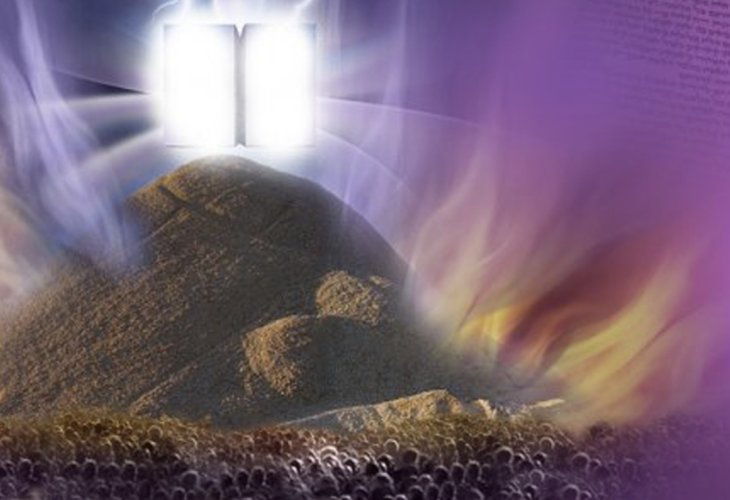
Immediately following the revelation at Mount Sinai, the people of Israel were given four commandments, which we will soon examine. Before listing these commands, the Torah introduces them with the verse: “And the Lord said to Moshe: Thus shall you say to the children of Israel: You yourselves have seen that I spoke to you from the heavens” (Shemot 19).
From this introduction, we understand that these commandments were given in close proximity to, and as a direct result of the unique experience of the Sinai revelation. Because Israel witnessed God speaking to them directly from heaven, they were commanded with these four mitzvot. We must therefore understand the deep connection between the revelation and these commands.
The First Commandment: No Intermediaries
The first commandment states: “You shall not make with Me gods of silver, nor shall you make for yourselves gods of gold.”
Rabbi Naftali Tzvi Yehuda Berlin (the Netziv), in his commentary Ha’amek Davar, explains that this verse is not warning against replacing God with another deity, as that prohibition had already been clearly stated by God Himself before the entire nation. Rather, it warns against associating other forces with the worship of God, by creating intermediaries or mediators between ourselves and the Creator.
Human nature tends to seek intermediaries between man and God. People mistakenly believe that it is beneath God’s dignity to relate directly to “simple” human beings, or that they themselves lack the right or ability to approach the King of Kings directly. As a result, they turn to lesser forces — “gods of silver and gold” —things they can see, touch, and comprehend, hoping these will convey their prayers to God.
Because God understands how deeply rooted this tendency is, He anchors this commandment in the experience of Sinai itself. Not only does the content of the revelation oppose intermediaries, but the experience of the revelation does as well: “You yourselves have seen that I spoke to you from the heavens.” God appeared directly to Israel and spoke to them without any intermediary whatsoever.
Therefore, God says to Israel: remember, “You shall not make with Me” — no other god, no other force, no person, and nothing else you might imagine. When you pray for salvation or hope for deliverance, do not pray to anyone else to approach Me on your behalf, and do not rely on any additional force besides Me alone.
The emphasis here is clear: God spoke directly from heaven to people standing on earth. There is no need for intermediaries.
The Second Commandment: An Earthen Altar
The second commandment states: “An altar of earth you shall make for Me… in every place where I cause My name to be mentioned, I will come to you and bless you.”
God begins by saying, “I spoke to you from the heavens,” and now turns to the earth: “An altar of earth you shall make for Me.” The altar must be connected to the ground, to the physical earth.
This teaches that divine service is meant to be rooted in the natural, physical world. The earthly realm itself can connect to God, who is exalted above all. Wherever God’s name is invoked, He will come — even crossing, as it were, the infinite distance from heaven to the individual standing on the earth, and bless him.
The Third Commandment: Natural Stones, Unaltered
The Torah continues: “And if you make for Me an altar of stones, you shall not build it of hewn stones; for if you lift your sword upon it, you have profaned it.”
When building an altar of stone, the stones must remain whole and natural, without being carved or shaped.
When approaching God, one must come as they are. Natural stones that are unchanged and unmodified, symbolize the human being in their current state. A person does not need to “chisel” or perfect themselves before turning to God. Using tools to shape the stones implies that intermediaries or modifications are necessary, which undermines the core idea that the bond between man and God is direct and unmediated.
Do not think you must reshape yourself before standing before God. Come as you are, and draw close to Him.
The Fourth Commandment: Ascending with Modesty
The final commandment states: “And you shall not ascend My altar by steps, so that your nakedness not be exposed upon it.”
This verse emphasizes that the altar is something one ascends. It represents spiritual elevation — an ascent from earth toward heaven. At Mount Sinai, God descended from heaven to earth; in the service of the altar, man ascends from earth toward heaven.
Because this ascent signifies spiritual elevation, it must be carried out with holiness, modesty, and purity. Therefore, the altar was approached by a ramp rather than steps.
One Unified Message
This group of commandments, given immediately after the revelation at Mount Sinai, conveys one central idea: the Sinai experience fundamentally transformed the rules of connection between man and God.
“You yourselves have seen that I spoke to you from the heavens.” God spoke directly to human beings, without intermediaries. That was true then, and it remains true forever.
