

Relationships
Can Couples Therapy Really Fix Bad Traits?
Is your marriage struggling because of who your partner is or because of what they do? This piece explores the difference and why it matters more than you think.
- Rabbi Daniel Pinchasov
- | Updated
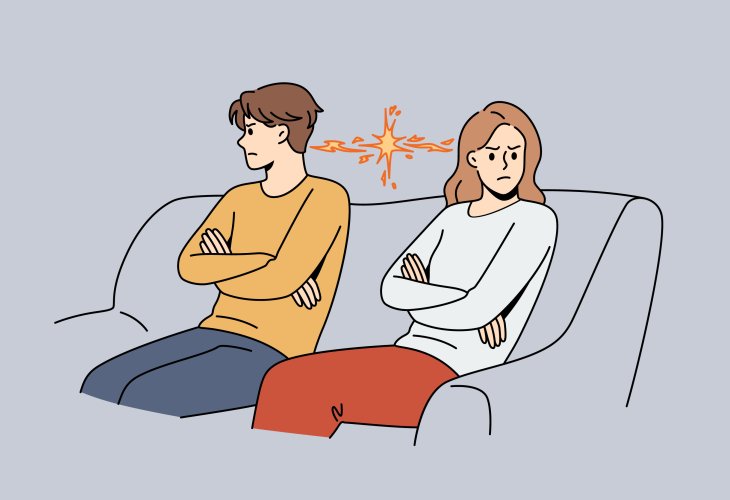 (Illustration: shutterstock)
"I am having a very difficult time with my husband. I want to emphasize that we are talking about a partner with what I experience as “bad traits.” His rudeness and lack of respect for others and for their feelings are crossing the boundaries of our marriage and family. In such a situation, is it appropriate to go to marriage counseling? Can couples therapy fix bad traits? And can people even change? My inner belief says no."
Alongside the deep desire for a healthy marriage, there is sometimes intense frustration between partners with the current reality of their relationship. At times, this frustration can even lead to thoughts of dissolving the marriage, despite the clear understanding that breaking up a family is not a simple or light decision. In a large percentage of divorcing couples, the central motive is the perception of one another as having negative traits, often described as “bad qualities,” combined with the belief that there is no real therapeutic ability to change people.
The Purpose of Marriage According to Jewish Thought
Jewish understanding teaches us that the logic behind the covenant of marriage is rooted in a profound insight formulated by the Creator: “It is not good for man to be alone.” From this understanding comes the decision, “I will make him a helper opposite him.”
Man was created as a solitary being, and only afterward did Hashem create companionship, recognizing that loneliness is a state that is “not good” emotionally, mentally, and psychologically. From this we learn that the role of the marital relationship is to improve and refine the quality of a person’s life on all levels.
Traits Versus Behaviors
It is important to emphasize that while one of the great challenges of marriage is not to try to change one another, if only because this is nearly impossible, it is still very possible for meaningful and positive changes to occur for both partners.
This brings us to an apparent contradiction that needs to be resolved. A key principle is that our feelings arise as a result of behaviors. In other words, our difficulty with “bad traits” does not usually stem from the traits themselves, but from the behaviors that emerge from them. If we succeed in changing behaviors, which is certainly achievable since human beings are capable of making choices, then even if the underlying traits remain, the marital distress can be greatly reduced or resolved.
A simple example is a person who feels distress because their partner is “meticulous.” The assumption should not be that the meticulousness as a trait is the source of the problem, but rather the specific meticulous behaviors that create tension in the relationship. If the partner learns to identify the situations in which these behaviors cause difficulty and agrees to adjust their behavior in those particular moments, the distress can significantly decrease, even if the trait itself remains unchanged.
Paradoxically, the more legitimacy a person is given to be who they are, without pressure to change their nature or stop being meticulous in their personal life, the easier it becomes for them to modify the behaviors that are difficult for their spouse.
Rabbi Daniel Penchasov is a lecturer, expert marriage advisor, and psychotherapist.

