

Personality Development
Jewish Clothing and Spiritual Symbols Explained: Tzitzit, Tefillin, Modesty, and Head Covering
Discover the meaning behind Jewish dress, from the tallit and tzitzit to tefillin and modesty, with classic Torah and Talmud sources that reveal the spiritual purpose and daily impact of these mitzvot
- Rabbi Zamir Cohen
- | Updated
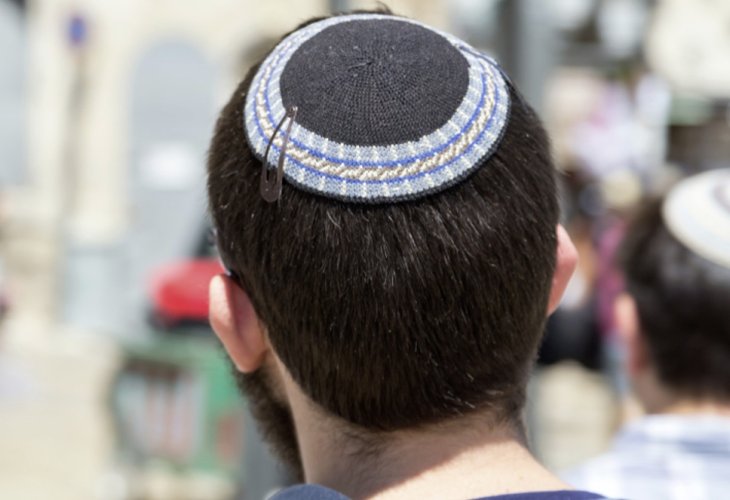
One of the areas of Judaism that sparks great curiosity among the nations of the world is the distinctive Jewish wardrobe. From the white prayer shawl, sometimes accented with dark stripes, worn each morning with fringes hanging from its four corners, to the headcoverings worn by men and by married women, to the black boxes containing Torah passages placed on the head and arm each weekday, with straps wrapped around the head and arm from the day a boy reaches maturity until the end of his life.
Even traditional Jewish grooming can look unusual. Many Jews are careful not to shave the sidelocks completely, and they avoid using a razor on the beard. Are these practices merely cultural habits, or do they carry meaning and benefit?
In these pages we are exploring the meaning of Torah instructions, including their practical value for a person in this world, in addition to their primary spiritual reward in the World to Come.
A Spiritual Shield at Four Corners
The Torah commands: “You shall make fringes on the four corners of your garment with which you cover yourself” (Devarim 22:12). It also says: “They shall make for themselves fringes on the corners of their garments… and it shall be for you as fringes, and you shall see it and remember all the commandments of God and do them” (Bamidbar 15:37–40).
On the plain level, the Torah explains its own purpose: daily life and material distractions can cause a person to forget who they are and what they are meant to live for. Tzitzit becomes a constant visual reminder. Like an official uniform that reminds its wearer of their role and responsibilities, the fringes remind the Jew that he belongs to a people called to holiness, described as “a kingdom of priests and a holy nation” (Shemot 19:6).
Tradition also teaches that, like many mitzvot, tzitzit carries benefits that reach into a person’s real life here and now.
Each corner of tzitzit contains eight strings. In the language of Kabbalah, the number eight is often associated with what is beyond the natural order. This is reflected in several mitzvot and events including brit milah on the eighth day, and the eight days of Chanukah, both pointing to a dimension that surpasses ordinary nature.
This is presented as part of the deeper idea of tzitzit as well. The fringes are not only a reminder, but are described as a form of protection.
Protection from Spiritual and Physical Harm
The Torah explicitly links tzitzit to spiritual guarding: seeing the fringes is intended to help a person resist being pulled after the heart and the eyes (Bamidbar 15:39).
Beyond that, Kabbalistic sources describe tzitzit as a protective covering. Zohar associates the garment of mitzvah with protection in times of danger, echoing the verse “She does not fear snow for her household, for all her household is clothed in scarlet” (Mishlei 31:21), interpreting the imagery in a spiritual sense (Zohar, Vayechi 238b). Later rabbinic works develop this idea and speak about the tallit as a sheltering presence, drawing on the language “in the shadow of Your wings, hide me” (Tehillim 17:8).
The result is a layered concept: tzitzit is both an internal reminder and an external covering, shaping behavior and also described as a source of protection.
When a Person Must Actively Place Themselves Under the Mitzvah
The Talmud records a striking conversation. A heavenly messenger found Rav Ketina wearing a garment that did not require tzitzit and challenged him about neglecting the opportunity to wear a four cornered garment. Rav Ketina asked whether a person is punished for not actively placing themselves under an obligation of a positive commandment. The response was that in a time of divine anger, accountability is stricter (Menachot 41a).
Mitzvot are not intended to be treated as optional symbols. When a mitzvah provides a channel of merit and protection, choosing to avoid it can matter, especially in spiritually vulnerable times.
The Talmud tells of a man who was exceptionally careful with tzitzit and was saved from a grave sin when his fringes struck him and jolted him into awareness (Menachot 44a). The mitzvah is designed to interrupt spiritual drift in real time, not only to decorate a garment.
In this sense, tzitzit functions like a spiritual alarm system that is visible, constant, and difficult to ignore.
Tefillin: Binding Mind and Heart
While a tallit surrounds the body, tefillin focuses on the head and the heart. The Torah commands: “Bind them as a sign on your hand, and they shall be as frontlets between your eyes” (Devarim 6:8).
Shulchan Aruch explains that when a person puts on tefillin, they should intend to place the passages that proclaim God’s unity and the Exodus on the arm opposite the heart and on the head opposite the brain, in order to subdue the mind and desires to the service of God (Shulchan Aruch, Orach Chaim 25:5). Tefillin is not only an act of memory, but a daily training of consciousness and inner direction.
The Divine Name and the Language of Symbols
Classical sources note the visible symbolism embedded in tefillin: the shapes formed by the boxes and knots correspond to letters that together form one of God’s Names, Shaddai. The message is that a person is not simply wearing an object, but they are placing themselves under a sign of covenant and divine protection.
Kabbalistic literature goes further and describes tefillin as forming a likeness of a higher spiritual pattern, connecting the person to holiness and restraining harmful forces. The Zohar describes tefillin as completing a person in the image of higher spiritual structure and binding destructive forces so they cannot harm or influence the wearer (Zohar, Introduction 13b; Zohar Chadash, Tikkunim vol. 2, 69b).
Whether one relates to this through symbolism, spirituality, or inner psychology, the lived experience is the same: a person who begins their day with tefillin often experiences greater focus, steadier emotional regulation, and a stronger sense of purpose.
Modesty: The Dignity of a Princess
Many women who grew up without a modest dress culture struggle to understand why halachah places such weight on dignified clothing. However, when you imagine what public life would look like if dignity and restraint shaped appearance everywhere, the impact becomes obvious. Much of the social and emotional turbulence fueled by constant stimulation would be reduced, and many forms of damage that grow from that tension would be less likely.
The tradition frames modesty as value. Like a precious diamond kept with care, a person who protects privacy communicates inner worth.
Four Inner Reasons Modesty Matters
Self respect and dignity
When someone relies on exposure for attention, they may unintentionally signal that external appearance is their main currency. Modesty says the opposite: my value is deeper than display.Looking is a kind of taking
Even in ordinary life, people pay for viewing experiences. The tradition treats intentional gazing as a form of use, not neutral observation.The power of the gaze
The sages taught that even standing and staring at another’s flourishing field can be damaging (Bava Metzia 107a), highlighting that focused looking can carry impact.Not placing a stumbling block
The Torah forbids causing another to stumble (Vayikra 19:14). Sefer HaMitzvot explains that this includes assisting or enabling wrongdoing, especially when desire blinds judgment (Sefer HaMitzvot, negative commandment 299). Applied here, the idea is that public presentation can either help others guard their inner world or make that harder.
Above all, the Jewish people are described as God’s children and as a nation set apart: “You are children to the Lord your God” (Devarim 14:1) and “I have separated you from the nations to be Mine” (Vayikra 20:26). The honor of that identity is meant to show itself in conduct, including dress. “All the glory of the king’s daughter is within” (Tehillim 45:14) is often quoted to express this dignity.
A Crown for a Married Woman: Hair Covering
Many people see a married woman’s head covering as an arbitrary restriction. Why would uncovered hair be acceptable before marriage but require covering afterward?
The Talmud discusses hair covering as part of a married woman’s obligations and links it to Torah level practice through the laws of the suspected sotah, where the priest uncovers the woman’s hair (Ketubot 72a; Numbers 5:18). The act of uncovering is presented as removing a symbol of dignity, implying that ordinarily her hair is kept covered.
On a simple level, hair covering strengthens the privacy of marriage. It sends a quiet message: a central element of my beauty is reserved for the relationship. It can also serve as a boundary marker, reducing vulnerability to unhealthy attention and supporting the emotional safety of the home.
The sages also connect a mother’s modesty to the spiritual success of her children. A powerful story is told about Kimchit, mother of priests, who said that even the beams of her house never saw her hair, and she merited seeing her sons serve in the highest role (Avot DeRabbi Natan ch. 35; Yoma 47a).
Many women also observe that hair covering changes the quality of beauty from external display to something more refined, a kind of grace that feels calmer and more dignified.
A Crown for a Man: Covering the Head
Why does a Jewish man cover his head?
The Talmud says: “Cover your head so that the fear of Heaven will be upon you” (Shabbat 156b). Shulchan Aruch rules that one should not walk four cubits with an uncovered head (Shulchan Aruch, Orach Chaim 2:6). The idea is that a head covering cultivates an inner awareness: there is Someone above me, the world is not ownerless, and my choices matter.
It also carries an outward message of loyalty and identity. In an age where many live without visible commitment, the quiet declaration “I belong to God” becomes, in its own way, an act of sanctifying His Name.
Tallit and tzitzit surround the body with reminder and protection, as the Torah itself says: “You shall see it and remember… and do” (Bamidbar 15:39–40). Tefillin binds mind and heart to purpose and spiritual clarity (Devarim 6:8; Shulchan Aruch, Orach Chaim 25:5). Modest dress and head covering are presented not as diminishment but as dignity, privacy, and strength (Tehillim 45:14; Bamidbar 5:18; Yoma 47a). A man’s head covering trains constant awareness of Heaven (Shabbat 156b; Shulchan Aruch, Orach Chaim 2:6).
To an outside observer these practices can look like unusual fabric and straps. But from within the tradition they are daily tools; reminders of identity, disciplines of the heart, and symbols of a life lived with holiness and intention.

