

Israel News
U.S. Focuses on Defensive Preparations as Near-Term Iran Strike Remains Unlikely — WSJ
Wall Street Journal reports broader action sought by President Trump would require expanded missile defenses to protect Israel, U.S. forces, and regional allies
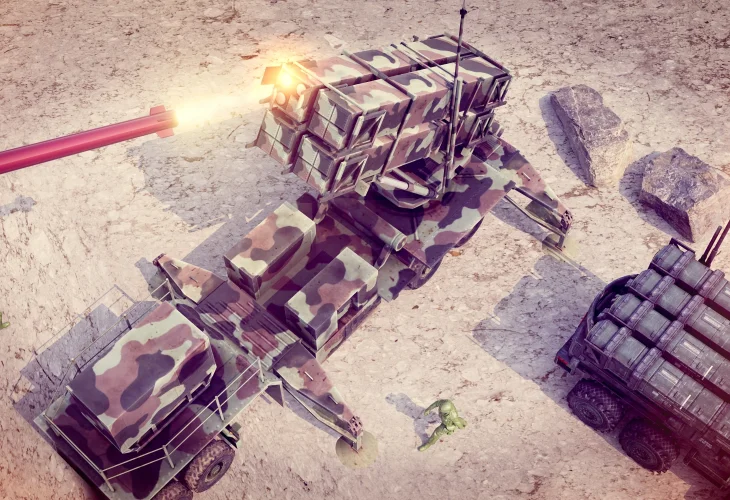 THAAD Defense System (Shutterstock)
The U.S. military is prepared to carry out limited strikes on Iran if ordered, but is not ready for a large-scale, decisive operation, according to a Wall Street Journal report published Sunday. Pentagon officials told the paper that no major strike is expected in the near term as Washington focuses on strengthening air and missile defenses across the Middle East.
U.S. officials said the distinction reflects concerns that a broader campaign would almost certainly trigger heavy Iranian retaliation, including large-scale ballistic missile fire against Israel, U.S. forces, and regional allies. While limited strikes could be ordered immediately, a wider operation would require significantly stronger defensive coverage to reduce the risk of mass casualties and damage to critical military infrastructure.
According to the report, President Donald Trump has pressed the Pentagon to prepare options for a “decisive” strike against Iran. Defense officials have warned, however, that such an operation would likely ignite a regional conflict unless the United States first bolsters its ability to intercept Iranian missiles. As a result, the timing of any major action is being driven less by offensive readiness and more by defensive constraints.
To address those vulnerabilities, the Pentagon has begun deploying additional Patriot and Terminal High Altitude Area Defense (THAAD) systems throughout the region. The Wall Street Journal reported that new or reinforced deployments are being positioned in Jordan, Kuwait, Bahrain, Saudi Arabia, and Qatar, creating a wider layered defense network intended to protect Israel, American forces, and key Arab partners.
Israel plays a central role in U.S. planning, according to the report. American THAAD missile-defense systems have already helped protect Israeli cities during past Iranian missile attacks, especially at times when Israel’s own Arrow interceptors were under strain. U.S. officials see Israel as a primary target in any Iranian retaliation and one of the main beneficiaries of the current defensive buildup.
The Journal also noted that in the previous exchange, Iran launched ballistic missiles in response to U.S. actions, including one that struck near Al Udeid Air Base in Qatar. While most of the missiles were intercepted, the episode highlighted how quickly regional air defenses could be stretched in a broader confrontation.
Missile interceptor availability remains a key concern. According to the report, the United States has fired more than 150 THAAD interceptors in recent engagements, about a quarter of all such interceptors ever purchased by the Pentagon. The Defense Department is now working with Lockheed Martin to sharply increase annual production, but officials cautioned that those additional interceptors would not arrive in time to change readiness if fighting erupts in the coming weeks.
At the same time, U.S. forces are stepping up coordination with regional partners. A U.S. military coordination cell at Al Udeid Air Base is working to better integrate missile-defense systems across the Gulf, improving early warning and interception capabilities. Still, several regional governments remain wary of being drawn into offensive action against Iran, limiting Washington’s options.
Iran has issued its own warnings. Supreme Leader Ayatollah Ali Khamenei said today, “If they start a war, this time it will be a regional war,” underscoring U.S. assessments that any major escalation would quickly spread beyond a single battlefield.
For now, U.S. officials say Washington is maintaining the ability to conduct limited military action while prioritizing defensive reinforcement. Whether a broader operation moves forward will depend on how quickly the Pentagon can strengthen missile defenses to withstand the scale of retaliation it expects Iran to unleash.

