

Parashat Yitro
Who Truly Lives: Equality in Death and the Difference Between the Righteous and the Wicked
Rabbeinu Bachya’s insight into Mount Sinai, the meaning of “animal,” and why true life is determined in the World to Come
- Amitai Hania
- | Updated
 (Photo: shutterstock)
“You shall set boundaries for the people all around, saying: Beware of ascending the mountain or touching its edge; whoever touches the mountain shall surely die. No hand shall touch it, for he shall surely be stoned or shot through; whether animal or person, he shall not live. When the ram’s horn sounds long, they may ascend the mountain.” (Shemot 19:12–13)
The verse states that whether an animal or a human being dares to touch the mountain, the law is the same for both: death.
What, then, is meant by the word “animal”?
The Meaning of “Animal”
Rabbeinu Bachya explains that the term “animal” should not be understood literally. Rather, it is a metaphor for the wicked, who are compared to animals.
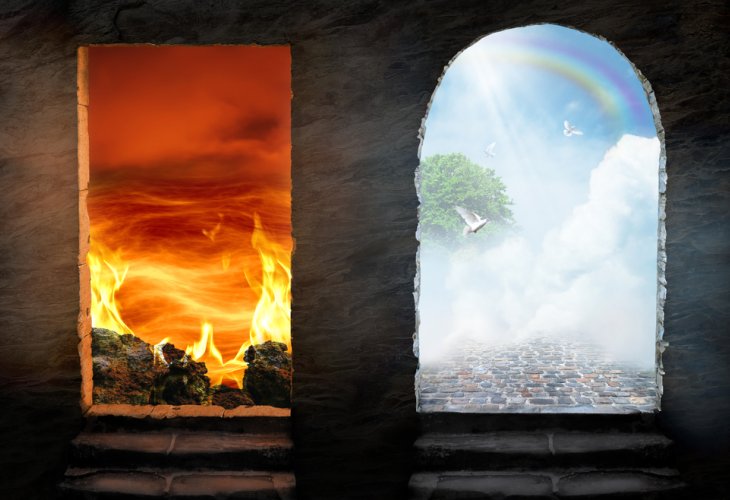
This passage teaches us an important distinction between the righteous and the wicked. With regard to touching the mountain, meaning involvement in this physical world, both receive the same outcome: death. No one lives forever in this world. Ultimately, all return their soul to the Creator. However, in what comes afterward, in the World to Come, there is a profound difference between the righteous and the wicked.
Equality in This World, Difference in the Next
In Rabbeinu Bachya’s own words: “So too Kohelet says: ‘Who knows the spirit of man, whether it rises upward, and the spirit of the animal…’ He compares the soul of the wicked to that of an animal. From here we learn that in this world, one fate befalls both the righteous and the wicked: as the death of one, so is the death of the other. This follows the verse before it, ‘All return to the dust.’ In this world, all are equal. This is not so in the World to Come, where their levels are distinct.”
The phrase “he shall not live” teaches that in this world, the decree of death applies equally to everyone, righteous and wicked alike. However, from here we learn that the real distinction appears in the World to Come, where different spiritual levels separate the righteous, who continue to live, from the wicked, who there too are considered as not living.
Rabbeinu Bachya summarizes the idea succinctly: “The wicked do not live in this world nor in the World to Come. The righteous does not live in this world, but he does live in the World to Come.”
Proof from Nadav and Avihu
What is the proof for this distinction?
Rabbeinu Bachya explains that Nadav and Avihu died in this world because they approached where they had been warned not to, yet they merited life in the World to Come. This is why their death is recalled on Yom Kippur.
Their story demonstrates that death in this world does not define ultimate existence. True life is determined in the World to Come, where the righteous continue to live, while the wicked remain spiritually lifeless.

