

Relationships
Addicted to Escape: When Sadness and Screens Replace Intimacy
One partner escapes into sadness, the other into a screen. A counseling-room conversation about emotional addiction, responsibility, and choosing life over escape.
- Hannah Dayan
- | Updated
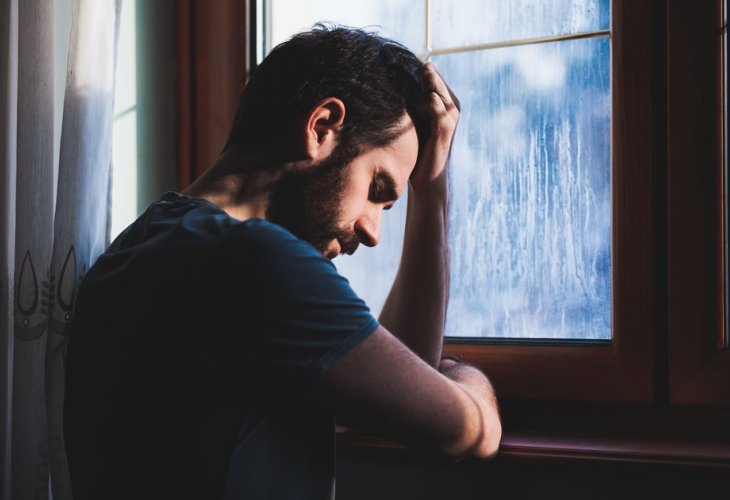 (Photo: shtterstock)
“No matter what happens, nothing makes him happy.
The rising sun depresses him because it will eventually set. When he got a new job, he was upset because it meant doing something new.
Nothing makes him happy.
Not me. Not the kids.”
“The way you open the newspaper, I already know a new depression is brewing inside you,” Tali said.
“My depression? That’s what bothers you?” he shot back. “Maybe you should deal with your obsession with your phone.
You’re on it all day. Liking. Posting stories. Replying to people on Instagram. Living a virtual life. The kids come to you with problems and you don’t lift your head from the screen. I’m talking to you and you don’t hear me. You’re always interested in what’s happening on your phone.
So what do you expect me to do if not fall into depression?”
Two People, Two Escapes
“How do you expect me not to be on the phone all day?” Tali responded angrily.
“You don’t want us to go for a walk. What’s the point if there’s always pressure to rush back home? You’re not available to celebrate birthdays. How can we celebrate when your father is sick and you’re not in the mood?
Maybe you should wake up and see that you have a wife and children who need you.”
“It’s hard for you to admit you’re addicted,” he snapped. “So you blame me. You’re addicted.”
“Good,” I said. “I’m glad you brought up addictions. That means you’re finally ready to deal with the problem that’s ruining your relationship.”
“Wait a second,” he said. “She’s addicted to her phone. Why are you saying addictions in the plural?”
“Itzik,” I answered gently, “you’re addicted to sadness. You get something from it.”
“What do I get from it?” he asked. “Do you think I choose to be sad?”
“Yes,” I replied. “But you’re not taking responsibility for it. Just as Tali isn’t taking responsibility for her addiction.
Now that you’re both fed up, you may finally be ready to take responsibility and regain real control over your lives.”
What Keeps Addiction Alive
“Do you know why it’s so hard to break free from addiction?” I asked.
“No,” they answered together.
“Because you don’t truly question what’s wrong with it or the price you’re paying. Worse, you justify it in order to feel comfortable continuing.”
Despite the differences between their addictions, they shared a common denominator. One shared by all addictions.
Your sadness, Itzik, and your phone obsession, Tali, are messengers filling an emotional void. They become redeemers, places where hopes and expectations are misplaced.
Tali, your addiction offers you an escape from reality. Instead of taking responsibility, it becomes a source of comfort in dealing with a disappointed man at home.
The phone temporarily blurs the monotony and emptiness you feel, but those feelings existed long before marriage. Itzik is not responsible for them.
Addiction creates a false sense of renewal, one that cannot be sustained without external aids.
The Power of Pleasure
There is an extremely powerful force in addiction: pleasure.
Pleasure fuels addiction. It is the strongest force in the soul.
But addictive pleasure depends on something external. Tali depends on her phone. Itzik depends on sadness.
Both of you live under the illusion that pleasure exists only there. You struggle to find it within yourselves.
This pleasure bypasses intellect and emotion. It bursts in without inner work, and afterward leaves emptiness in its wake.
Another force feeding addiction is release from control.
“What’s the difference between an addict and a non addict?” I asked.
“What?” Tali said.
“An addict needs the external object. A non addict wants and chooses. They do not need it.”
Why Relapse Happens
“I’ll tell you something,” Tali said. “Do you know how many times I tried to quit the phone? I once succeeded. I closed Instagram for almost a year. Then suddenly I went back. I don’t understand why.”
“I remember exactly when,” Itzik said sarcastically. “After you were named outstanding employee and got promoted. Then you didn’t just return to Instagram. You joined Telegram, Facebook, TikTok, Snapchat. Every new platform. You became a social media personality.”
“That makes sense,” I said. “It’s hard to maintain constant self awareness.
There are two situations that pull us back into addiction.
The first is after success. After reaching a peak, emptiness appears. We feel satisfied and tell ourselves we can loosen control.
The second is after failure. When self worth drops during crisis, we escape the emotional state controlling us.
Both come from the same desire: to avoid responsibility.”
A Different Path Forward
“So what do we do?” they asked together.
“To deal with addiction, we must cut off the sources feeding it and stop allowing them to justify escape.
This requires a deep belief that control can be restored.
There is one power stronger than pleasure in the soul, and that is faith.
Many try to fight addiction with willpower, but willpower is weaker than pleasure. That is why logic and awareness alone are not enough. Knowing the damage does not weaken pleasure.
Addiction cannot be fought directly. It is only a symptom, the soul’s attempt to release its burden.
The real work is at the root.
Replacing Escape With Meaning
We must provide alternatives to the sources feeding addiction.
This involves two components.
First, weakening the pleasure within addiction by honestly examining it. What happens five minutes after the pleasure fades? What remains?
Second, awakening pleasure in life itself. Developing control, purpose, and meaning. Learning to see life not as something to escape from, but as a garden where I am the gardener.
This requires strengthening appreciation for life through tools such as:
Strengthening social connections and commitments
Enhancing self esteem so we avoid what does not belong to us
Building confidence to make firm decisions and replace ineffective beliefs
Encouraging ourselves for small victories
The reward is regaining control and returning to a state of choice, one that leads to a life filled with genuine pleasure.
Inspired by Dr. Yechiel Harari’s book Breaking Through Personality Boundaries, in collaboration with Ishai.

