

Parashat Yitro
“We Will Do and We Will Understand”: The Secret Behind Israel’s Commitment at Sinai
Why true understanding of Torah and mitzvot comes through action first, not explanation
- Rabbi Reuven Elbaz
- | Updated
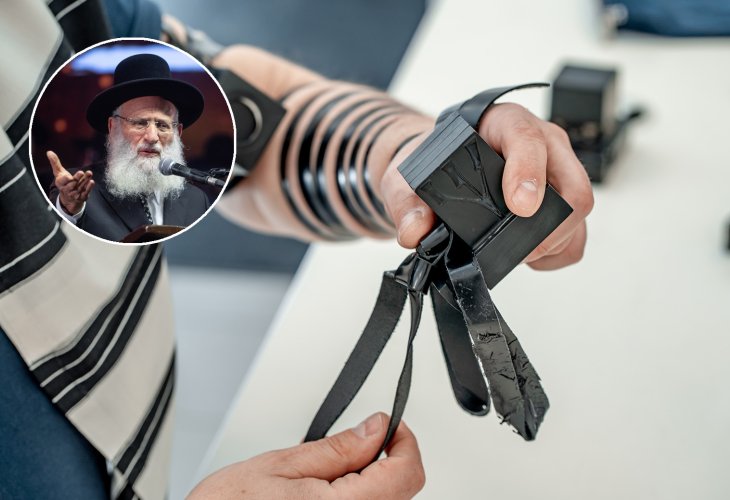 (Photo: shutterstock)
“Moshe took the Book of the Covenant and read it aloud to the people, and they said: ‘All that the Lord has spoken, we will do and we will hear.’” (Shemot 24:7)
“We Will Do” Before “We Will Hear”
Our sages teach in the Talmud (Shabbat 88a) that when Israel placed “we will do” before “we will hear,” a heavenly voice proclaimed: Who revealed this secret to My children, a secret used by the ministering angels?
At first glance, this order seems puzzling. Shouldn’t a person say “we will hear and then we will do”? How can someone commit to action before understanding? This manner of obedience is usually attributed to angels, as Scripture says: “Mighty in strength, who do His word, to listen to the voice of His word” (Tehillim 103:20).
Yet Israel preceded doing with hearing, and for this they were praised by God.
The Unique Power of the Torah
This is the unique quality of Torah. When does a person truly grasp that life without Torah study and mitzvot is impossible? Only after beginning to do them and live by them.
If a person merely hears a command, they may ask, “Why does God want this from me?” But when someone trusts completely in the One who commands, they act even without understanding, confident that the Commander knows exactly what He is doing.
That was Israel’s stance. They trusted God fully and declared: “All that the Lord has spoken, we will do.” The explanation would come later. First comes action, then understanding. As the liturgy says: “Blessed is He who speaks and acts.” We act first; understanding follows.
Laws We Understand and Laws We Accept
Some commandments are readily understandable. These are the mishpatim, such as “You shall not steal,” “You shall not rob,” and “Honor your father and mother.” Human logic readily grasps these mitzvot.
But the Torah also contains chukim, which are commandments whose reasons are not revealed. These, too, must be fulfilled even without understanding. A Jew says: “I do not understand why this is required, yet I do it anyway. If understanding comes later, all the better. If not, I still accept it wholeheartedly.”
Not understanding is never a reason not to act. The One who commanded knows the depths and secrets behind every mitzvah, and we trust Him fully.
The Torah was not given for a single generation. God’s commandments are eternal, relevant in all times. Each mitzvah has its laws and practical applications. Our task is to begin to do, and understanding will follow.
A Living Example: The Power of Action
A story is told about Yechezkel Abramsky, author of Chazon Yechezkel and former head of the rabbinical court in London.
In his later years, Rabbi Abramsky fell ill with heart problems. A renowned heart specialist was summoned to examine him. Early one morning, the doctor arrived and saw the rabbi wrapped in a tallit, wearing tefillin, and immersed in Torah study.
The doctor, who had grown up in Germany and had never seen tefillin, asked the rabbi’s son in all seriousness, “What is that electrode device on his head? Which professor prescribed it?”
“No, no,” the son replied. “Those are tefillin.”
“What are tefillin?” the doctor asked. “What are these black boxes and straps? I thought it was a medical infusion.”
The son explained that tefillin are a divine commandment that every Jewish man fulfills daily.
When the doctor began examining the rabbi, he asked about the meaning of tefillin. Rabbi Abramsky explained that God took Israel out of Egypt and commanded this mitzvah as a sign and a bond with Him: “It shall be a sign upon your hand and a remembrance between your eyes” (Shemot 13:9).
The doctor objected, “I don’t understand this. Why do these straps connect a person to God? A person can connect to God without them.”
The rabbi responded calmly and kindly: “No matter how much I explain, you will not understand. But if you yourself put on tefillin for ten days, then I will be able to explain everything. Without performing the mitzvah with your body, its meaning cannot be grasped.”
From Practice to Understanding
The doctor agreed. Rabbi Abramsky gave him a beautiful pair of tefillin and a siddur, explaining how to recite the morning blessings, the blessings over Torah, and the Shema.
Each morning, the doctor put on tefillin and prayed. As he read the blessings, he was deeply moved by their words: “Who formed man with wisdom… God, the soul You placed within me is pure.”
“These blessings contain profound medical insight,” he thought, and continued praying with growing joy. Soon, he found it hard to part from the experience.
In the evenings, he asked religious Jews to explain the meaning of the tefillin he wore. They taught him about their greatness and about the verse: “All the nations of the earth will see that the name of the Lord is called upon you” (Devarim 28:10), which the sages explain refers to the tefillin worn on the head.
The doctor grew eager to learn more. He discovered that Jews gather in synagogue on Shabbat, when tefillin are not worn, and he asked to join them. Slowly, he returned to the roots of Judaism.
When Questions Fall Away
After ten days, the doctor no longer came to Rabbi Abramsky with questions. The rabbi wondered whether he had even continued wearing the tefillin.
Eventually, the doctor returned, thanked him warmly, and said: “I no longer need these tefillin. I bought my own tefillin and tzitzit. I go to synagogue on Shabbat. I already have answers to my questions. You don’t need to explain anything.”
When a person begins to perform a mitzvah, it acts upon them. It brings holiness and purity and removes doubts. Explanations are no longer needed.
The Eternal Message of “Naaseh v’Nishma”
This is the meaning of Israel’s declaration: “We will do and we will hear.” Once we begin to do, the questions dissolve and understanding follows naturally.
At Mount Sinai, Israel reached a level of purity akin to that of angels, even like Adam before the sin. May we merit to feel this closeness again, accept the Torah wholeheartedly, and soon witness complete redemption.

