

Israel News
Israel Reopens Rafah Crossing Under EU Oversight, With Strict Daily Limits
After a “very successful” pilot, limited flows begin as Israel vets lists remotely and ceasefire moves forward
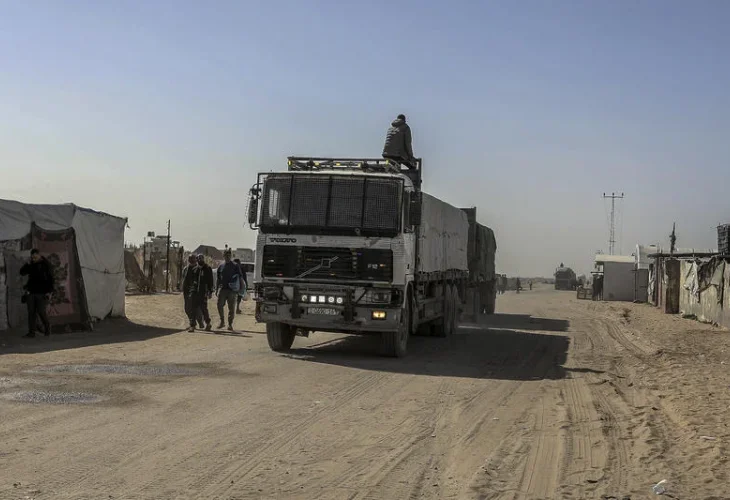 Rafah Crossing with Egypt (Flash90)
The Rafah border crossing between Gaza and Egypt began operating officially in both directions on Monday, February 2, 2026, following a pilot opening a day earlier that Israeli officials described as “very successful.” Israel and Egypt confirmed that the first phase proceeded without irregular incidents, under a pre-agreed international mechanism.
The reopening marks a practical step within the broader ceasefire framework, but movement through the crossing remains tightly limited and subject to layered security screening. Operations are being conducted by the European Union’s EUBAM mission, working in coordination with Egyptian authorities and Israeli security checks.
On the first day of official activity, movement was deliberately modest. Egyptian media reported that 50 Gazans returned from Egypt to Gaza via Rafah on Monday morning. At the same time, international reporting indicated that roughly 50 people were expected to enter Gaza and a similar number to leave on Day One, reflecting a phased rollout rather than full implementation of the daily quotas.
According to a statement cited by Reuters, Israel’s Coordinator of Government Activities in the Territories said: “Today, a pilot is underway to test and assess the operation of the crossing. The movement of residents in both directions, entry and exit to and from Gaza, is expected to begin tomorrow.”
Under the agreed framework beginning the following day, up to 150 Gazans are expected to exit Gaza daily, 50 patients and 100 companions, while up to 50 Gazans will be permitted to enter Gaza from Egypt. The crossing is scheduled to operate six hours a day, from 9:00 a.m. to 3:00 p.m.
The mechanism relies on advance lists and layered approvals. Each day, Egypt submits a list of 50 people seeking to enter Gaza. After Israeli security screening, approved individuals are permitted to cross the next day. In parallel, EUBAM transfers to Egypt a list of 150 people requesting to exit Gaza, including their final destination. Egyptian authorities can approve or reject those requests in Cairo.
Ahead of Monday’s reopening, teams carried out infrastructure checks at the crossing, ran trial simulations for buses and ambulances, and held briefings for all involved parties, including Palestinian operators and the EU delegation. Travelers pass through the area on foot, moving along a secured corridor roughly 2.5 kilometers (about 1.5 miles) long inside the border zone.
Despite Rafah’s reopening, medical evacuations continued to be routed through Kerem Shalom on Monday. Gaza health authorities said 50 patients and 100 companions exited the Strip that morning via Kerem Shalom rather than Rafah. A spokesman for the Hamas-run Gaza Health Ministry said approximately 20,000 patients remain on waiting lists to leave Gaza for treatment abroad.
Israeli officials emphasized that Israel has no physical presence at the Rafah crossing itself. As reported by Kan, “but there will be a technological means that will allow Israel to remotely prevent the exit of anyone who was not approved.”
European Union Foreign Policy Chief Kaja Kallas framed the reopening in broader political terms, writing on X: “Opening the Rafah crossing marks a positive step in the peace plan. The EU mission is to monitor crossing operations and support the Palestinian border police. Gaza’s reconstruction will depend on Hamas being disarmed.”
Israeli officials said the mechanism will continue operating under close monitoring as the daily quotas are gradually implemented.

