

Wonders of Creation
What Is the Molad? Understanding the Moon’s Role in the Jewish Calendar
Why knowing the molad matters before Birkat HaChodesh and how the lunar cycle shapes the Jewish month
- Debbie Reichman
- | Updated
 (Photo: Shutterstock)
Before the blessing of the new month (Birkat HaChodesh), every siddur contains a small note:
“It is proper to know the molad before blessing the month.”
What is this molad, and what exactly do we need to know?
The Moon’s Monthly Cycle
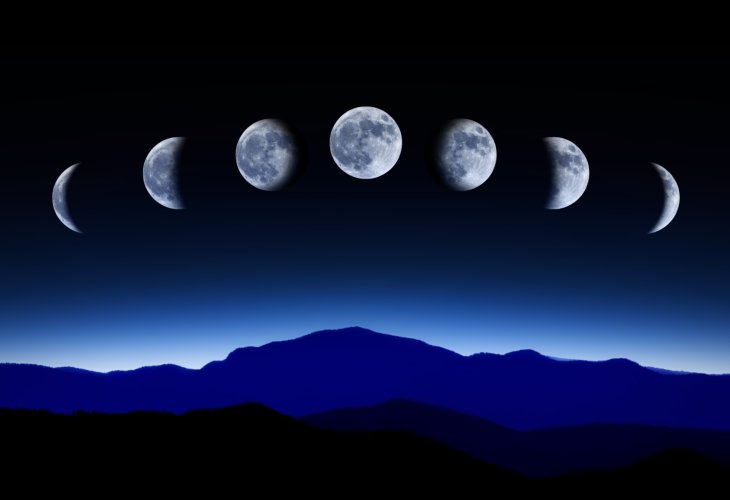
As we know, the moon waxes and wanes over the course of the month. This phenomenon where the moon appears slightly different each night, occurs because of the moon’s position relative to the Earth and the sun.
The sun always illuminates half of the moon — the side facing the sun, but from Earth we usually see only part of that illuminated half, depending on the angle between the moon and the Earth.
The Jewish Calendar and the Moon
The Jewish calendar, which is primarily lunar, is structured so that the moon appears full in the middle of the month — on the night of the 14th in a deficient (chaser) month, and on the night of the 15th in a full (malei) month.
At the beginning of the month, the moon gradually grows fuller. By mid-month it is fully visible, and from that point until the end of the month, it wanes, appearing slightly smaller each night.
Until the end of the month, and the beginning of the next one.
How Rosh Chodesh Was Once Determined
In earlier times, Rosh Chodesh was established based on the molad of the moon — meaning the day on which the thin crescent of the new moon was first visible. This marked the start of the new month.
From an astronomical perspective, however, the molad is defined as the moment when the moon is closest to the sun. At that stage, the moon cannot yet be seen by the human eye.
The Molad in the Fixed Calendar
In the fixed Jewish calendar in use since the days of Hillel, we rely on what is known as the “average molad” (molad emtza’i). This is a calculated approximation of the true astronomical molad, based on the standardized length of months established in the Jewish calendar system.
Knowing this molad is what the siddur refers to when it instructs us to be aware of the molad before reciting Birkat HaChodesh.
