

Life After Death
Resurrection of the Dead Explained: A Simple Parable and a Profound Jewish Belief
Why belief in resurrection is a foundational principle of Judaism, illustrated through nature, creation from nothing, and the soul’s renewal after death
- Rabbi Zamir Cohen
- | Updated
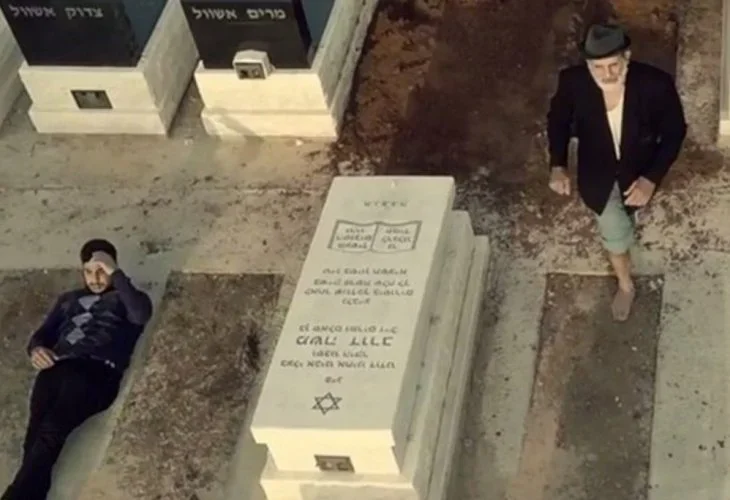
“Many of those who sleep in the dust of the earth shall awaken” (Daniel 12:2).
The resurrection of the dead is one of the fundamental principles taught by Moshe our teacher. Anyone who does not believe in this, writes the Rambam, has no religion and no true attachment to the Jewish faith. (Maimonides, Commentary on the Mishnah, Sanhedrin, chapter 11)
To grasp this idea on a basic level, let us begin with a parable.
A Parable from the World of Agriculture
Imagine a new immigrant who arrives from the Arctic Circle. He is accustomed only to frozen plains and has never seen or known plowing, sowing, or harvesting. After adjusting to life in the agricultural settlement to which he was sent, he goes out with the veteran farmers to learn and assist in their work.
To his surprise, he sees them plowing the ground. He does not understand. What are they doing? What is this for? A few days later, when the plowing of the entire field is complete, they begin loading sacks of wheat and heading out to the field. Curious, he asks what these grains are. They answer that nourishing, satisfying bread is produced from these grains after they are ground.
The Shock of Burying the Seeds
All the while, he gazes at the sacks of wheat with admiration. He remembers how difficult it was, back home, to feel full without them. His amazement turns to shock when he sees them scattering and burying the precious grains in the soil. This time he can no longer restrain himself and rebukes them: what kind of foolishness is this?
They respond with a patient smile: the day will come when you will see. From every buried grain of wheat, a beautiful green stalk will grow, and at its head will be many grains of wheat, exactly like these. He becomes angry and insists they stop mocking him. They continue to smile and try to calm and reassure him.
From Rot to Growth
After several weeks of watering, he goes out alone to the field, confused and troubled. He digs a little and pulls out one seed. Tears fill his eyes. The seed is rotten and foul.
Why did they do this? Why did they destroy it with their own hands?
Some time later, he goes out to the field with the harvesters. He stands thunderstruck. Where once there was a barren field, upright stalks now fill his vision. The grain bends in the wind as if smiling at him and whispering: indeed, they were right. Such is the nature of creation. This is resurrection.
Habit Blinds Us to Wonder
We do not react with the same amazement as that new immigrant, yet we understand him. After all, he witnessed a miracle. What is the difference between him and us? Why is he amazed while we are not? The answer is simple. We are accustomed to it, and he is not.
But let us free ourselves for a moment from habit and reflect. Is this not wondrous? If before our eyes a decayed seed turns into a green stalk laden with many grains identical to the original seed, is it truly so inconceivable that a decayed body could also be rebuilt again, one for one?
What Is the Human Being?
The matter becomes even clearer for one who understands what constitutes a human being.
As explained earlier, the true human being is the inner, spiritual person, clothed in a garment woven of flesh and bones. This garment is fashioned in its image and form, like a suit tailored precisely to the body’s shape and measurements. For one who knows this, it is simple to understand that even if the garment wears out and disintegrates, as long as the person within still exists, they can don a renewed garment and return to what they once were.
Creation from Nothing, Renewal from Nothing
At the deepest and simplest level, which is the truth itself: if you believe that the Creator of the world created the entire universe, including the human being, from absolute nothingness, creation ex nihilo, is it really difficult to believe in His ability to create and renew a human being once again?

