

For the Woman
Emotional Therapy That Works: Why the Therapist–Client Connection Matters More Than the Method
How motivation, trust, and expressive arts therapy help people heal, grow, and live fully — regardless of the therapeutic approach chosen
- Shira Dabush (Cohen)
- | Updated
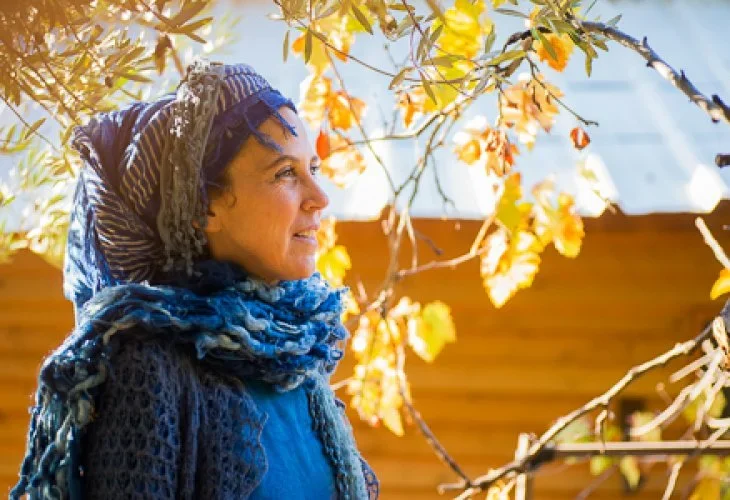 Devorah Nov (Photo: Ayala Yivgi)
Today, dozens of therapeutic approaches are offered to address emotional challenges such as depression, anxiety, emotional difficulties, lack of self-confidence, and more. Is there a way to know which approach is best for us?
According to Devorah Nov, an expressive arts therapist, lecturer, and head of therapy tracks at the Haredi women’s college Lomda, the specific method chosen is not the most important factor. There are two main parameters that determine the success of therapy:
The client’s motivation to work on themselves and adopt tools for improvement
The relationship between the client and the therapist
“The therapist must be someone who knows how to work not only with others, but also with themselves,” Nov explains. “A humane person who knows how to accept and respect others, create meaningful connections, and truly believe in the person sitting across from them. As the Baal Shem Tov said: It’s not enough to believe in God — you also must believe in a Jew.”
Education vs. Personality: What Makes a Good Therapist?
What about professional training? Can anyone with the right personality become a good therapist, or is extensive academic education required?
“Because we are dealing with matters of life and soul, proper professional training is essential,” says Nov. “At the same time, a person’s character and interpersonal abilities are a crucial foundation in therapeutic work.”
Art as a Mother Tongue of the Soul
Nov describes herself as someone born with “the soul of an artist” and has been engaged in creative expression her entire life.
“Art is our mother tongue. It’s how we communicated long before we learned to speak. Art is the language of existence — movement, color, form, rhythm. It’s a primal, direct language of expression and deep connection. When I create, I feel I’m speaking the same language as all of creation. There are things that can only be said through art.”
When in high school, she devoted herself to artistic fields, especially movement and dance. At age 21, while studying Jewish thought and philosophy at the Hebrew University in Jerusalem, she also underwent a deep spiritual strengthening.
“I wanted first to understand the meaning of my existence before continuing with professional studies.”
Her return to religious life did not prevent her from fulfilling her dream of becoming an expressive arts therapist. She continued toward a master’s degree in expressive therapies, navigating environments far removed from religious values in order to later bring these tools, in a clarified and refined way, into the religious and Haredi world.
She went on to establish training programs for women in creative therapeutic languages through the Center for Creative Judaism Sihara, which she founded. She also trained therapists in various frameworks of arts therapy and Jewish psychology programs, some of which she established and directed herself.
Her training included movement, drama, music, bibliotherapy, and visual arts. She has worked with diverse populations: people with mental illness, autism, trauma and terror survivors, abuse victims, individuals with profound disabilities, communication difficulties, and evacuees from Gush Katif.
Emotional Therapy: “Everyone Needs It”
Emotional therapy, including arts therapy, has entered the Haredi world in a significant way over the past two decades, and for good reason.
“We all have challenges,” says Nov. “In His compassion, God opens paths for coping, growth, and healing. I believe in holistic therapy, which addresses all dimensions of the human being — body, soul, and spirit.”
During therapy, attention is given to these dimensions and the relationships between them. What happens in one dimension is reflected in the others, opening additional paths for healing. Each dimension has its own needs for nourishment and development, and these must be respected.
The Human Being as a Complex Unity
“The human being is one unified but complex whole,” Nov explains. “The body is a vehicle for the psyche, the psyche for the spirit, the spirit for the soul. Just as the body needs food, movement, and rest, and the soul needs connection to Torah and prayer — the emotional world has its own essential needs: love, trust, support, acceptance, appreciation, meaning.”
These foundations allow a person to live fully, choose life, and realize the divine image within them. Emotional health also influences physical health and spiritual service, including the ability to serve God with joy, love, and authentic reverence.
Who Is Therapy For?
“Every person can benefit from emotional therapy,” Nov says. “Everyone carries unmet experiences, tensions, unresolved emotional issues, conflicts, fears, and interpersonal difficulties.”
Neglect only deepens the problem, which can later manifest in various ways, including physical illness. “It’s better to address things early and prevent greater suffering.”
When Sensitivity Becomes Pain
Nov illustrates this with an example of a sensitive child. Sensitivity is a beautiful trait, but vulnerability emerges when a person doesn’t know how to live healthily with that sensitivity.
Without emotional support, such a child may suppress their sensitivity to survive socially, adopting a false persona. While this may help socially, it disconnects them from themselves. Over time, they shift from living to merely surviving.
“These suppressed parts don’t disappear,” she explains. “They surface later in relationships, marriage, or parenting. Much of this suffering could have been avoided through proper emotional support.”
“I intentionally give an example of a positive trait like sensitivity,” Nov emphasizes. “To show that therapy isn’t only for people with ‘problems.’ It’s for anyone who wants to work wisely with what God gave them and become who they truly are.”
Emotional Health and Religious Life
A person with healthy faith experiences God as loving, protective, and compassionate. Ideally, this relationship also reflects in healthy interpersonal relationships.
But sometimes religious life takes on distorted forms, marked by pressure, fear, guilt, obsession, or self-criticism. “The Torah can be a potion of life — or the opposite,” she warns. “Wisdom lies in knowing the difference.”
Obsession with mitzvot, she stresses, is not genuine fear of Heaven.
Why Expressive Arts Therapy Works
Creative expression bypasses verbal defenses. Because it is less censored than speech, it often reveals what truly lies in the heart.
“Art allows primary, living, direct contact with inner experiences,” Nov explains. “It’s a powerful and deep tool, suitable for all ages.”
Nov offers a final insight for educators and caregivers:
“In therapy, we don’t direct the soul — we accompany it. When someone is sad, we often rush to say ‘everything is for the good.’ That may be true, but first we must be with the person where they are.”
Containment comes before solutions. Encounter the person, respect their emotions, believe in their strengths, and help them connect to their inner resources. Only then can growth and healing occur.
“Only then does a person truly live ‘by them you shall live’ — experiencing life fully and authentically, as the unique creation God intended them to be.”
