

Relationships
Victim or Chooser: The Hidden Decision in Marriage
Feeling trapped often looks like fate, but it usually hides a choice we stopped making.
- Hannah Dayan
- | Updated
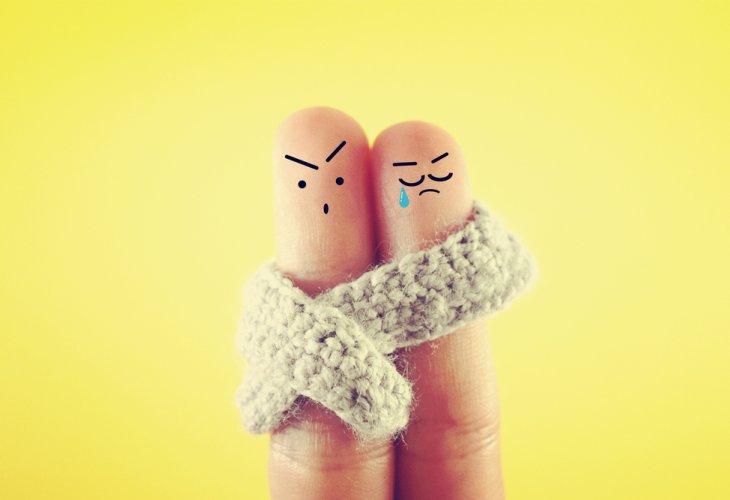 (Photo: shutterstock)
“She chose me as her victim,” Rafael complained. “She never stops taking out her frustrations on me.”
“A victim?” Sima shot back. “Maybe you mean that I’m the victim of this entire household. Laundry, cleaning, cooking, taking the kids to classes. The only thing left is to sacrifice me on the altar, and that’s it.”
“I’m glad you touched on exactly the point that leads to the solution,” I said. “It’s also the central theme of this week’s Torah portion, Vayikra, which deals primarily with sacrifices.”
What Is a Sacrifice, Really?
The word sacrifice carries several meanings.
Sacrifice as dedication and self-giving.
Sacrifice as struggle and effort.
Sacrifice as closeness and drawing near to something or someone.
One of the most difficult feelings people experience in relationships, often mistakenly, is the feeling of being a victim. This feeling arises from a belief that directly contradicts a fundamental truth.
“Why contradicts?” Rafael objected. “I believe very strongly.”
“Because unlike animals, plants, or inanimate objects, Hashem granted human beings the gift of choice. The moment you experience yourself as a victim, you are declaring that you have no choice.”
Victim or Sacrificer?
“Sima,” I continued, “it’s true that you need to ask, and sometimes even demand, that Rafael take a greater role in household responsibilities. But your work at home does not need to turn you into a martyr.”
“Then what am I, if not a victim?” she asked.
“You are becoming a sacrificer.”
Being in a relationship often means giving up personal time, gathering strength, and choosing to give even when it costs us something. These are sacrifices. But they are meaningful only when they are chosen.
“But how can I give so much and still feel empty?” she asked. “How do I stop feeling like the servant of this house?”
Choosing Instead of Collapsing
“By choosing,” I answered. “Choosing from freedom, not from fear. Choosing this relationship again.”
A relationship built on real connection allows space for honesty. You can say what hurts you. You can express anger. You can trust that the bond is strong enough to contain frustration without collapsing.
It is essential to feel the point of choice within your soul. From that place, you can look at your reality and choose how to relate to it.
“Do you really think I can tell her she hurt me?” Rafael asked. “If I say that, she’ll immediately throw everything I’ve ever done wrong back at me.”
“That’s exactly the work,” I said. “To be able to express hurt even if a storm comes back at you.”
The greatest permission in a relationship is to look at the other person and say honestly where you are and what you feel. The more emotionally developed a partner is, the more they can contain this truth.
Losing the Point of Choice
“I honestly don’t feel like I can choose,” Sima said. “I feel like I was thrown into a life I didn’t want, not the home I dreamed of. Everything fell on me.”
“That’s because you’ve lost your point of choice,” I replied. “When a person loses that inner place, they begin to function like a robot.”
At every moment, you must return to choice. Examine your actions, your reactions, and your connection, and reveal the truth of where you stand.
If you don’t allow yourself to be present in the moment you are actually in, you cannot create connection. Choice cannot be faked. You must acknowledge where you truly are right now.
Choosing Within the Mess
“How can we accept this?” Rafael asked. “We’re in a nuclear mess. I don’t even want to go home.”
“You need to learn to appreciate the mess,” I said gently. “You have nowhere else to run. This place exists under divine supervision. Everything your soul needs to grow is right here.”
Hashem does not want us to be victims. He wants us to be choosers.
When I do not choose, I experience myself as a victim and live in illusion. When I choose, the responsibility becomes mine.
Then every sacrifice I make for my spouse, every effort for the home and the family, draws me closer. It becomes real. It becomes mine.

