

World News
Trump Accepts Iranian Terms, Raising Fears U.S. Will Limit Talks to Nuclear Issue
Tehran pushes to limit negotiations to uranium as Israel warns missiles and proxy forces cannot be left outside any agreement
- Brian Racer
- | Updated
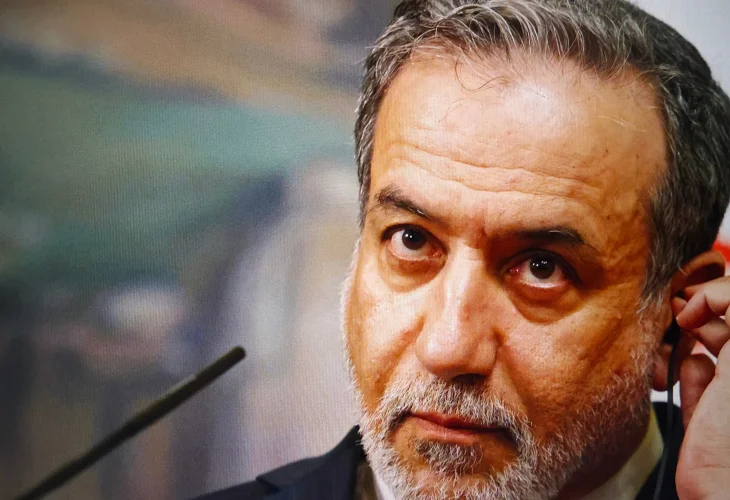 Iran Foreign Minister Abbas Araghchi (Shutterstock)
Israel moved Tuesday night to lock in U.S. red lines ahead of nuclear talks with Iran after Washington agreed to Iranian demands to change the venue and format of negotiations set to begin Friday.
U.S. special envoy Steve Witkoff met for more than three hours in Jerusalem with Prime Minister Benjamin Netanyahu and Israel’s senior security leadership as concerns grew in Jerusalem that Iran is already narrowing the scope of diplomacy before talks formally open.
According to Axios citing an Arab source, nuclear talks between the United States and Iran are now expected to take place in Oman after the Trump administration agreed to Iran’s request to move them from Turkey. Negotiations are still underway over whether Arab and Muslim countries in the region will join the talks as observers.
Iranian officials are pushing for bilateral, nuclear-only talks, while the United States and regional partners are seeking to include Iran’s ballistic missile program and its support for proxy groups. Israeli officials fear that a limited agreement would restrict military options without addressing what they see as Iran’s broader strategic threat.
President Donald Trump confirmed Tuesday that negotiations with Iran are underway, while signaling that the military option remains on the table. “They want to do something, we’ll see if something happens. They had a chance to do something and it didn’t work out, so we did ‘Midnight Hammer.’ I don’t think they want that to happen again. They want negotiations and we are negotiating now,” Trump told reporters in the Oval Office.
During the Jerusalem meeting, Israeli security officials presented Witkoff with updated intelligence on Iran’s nuclear program and its ballistic missile development, as well as information related to the regime’s internal repression. According to Israeli reporting, Witkoff acknowledged the difficulties created by Iran’s demands and said Washington was not approaching the talks naively.
Netanyahu outlined Israel’s conditions for any agreement with Tehran, describing them as non-negotiable: zero uranium enrichment, the removal of at least 450 kilograms of enriched uranium from Iranian territory, a halt to Iran’s ballistic missile program, and an end to Iranian support for proxy groups across the Middle East. The meeting was attended by Defense Minister Israel Katz, IDF Chief of Staff Eyal Zamir, Mossad Director David Barnea, Military Intelligence chief Shlomi Binder, Air Force commander Tomer Bar, and other senior officials.
White House press secretary Karoline Leavitt said the talks with Iran were still scheduled and emphasized that the administration remains committed to diplomacy, while stressing that “it takes two to tango” and that all options remain available to the president.
Iranian officials publicly downplayed the dispute over the talks’ location. Tehran’s foreign ministry said the venue and timing should not be used as “a pretext for media games,” while confirming that discussions would take place later this week. Iranian Foreign Minister Abbas Araghchi reiterated that Iran will not give up what it describes as its right to uranium enrichment, even as other Iranian officials have hinted at possible compromises.
In a separate statement, Netanyahu’s office said that ahead of Witkoff’s trip to meet Iranian representatives, the prime minister stressed that “Iran has proven time after time that its promises cannot be trusted.” Netanyahu also reiterated Israel’s demand that Hamas terrorists be disarmed, Gaza demilitarized, and the war’s objectives completed before any reconstruction, adding that the Palestinian Authority would not be involved in governing the Strip.
Friday’s meeting in Oman is expected to clarify whether Iran succeeds in limiting the talks to the nuclear issue alone, or whether Washington insists on addressing the full scope of Iran’s military capabilities, with the military option remaining in view.

