

Magazine
A Father's Pride and Pain: Remembering Captain Yehuda Cohen
A little over two years after Captain Yehuda Cohen saved his platoon during a mission in Gaza, his father reflects on his bravery and enduring legacy.
- Michal Arieli
- | Updated
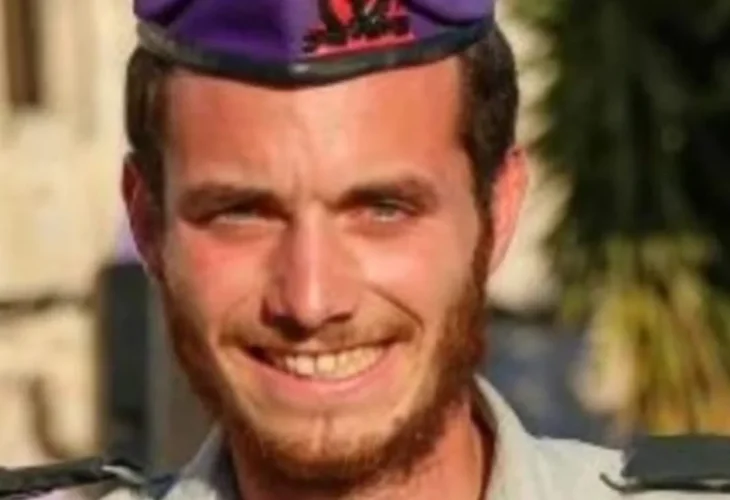 Captain Yehuda Cohen
When our son Yehuda was born, we named him after my grandfather, who was murdered in the Holocaust. We never imagined that one day, here in Israel, Yehuda would also meet his end, coincidentally near the memorial for the grandfather whose name he bore.”
These words are shared by Dov Cohen, father of Yehuda Cohen, a fallen commander in the Givati Brigade reconnaissance unit. His voice carries immense sorrow, but also deep pride.
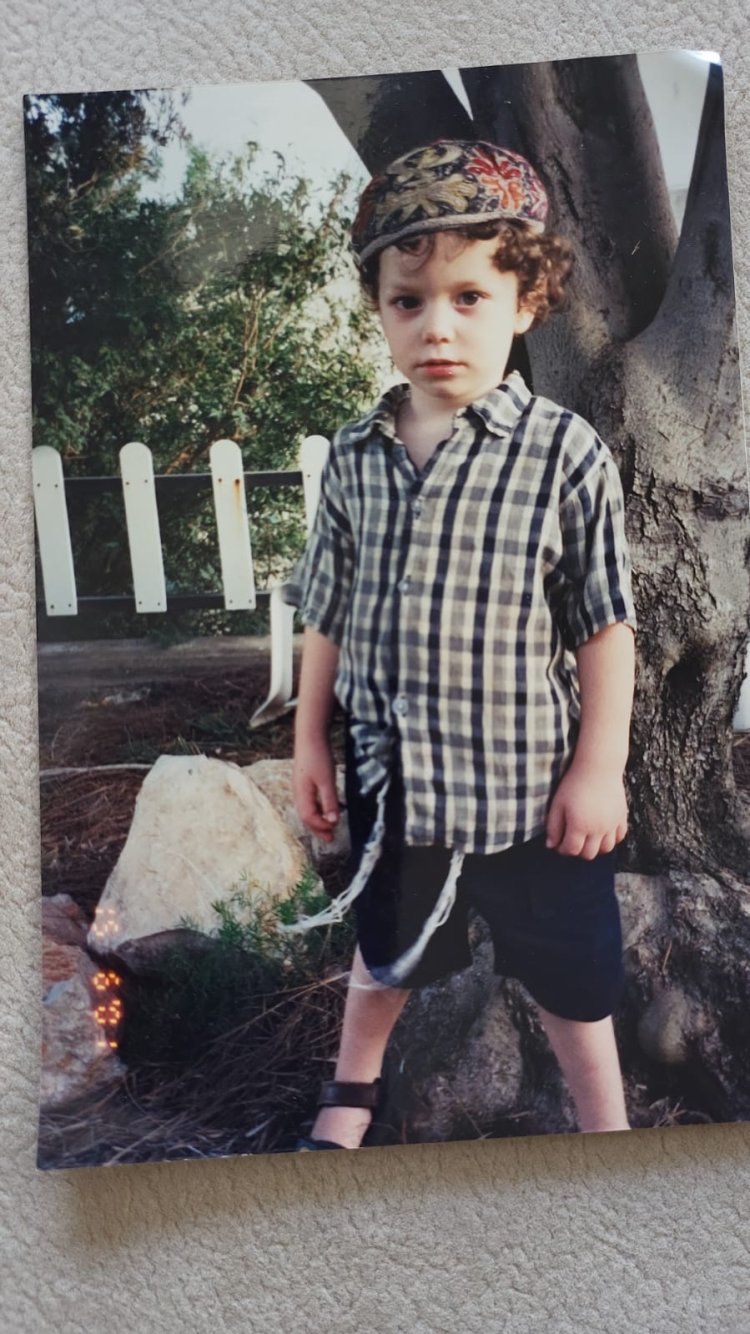 Yehuda as a child
“Both my grandfather and Yehuda died because they were Jews,” he explains. “Unlike my grandfather, who was helpless and murdered together with his wife and four of their children, Yehuda fought bravely and saved many lives. This understanding gives us strength.”
Dov emphasizes that Yehuda saw himself as part of an unbreakable generational chain. Just days after Simchat Torah, Yehuda corresponded with family friend Menahem Ansbacher, who commanded the observation post at Tel Saki during the Yom Kippur War. Ansbacher wished him well, and Yehuda replied: “Thank you, Menahem. Only after the fighting subsided did I begin to absorb it. I felt that the courage and heroism from fifty years ago were flowing into us. We must continue this noble chain of generations.”
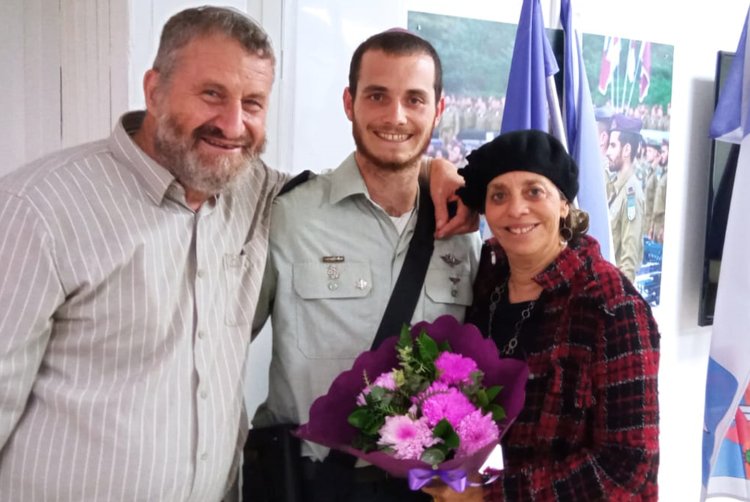 Yehuda z"l with his parents
The Person Behind the Rank
It is not easy for Dov Cohen, a resident of Shadmot Mehola, to speak about his son. A quiet longing fills every sentence, as though Yehuda is still present.
“Yehuda held a very senior position in the Givati reconnaissance unit,” he says. “But unlike other commanders who excelled academically from a young age, Yehuda wasn’t especially drawn to studies.”
Yehuda studied at the yeshiva in Hispin and was curious about many things beyond the classroom. Though talented, he met only the minimum academic requirements. His passions lay elsewhere, particularly chess and basketball, where he excelled. He won the national chess championship in ninth, tenth, and eleventh grades, yet chose not to compete in twelfth grade. “Others should have a chance to win too,” he explained.
Still, the values Yehuda absorbed in yeshiva stayed with him for life. Every Rosh Hashanah, he made a point of calling his teachers to wish them well. Last year, when the war broke out, he missed calling before the holiday and made sure to call immediately afterward.
Growth Through Choice, Not Pressure
After Hispin, Yehuda attended the pre army mechina in Eli, which deeply shaped him both spiritually and mentally. “It wasn’t about academics alone,” his father recalls. “It was about connecting to Hashem, to the Torah, and to the ideals of the Jewish people in their land. He was completely immersed.”
“As parents of seven children, we learned about parenting through Yehuda,” Dov admits. “You can’t force growth. Change has to come from within.”
He shares a moving example. At one point, Yehuda stopped wearing tzitzit. It troubled his parents, but they chose not to pressure him. Eventually, Rabbi Eli Sadan, head of the mechina, spoke with Yehuda and encouraged him to resume wearing tzitzit. From that moment on, it never left him.
That connection later took on broader meaning. Before entering Gaza, Yehuda requested 400 tzitzit for his soldiers. The request grew to 4,000, ensuring that no soldier who wanted one was left without.
Leadership Rooted in Responsibility
Yehuda’s path to command was not simple. A hearing issue lowered his military profile and initially blocked his advancement. But his determination prevailed. He approached the battalion commander directly and earned a place in the officers’ course.
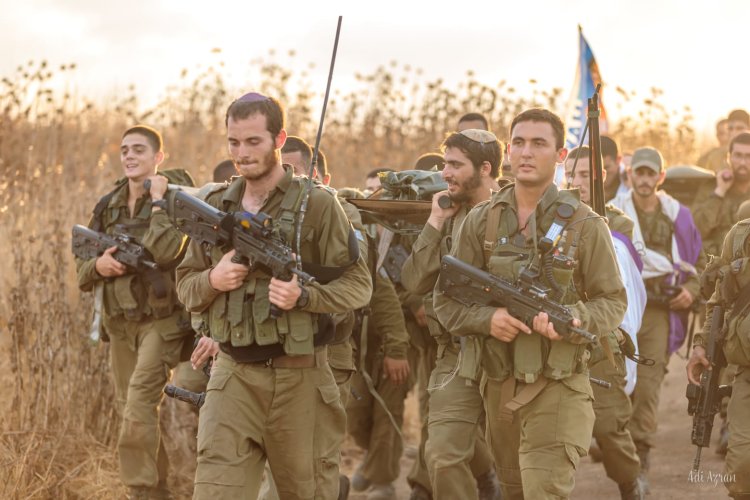 Yehuda with his soldiers
As a commander, Yehuda was not only a leader but a mentor. He invested deeply in his soldiers, especially lone soldiers, and maintained close contact with bereaved families, offering comfort and support. His concern extended beyond the battlefield. During an operation in Jenin, he made sure that an injured Palestinian child received medical treatment before the unit withdrew.
“Perhaps surprisingly,” his father says, “Yehuda’s character was most visible during his break before assuming command.” Instead of traveling, Yehuda stayed home, worked at the local dairy farm, competed in chess, and continued a regular study schedule at the mechina. It reflected his commitment to balance physical effort, spiritual growth, and intellectual discipline.
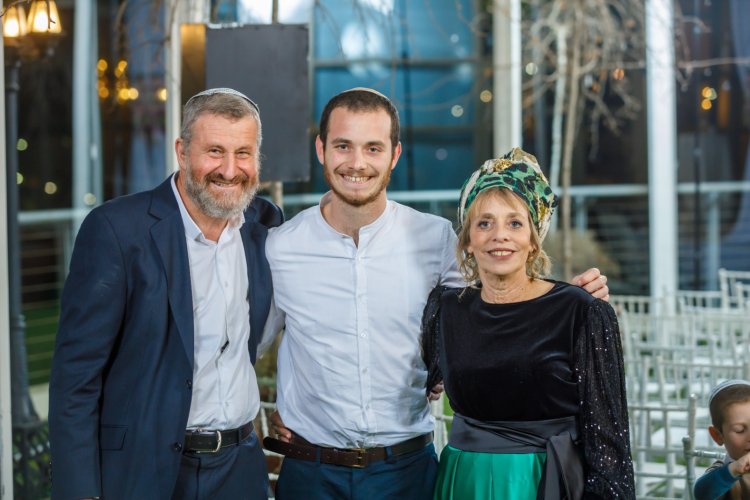 Yehuda with his parents
A Final Request
One of Yehuda’s enduring messages was the power of prayer.
“On October 7, Yehuda was at home when he received orders to head south,” his father recounts. “He said it felt like the opening of the Yom Kippur War. We had only a short conversation before he left. The last word I heard from him was: ‘Pray.’”
Yehuda’s heroic actions saved many lives and embodied a life devoted entirely to the Jewish people. In his memory, numerous initiatives have been launched, including the “Oz LeYehuda” project, which connects soldiers with study partners.
Dov Cohen carries the weight of loss intertwined with profound pride. “Yehuda died sanctifying Hashem’s name,” he says. “Like Rabbi Gutz, who said of his son killed in the Six Day War, ‘Woe that he died, but blessed it was for the liberation of Jerusalem.’ We feel the same. Yehuda’s sacrifice had meaning. It was not in vain. Our task now is to carry his message forward, to pursue victory and righteousness.”

