

Magazine
Remembering Hadar Lavi: A Child Who Brought a Nation Together
The story of Hadar Lavi, whose brief life became a powerful moment of shared prayer, unity, and compassion. A remembrance of how one child brought people together across every divide.
- Michal Arieli
- | Updated
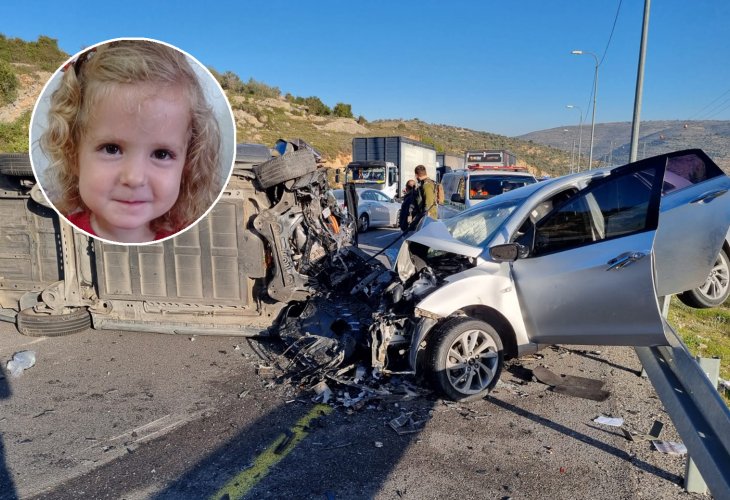 (Inset: Hadar Lavi)
Almost three years ago, the Lavi family from Shiloh lived an ordinary, full life. Adi, a sought-after doula, spent most of her time at home caring for her five children. Her husband, Elishiv, worked in software development in Tel Aviv. Their days were busy, structured, and familiar, shaped by routine and family life.
Each morning began with the children leaving for school. Adi would then enjoy a few quiet hours until two year old Hadar returned from daycare at one o’clock. “From the moment Hadar came home, everything stopped,” Adi recalls with longing. “I couldn’t do anything else. She was full of energy and kept everyone busy. The entire house revolved around her.”
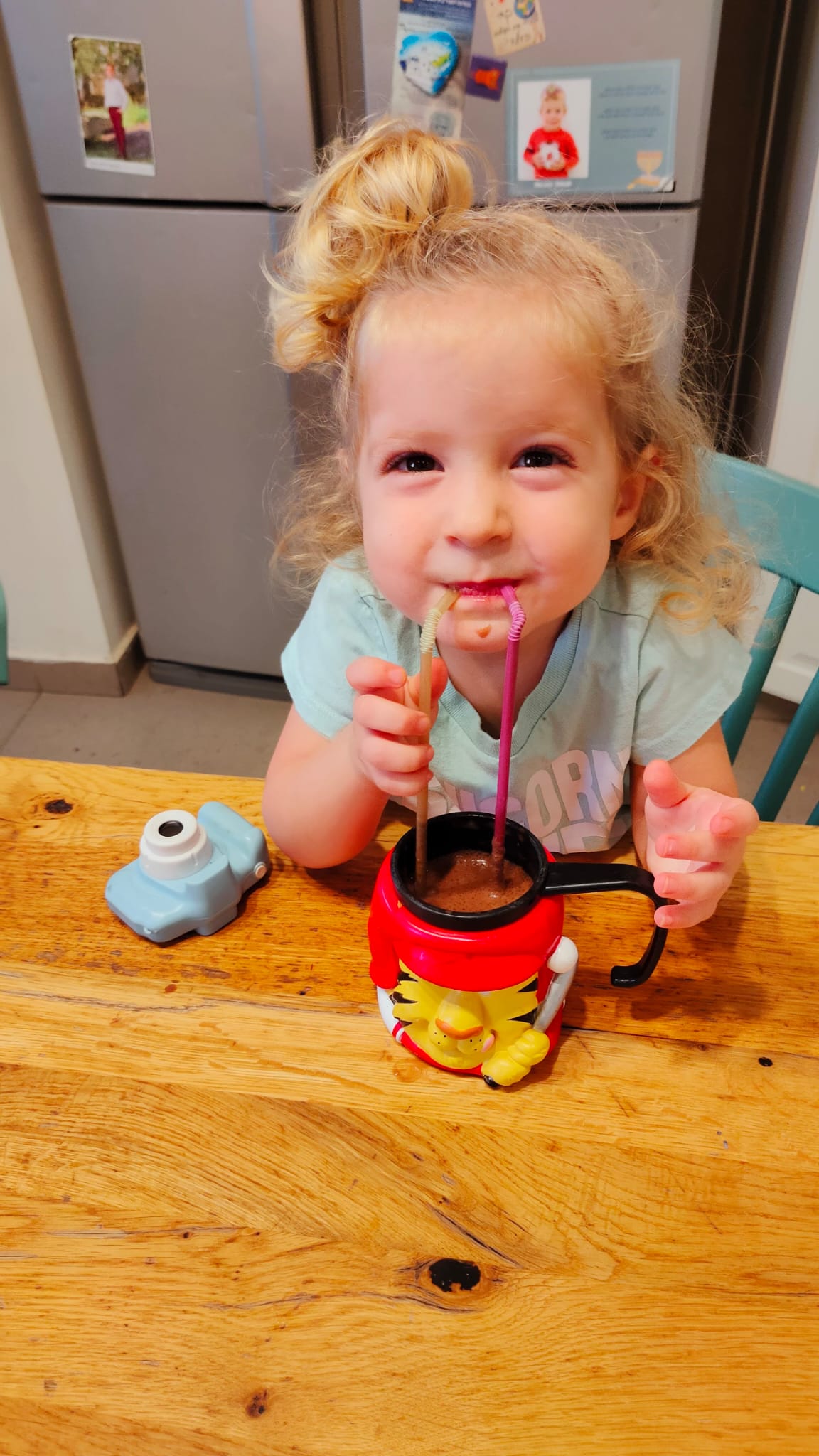 Hadar Lavi z"l
Hadar loved stories, and the family told her dozens each day. Then she would ask to go to the petting zoo, the library, or the playground. She always knew how to get what she wanted. “Thanks to her,” Adi says, “every day felt like a celebration at home.”
It wasn’t only her parents who sensed Hadar’s uniqueness. People around them noticed it too. She drew attention effortlessly and was remarkably articulate, speaking like a much older child and expressing her emotions clearly. “If I was upset with her, she would ask, ‘Why are you mad at me, Mom? It doesn’t feel good,’” Adi says. “After that, it was impossible to stay angry.”
She loved Torah stories as well. On Purim eve, her kindergarten teacher told the parents that the community rabbi had come to tell the children the story of Megillat Esther. When the teacher questioned whether the children were too young, he replied, “But Hadar is listening to me.” This was true beyond Purim. Every Shabbat, Hadar would stand up, open a Chumash, and announce, “Now everyone listens to me,” before retelling stories like Jacob climbing the ladder or Bigthan and Teresh poisoning the king, captivating everyone around her.
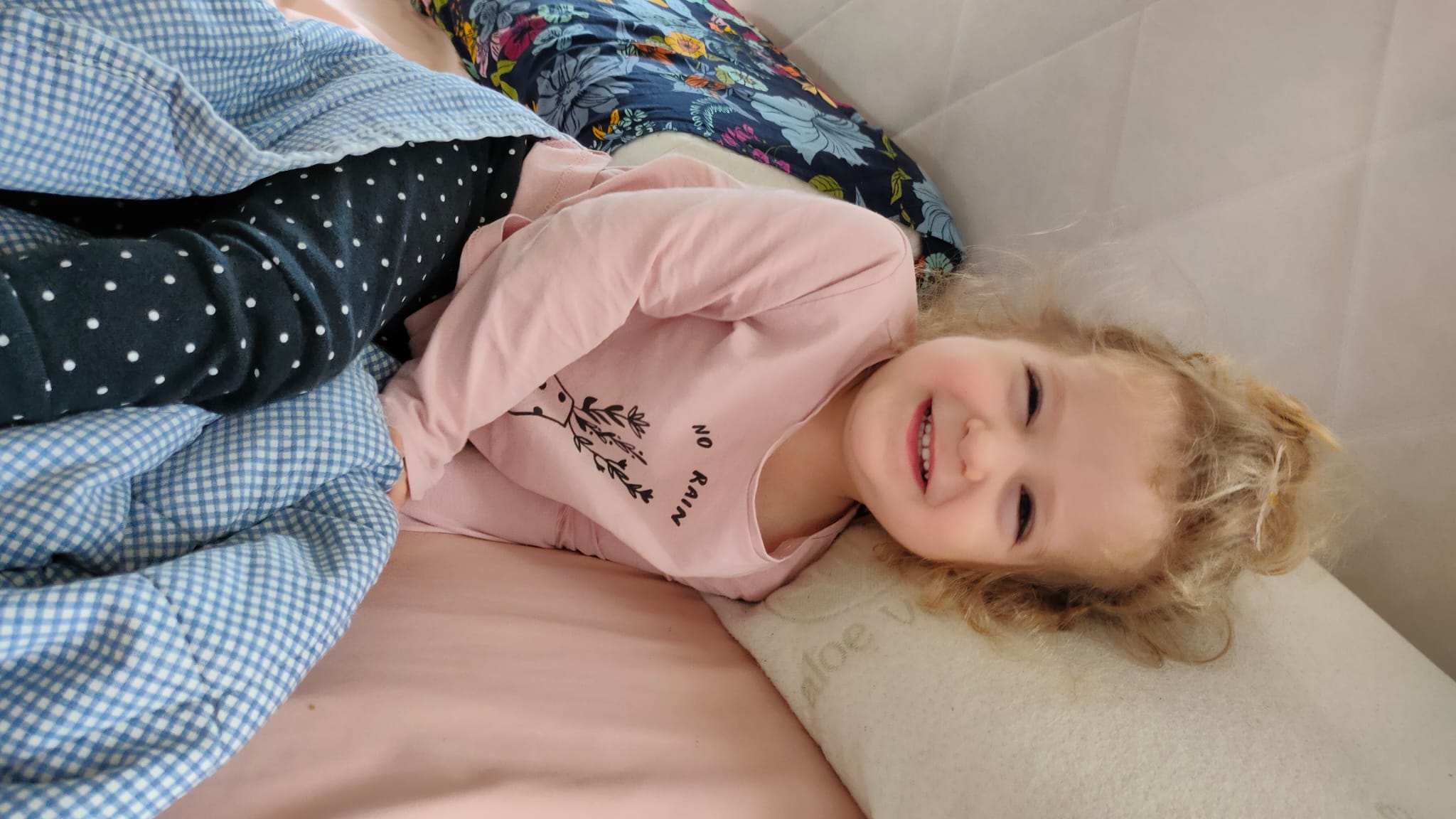 Hadar Lavi z"l
The Day Everything Changed
The turning point began with what seemed like a minor injury above Hadar’s eye. “It looked like something that needed professional care,” Adi explains, “so I took her to Shaare Zedek Hospital.” Hadar was admitted for several hours, her eyebrow was stitched, and she was declared stable. They were released at three in the morning.
Adi debated whether to return home immediately or wait. By six, fully awake, she decided to drive back. She buckled Hadar into her car seat, and the child fell asleep instantly. As they drove toward Shiloh, just minutes from home and past Ofra, a car suddenly appeared in their lane, driving straight toward them.
“I tried to swerve,” Adi says quietly, “but it hit us head-on.”
In the moments after the impact, people gathered around the scene. Adi remembers hearing cheers directed at the Palestinian driver. It was shortly after a deadly terror attack, and her greatest fear was that they were about to be lynched. Acting on pure instinct, she called emergency services, begging them to arrive immediately.
At that moment, what the family describes as clear divine providence unfolded. Just three cars behind them was an ambulance with a paramedic. The driver later explained that they had received a call involving Shiloh without understanding why, only to realize they had been sent directly to this scene.
Adi managed to free herself from the car. Hadar remained strapped in her seat, seemingly unharmed. Only when medics transferred her to the ambulance and she did not wake up did Adi realize something was terribly wrong. “She isn’t breathing,” she screamed. Although Adi herself was injured, she refused to be separated from her daughter, and they were taken together back to Shaare Zedek, the same hospital they had left barely an hour earlier.
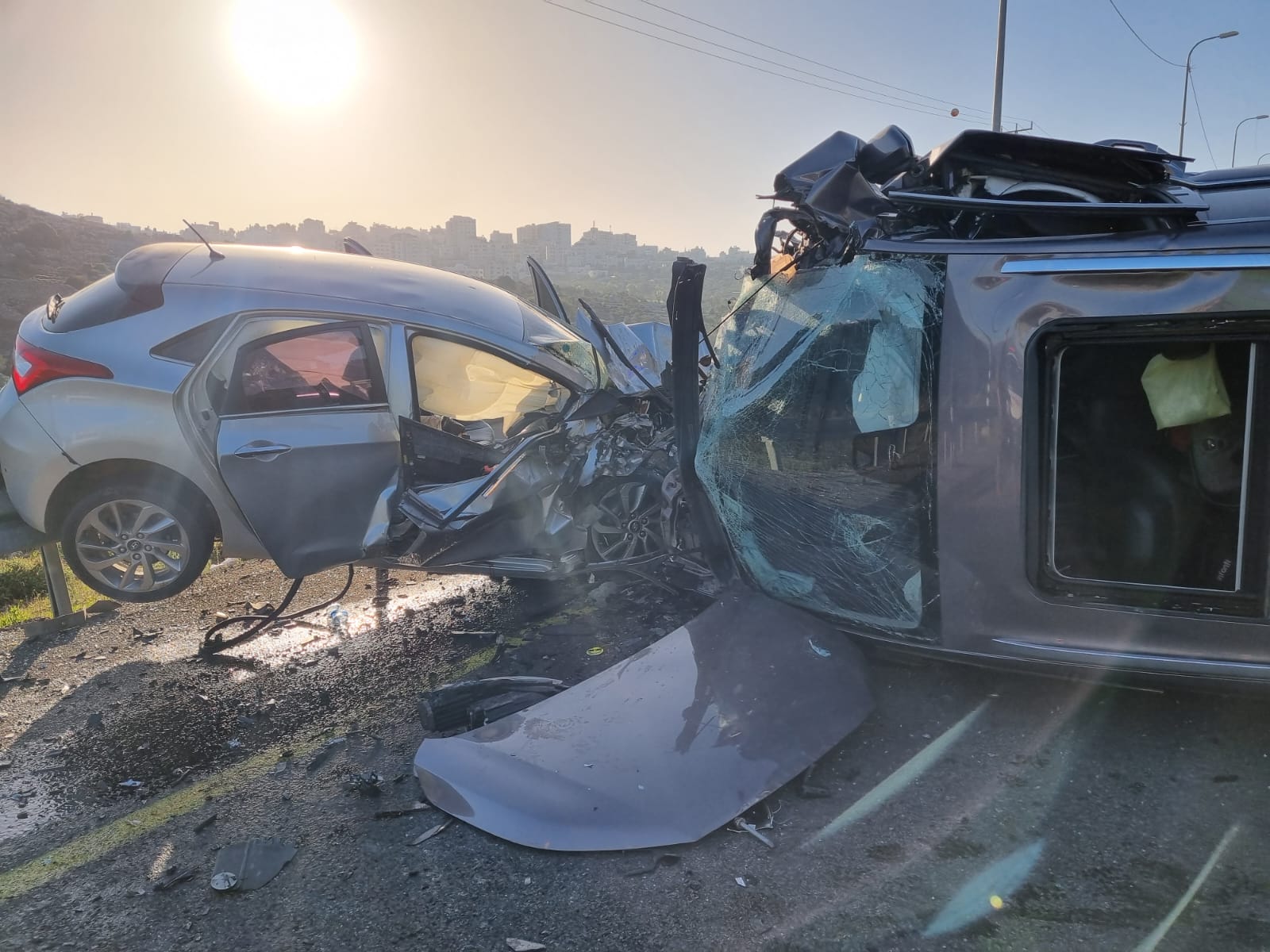 The aftermath of the terrorist attack
Only later did Adi realize the extent of her own injuries. Six ribs were broken, and she was covered in blood. “But I didn’t feel it,” she says. “My entire being was focused on protecting my child.”
Waiting and Hoping
Elishiv learned of the accident early that morning. “Adi called me,” he recalls. “She was very shaken, but I assumed everything would be okay. I thought perhaps Hadar’s stitches had opened and needed further treatment.”
He prepared the children and went to pray. An hour later, a nurse from Shaare Zedek called and asked him to come immediately. Driving toward Jerusalem, he encountered a long traffic jam. At one point, he saw their overturned car and felt, for the first time, real fear. “I thought to myself, surviving something like that isn’t obvious.”
At the hospital, the hours stretched endlessly. The doctors did not allow them to be with Hadar and promised an update later in the day. “We stopped every doctor in the hallway,” Adi says. “We only asked one thing: Is she alive?”
Eventually, they were brought into a room filled with medical staff. The conversation began with bowed heads. “We have no good news,” they were told. A CT scan showed severe damage to Hadar’s upper vertebrae and indications of brain injury.
Adi barely heard the details. “It was as if I shut down,” she says. When she later asked the doctors to explain clearly what they saw and what they did not see, she responded with faith. “Everything you didn’t see is where prayer comes in. Hashem heals all flesh, and there are no limits to what He can do.”
From that moment, the family focused entirely on prayer.
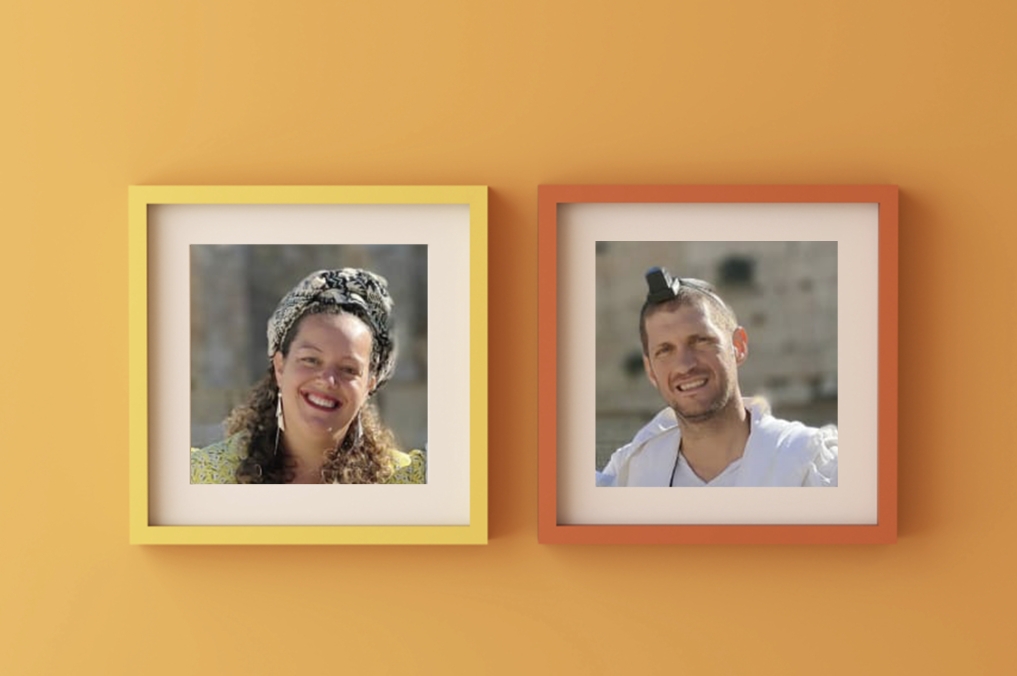 Hadar's parents, Adi and Elishiv
 A Nation Prays
Adi and Elishiv shared Hadar’s photo and asked the world for one thing: pray. The response crossed every boundary. Religious and secular, right and left, Israel and abroad, people united around a toddler they had never met.
Elishiv recalls a friend from Tel Aviv who had never prayed before. At work, the office manager asked everyone to read Tehillim for Hadar or to participate in their own way. “That was the first time I ever opened a Tehillim,” his friend told him.
Adi describes countless initiatives. Women gathered to separate challah, first dozens, then thousands. Some did so for the first time in their lives. Entire communities organized Tehillim gatherings. Each message strengthened the family and filled them with hope that a great miracle was approaching.
Saying Goodbye
The injury occurred shortly before Purim, and the family believed a Purim miracle was imminent. But each day brought the same message from the doctors. There was no improvement.
After nine days, the family understood they needed to prepare the children. The siblings came to Hadar’s bedside, sang her favorite songs, brought drawings and gifts, and kissed her. They showed extraordinary maturity and love.
Later that day, Elishiv was told that Hadar was brain dead and that it was only a matter of time. Leaving the meeting, he was barely able to breathe. When relatives invited him to pray, he said quietly, “Now we need to pray for strength.”
The medical staff cried with them. The community rabbi arrived, prayed, and sat beside them. The family gathered, sang, spoke to Hadar, and said goodbye. After everyone left the room, only the parents remained. For a long hour, they watched as her vitals slowly faded.
“We felt she waited to be alone with us,” Adi says. “We understood it was the end.”
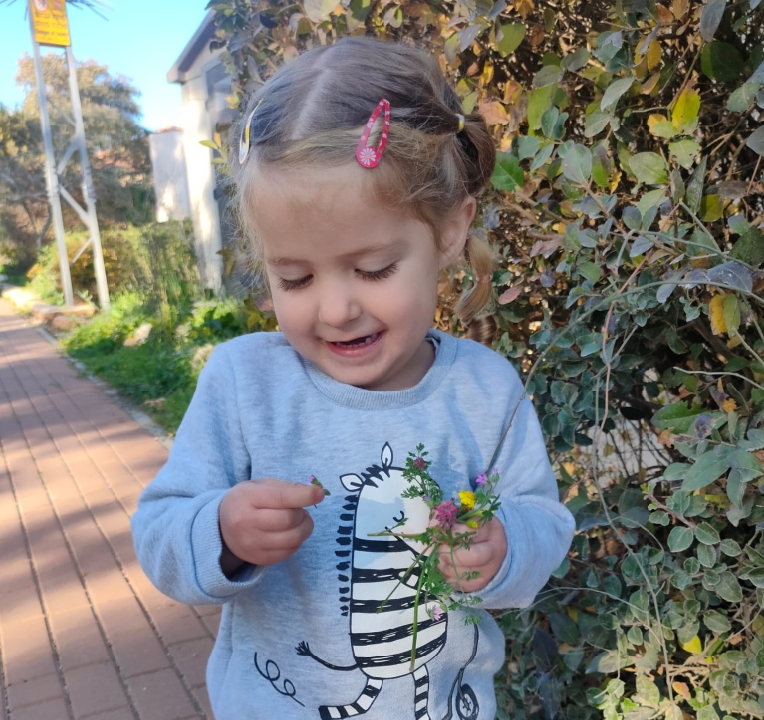 Hadar Lavi z"l
Carrying Life Forward
The moment of separation was unbearable, yet meaning emerged slowly. “I felt she came to say goodbye,” Elishiv says. “As if she was telling me she is at peace.”
Strength comes from many places. From faith, from the belief that Hadar is in a place of complete goodness, and from life itself. The family continues to raise their children, to support others, and to move forward alongside the pain.
The Lavis are still searching for a meaningful way to honor Hadar’s memory, one that reflects the unity they witnessed during those days. Until then, they ask for something simple.
“See one another,” they say. “Do something small for someone else. Let unity grow from goodness and joy.”

