

Magazine
From Grief to Hope: One Woman's Mission to Fulfill Dreams of Bereaved Families
How Ortal Schlussel's initiative supports families and their loved ones
- Michal Arieli
- | Updated
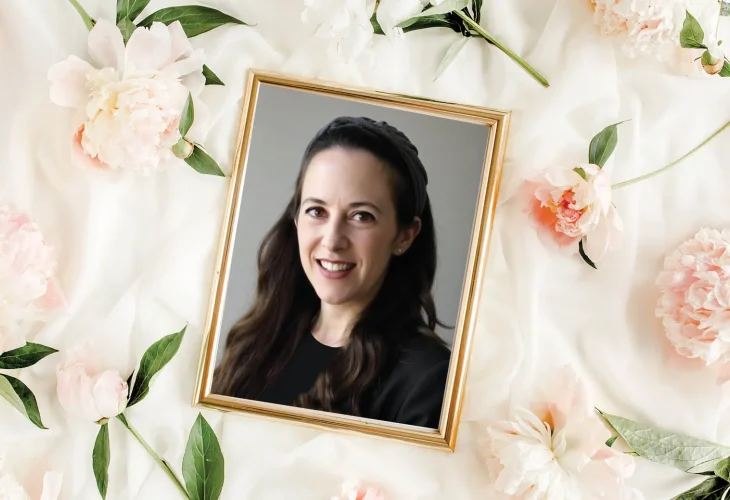 Ortal Shlissel
Over the past few years, thousands of families have received the bitter news that their loved ones are no longer alive. Thousands have entered the world of bereavement as part of the Iron Swords war, and the grief and sorrow are overwhelming.
Even those of us who stand outside the immediate circle of mourning find ourselves torn apart again and again by the painful stories. We pray for the moment when we might be able to take even a small fragment of the pain carried by these families, to ease their burden and help them continue forward.
Some people do more than dream about easing the pain. They act. One of them is Ortal Schlussel, who initiated the establishment of the nonprofit organization “Living the Dream” which fulfills the dreams of bereaved families.
The Loss of a Dream
To understand what led to the founding of the organization, Ortal describes what took place.
“I was about to celebrate my 40th birthday, and in honor of that milestone I planned to fulfill a personal dream and hold a one time performance featuring songs I write and compose.
“I enrolled in a professional course, worked hard to build the show, booked a venue, chose a dress, and even sent out a save the date message. The plan was to begin selling tickets the day after Simchat Torah and to hold the performance a few weeks later.
“Of course, after the Hamas attack, no one was thinking about performances or music. Alongside the horrific national trauma we all experienced, I remember the deep sense of losing my personal dream. I felt uncomfortable with myself. How could I even allow myself to grieve something so small in the face of such unimaginable national pain? And yet it stayed with me. I had worked on it for an entire year, invested significant money, and in the end it simply did not happen. That weighed heavily on me.”
A few weeks later, as her birthday approached, Ortal decided that if her original dream could not be realized, she wanted to transform it into something else.
“I wanted to hold an evening of spiritual strength and prayer for the people of Israel. Within a few days I managed to produce a deeply meaningful evening, with prayers for the hostages and the soldiers. Rabbi Benny Lau spoke and gave us tremendous strength.
“At the end of the evening, I went up to the stage and without planning it in advance, I found myself sharing with the audience the story of a private dream that had been lost. I said, ‘This is the Jewish story as a whole. Our dreams, small and large, continue to live and beat in every situation. And this is also our obligation toward those who lost their lives to ask whether their dreams continue to live as well.’”
From Words to Responsibility
Asked what she meant by those words, Ortal answers honestly.
“The truth is, I did not mean anything in advance. The words simply came out. But after the evening ended, they echoed inside me powerfully. I felt they created a sense of responsibility to act on behalf of bereaved families and to help fulfill their dreams.”
She pauses, then adds, “Of course I had every reason to say, ‘Dream fulfillment is not relevant right now. We are at war.’ On a personal level, I was also at the beginning of a new pregnancy with four small children at home. Who had the time or capacity to think about this? But the more I thought about it, the more I realized that if we wait for the right time, it will never come. Our responsibility is to begin now.”
On the Road to Fulfillment
This is how the project to fulfill the dreams of bereaved families was born.
Ortal explains how the project works.
“I have a full partner in all of this, Elad Adler, the organization’s project manager. We have worked together from the very first moment. Every evening we meet with bereaved families over Zoom, first and foremost to live their dream together with them.
“We explain that we are here to fulfill dreams that have social or communal value, and we ask them to share their vision for commemorating their loved one in a way that truly reflects who they were. The families’ responses made it clear to us that there is no fallen soldier or murder victim who did not have a dream, and that every dream can be fulfilled in some way.
“Sometimes the family comes with a clear dream. Sometimes they come with a sense of the person their loved one was. Together, based on that understanding and on the family’s abilities, we help shape a dream that they themselves can carry forward.”
Creating Connections
When asked whether the organization funds the dreams, Ortal is very clear.
“No. We do not raise money at all. We create connections. First we help articulate the dream. Then we open a WhatsApp group with the family and issue a call to find the right person to lead the project. Sometimes that means a professional, sometimes a project manager, sometimes both.
“Over time, we built a network of volunteers, graphic designers, business consultants, project mentors, all of whom step in to help. Our goal is to tailor a precise solution for each family.
“There have also been cases where the connections we created led to funding. For example, teenagers from abroad who raised money and were looking for a meaningful way to donate it, or individuals seeking to invest their resources in something of value. We presented them with several dreams and they chose which one they wanted to support.”
In the past year, the organization has accompanied sixty dreams. Some have already been fulfilled, others are in progress. A few could not be realized, and in some cases the connections were so successful that the families continued independently.
Partners in the People of Israel
The dreams themselves are diverse, creative, and deeply moving.
“One family came to us after the fall of Yosef Gedalia from the Duvdevan unit,” Ortal shares. “They told us he regularly went on pilgrimages, and they wanted to commemorate him by creating a walking trail for groups. Another family chose to renovate the Tomb of Dan in memory of one of the Nova festival victims who often prayed there.
“For another family we fulfilled the dream of donating a Torah scroll. In a very different case, a family wanted to establish a football related memorial center. Through our call for volunteers, we connected them with a world renowned architect who led the project.
“One particularly moving dream belonged to the family of Salman Habaka, a Druze officer with the rank of lieutenant colonel. During the battle in Beeri, he went from house to house saving many lives. His family asked to create a book in Hebrew and Arabic for his son. It was an extraordinary project.
“We are not afraid of any dream,” Ortal emphasizes. “We always tell the families, ‘Dream as far as you can. We will do everything possible to connect you with the people who can help make it real.’”
Turning Pain into Purpose
Alongside the deep satisfaction of fulfilling dreams, Ortal encounters immense pain up close.
“This pain meets us constantly, and it is very hard. Evening after evening I meet families over Zoom. Each one shows me the memorial corner in their home and speaks about their loved one. Suddenly you realize how endless the pain is and how it permeates every aspect of life. I have seen families completely broken, some of whom have not returned to work or functioning at all.
“And yet, I feel this is the truest expression of mutual responsibility. Personally, I can say that at the beginning of the war I consumed a lot of news, watched videos, listened to stories, trying to take it all in. But once I began meeting the families, I understood that consuming the stories through the media only weakened me and created anxiety that made it hard for me to function as a mother.
“Working directly with the families is different. The pain is strong, but it comes from heart to heart, from partnership, and above all from a desire to do something with the pain instead of remaining helpless.”
She recalls a moment that stayed with her. “I once asked to speak with one of the fathers and discovered he was literally lying in bed, barely getting up since his son was killed. When the project manager arrived to begin fulfilling the dream, the father started getting up in the morning to prepare and work. He came back to life.
“I feel that as part of my partnership with the people of Israel, as part of my commitment to belonging, carrying a portion of the pain is the bare minimum. And may we merit to hear only good news.”

