

Magazine
Winter’s End: Reflections on Operation Brave Heart
From the harrowing work of the Yassar unit to the quiet bloom of the Israeli landscape, finding light in the final chapter of a national tragedy
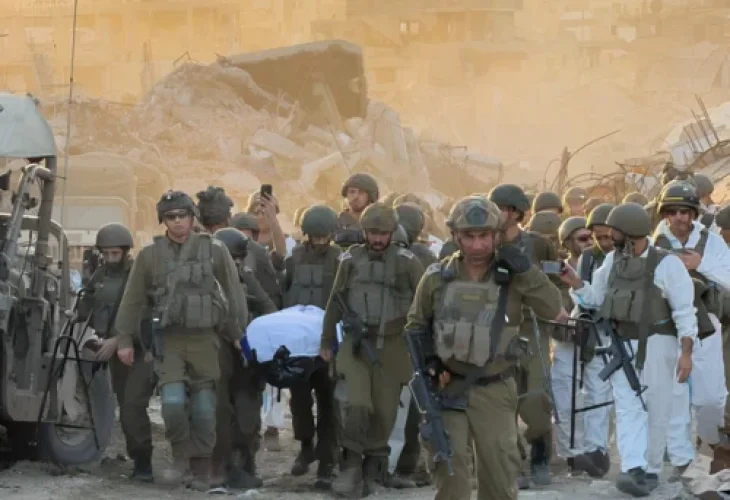 The Return Of Ran Gvili's Body To Israel January 27 2026
“The body of Ran Gavili has been identified.”
“There are no more hostages in Gaza.”
Last week, Israel and the collective Jewish world finally exhaled fully for what felt like the first time since October 7, 2023. I imagine this is what my grandparents’ generation feels about the assasination of JFK: Everyone will remember where they were when they heard the news. Personally, I was working, caught up in a project, when I saw the stunning headlines, and I will admit, my project was put on hold while I suddenly found myself glued to the unfolding events.
And I felt such a flurry of emotions. There was, of course, the overwhelming relief—and joy—that after 843 days, Ran was finally coming home. There was the disbelief that it’s been nearly twelve years since an Israeli was last held in Gaza, but at long last, we can finally say that there are no more Israelis held hostage in Gaza. (It still gives me chills.) There was the grief for all of the people we lost, whether on October 7 or in the ensuing two-plus years. There was the immense pride in our soldiers who have been rotating in and out of Gaza since November 2023, and the personal pride in my husband and his unit who were there just two weeks ago, literally laying the groundwork for Operation Brave Heart (as was called the operation which brought Ran back).
I also couldn’t help but think about the Yassar unit, and specifically the southern division. This unit, which falls under the army rabbinate, does the unfathomable job of making sure that any soldier who falls in battle comes home. The only word to accurately describe the work that they do is holy. They work in the most dangerous of places and under the most harrowing of circumstances, and that’s without considering that they were at the site of the Nova festival and all around the Gaza envelope on October 7 and in the immediate weeks afterwards.
My husband and I have a close friend who is a commander in the southern Yassar unit. He spent the better part of the last two years away from his family, focused instead on his work on behalf of the greater Jewish people. Last week, as I watched the Israeli-flag-draped body of Ran Gavili being escorted home, I had flashbacks to the conversations I had with this friend in October and November of 2023. These were the kinds of conversations where, when we’d hang up, I’d be crying, and I knew that I couldn’t imagine half of what he was going through.
The Lesson of the Almond Trees
I think of this friend, and of his entire unit, and of the work that they did that made it possible to say, “There are no more Israelis held in Gaza.” I think, too, of the timing of events. This week marks Tu B’Shvat, the fifteenth day of the Jewish month of Shvat, which is the new year for the trees. Practically speaking, that has ramifications for how we calculate the various tithes that are to be taken from produce each year. The day, however, has come to symbolize much more than that.
It’s around this time of year that the first of the almond trees begin to blossom. You may, in fact, be familiar with the Israeli song, The almond tree is blossoming, the sun is already shining. It’s not hardly the end of winter, yet it feels like the beginning of spring. The pink and white flowers begin to dot the landscape and there’s new life breathed into the air itself. And it’s not as though winter in Israel is the same barren wasteland that this Northeastern girl grew up with—the Israeli winter is lush and verdant. Yet, there’s something about these flowers, these signs of new life, these hints of a new season, that when they begin to bloom, there’s joy, wonder, and hope that bloom along with them. And you hear it, if you’re out in nature: everyone pointing to the almond trees and exclaiming, “Look! They’re starting to bloom!”
Winter is not quite over. It’s only the first week of February. Similarly, this war is not quite over. We still have soldiers in Gaza, in Lebanon, and in Syria, and who knows what might be with Iran. But Ran Gavili is home. Because even in the darkest days of this tragic war, there was a group of soldiers who went above and beyond in ensuring that no matter what comes, no matter how hard the winter may be, at the end of it all, the almond trees will once again blossom, bringing with those beautiful flowers the promise of a better tomorrow.

