

Magazine
Ben Ben Baruch: Faith, Comedy, and the Power of Clean Humor
How one of Israel’s leading stand-up comedians uses belief, joy, and purpose to inspire millions
- Chaim Gefen
- | Updated
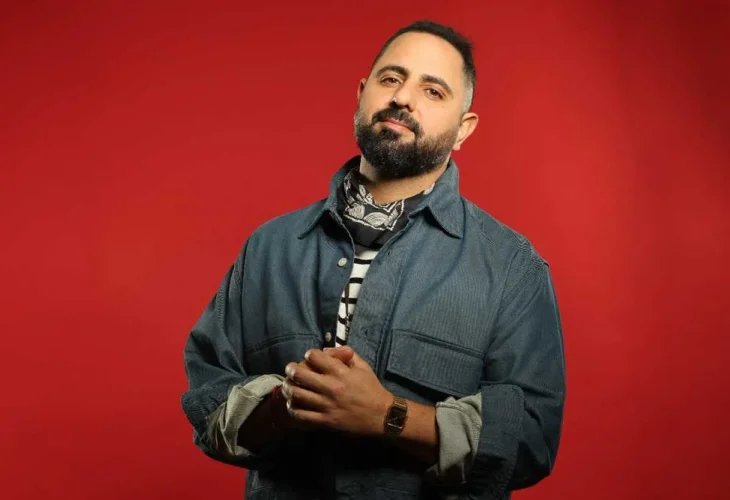 Ben Ben Baruch (Photo: Kfir Ziv)
"This is a privilege," Ben Ben Baruch laughs at the start of the interview. "To be the person who walks down the street and everyone recognizes him and smiles. It’s really not something I take for granted, to be on this side of the universe."
What truly distinguishes Ben Ben Baruch, one of Israel's leading comedians, is his profound faith in God. He sells out performances, has millions of social media followers, but he understands one thing: "It's not me, it's Him."
"Money Doesn’t Interest Me"
We are talking with Ben Ben Baruch in the middle of a nationwide tour. He’s also hosting the popular "Mojo" podcast, which has achieved exceptionally high listenership statistics. "I feel this is my mission in the world," he notes.
Do you truly understand why God brought you into this world?
"It's a very deep question. The Baal HaTanya writes that every soul has a purpose in the world, and there is no soul without a goal – but not everyone is lucky enough to understand their purpose. I am fortunate to have understood that I am here to spread light and joy. To bring unity and bring hearts closer, both within our people and even to the nations of the world. I know this is the mission that God gave me."
Becoming a stand-up comedian is not exactly the most conventional career choice. Let’s go back to the moment of decision.
"The truth is, I was actually a businessman. I had a big company with dozens of employees. I provided financial services and had non-stop business meetings with senior officials in the Israeli economy. One time, we signed a major deal. I remember my partner getting excited and starting to calculate how much money would be coming into the account, but all I could think about was a small show I had performed the night before. I earned almost nothing from it, but my mind was fully there."
"In that moment, I realized that money doesn't interest me as much as the energy I experienced. The fact that I was about to sign a deal with a great sum of money, but the show I did – where I hardly made anything – was what occupied my mind. I understood that my heart was in the performances. Not in the company I built, not in the investments I developed, but in the energy I felt during shows. That was the moment I decided to leave everything behind and pursue stand-up comedy."
Were you surprised by your success?
"Yes. And even more so, I’m surprised every day. I never tell myself, 'Okay, this is who you are, now get used to it.' Every day I’m surprised again, and I always strive to keep improving."
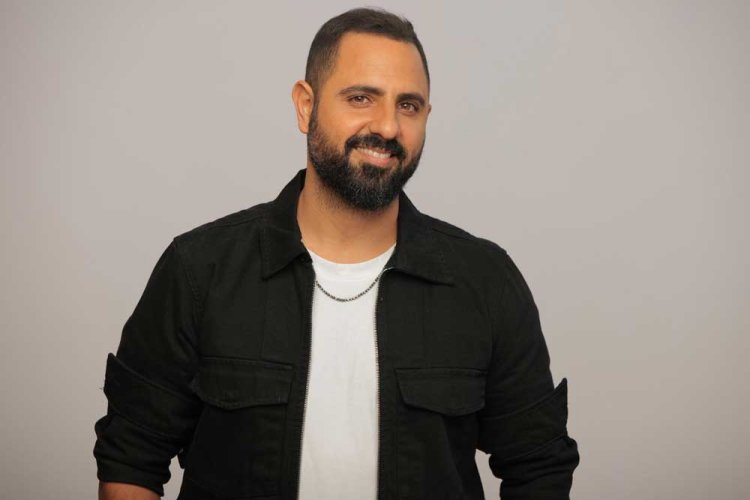 (Photo: Ran Yechezkel)
In your performances, you often talk about God. That’s not the most common theme in the stand-up world.
"Stand-up comes from a place of truth. That’s the foundation. You write your performance from the heart – about what makes you laugh, about what hurts you – and faith is an inseparable part of my life. It’s who I am. I keep Shabbat and the commandments at the highest level, so naturally, I talk about it in my shows."
You also maintain a clean language and avoid coarse words – which is quite rare in stand-up. How do you manage to walk that fine line?
"In stand-up, there’s the verbal part and the linguistic part," he explains. "In the verbal part, you tell a story that throws the listener into situations in their own life. In the linguistic part, you use language that enhances the story as much as possible. The coarser the words, the more they amplify the story. These words have a different energy, and sometimes you need to use them to convey that emotion to the audience. My challenge is to convey the emotion while keeping the language clean and modest. That’s what challenges me. Not to bring up topics that should remain silent, not to curse, but still manage to convey my feelings. Sometimes a daily curse word like 'idiot' slips out, it happens. I didn’t grow up in Mea Shearim. I’m from Bat Yam," he laughs.
If it’s so challenging, don’t you sometimes feel like giving in and doing a crude performance without worrying about the words?
"No, because I don’t speak like that in my daily life. It’s not that I restrict myself from cursing. It’s simply not who I am. For example, in my home, it’s forbidden for my daughters to say 'stupid' to each other. I train them to keep their language clean. Like in any home, they argue sometimes, but I instill in them the belief that words create worlds, and that’s why they should be as pure as possible. So, writing a clean show isn’t really hard for me. It’s challenging, but not to the point of breaking."
 (Photo: Ran Yechezkel)
Unlike a singer who can rely on the orchestra if they suddenly get stuck, a stand-up comedian is alone in front of the audience. Doesn’t that scare you?
"I’ve faced jokes that didn’t work more than once, but it’s not the end of the world. The rule is not to panic, and think about how to get out of such a situation gracefully. Compared to a singer, in those situations, I am my own orchestra," he winks.
"They Hug Me on the Street"
Three years ago, Ben Ben Baruch created the Mojo podcast, which has now become one of the most popular podcasts in Israel, with dozens of episodes and high listening statistics. However, the beginning wasn’t easy. "It took me three years to set up the studio," he shares. "But I didn’t stop, and I didn’t rest until I started the first episode. I was persistent and determined not to give up, and its success is truly divine help."
You’re a successful stand-up comedian. What made you start a podcast?
"I felt like I had more to give, more than what the stage allows me in an hour and a half of performance," he shares. "Performances are a platform to deliver funny messages, but I have other messages I want to share with the world. The podcast platform is perfect for that. When I found out there was a platform that is 100% under your control, where you can say whatever you want and however you want – that enchanted me."
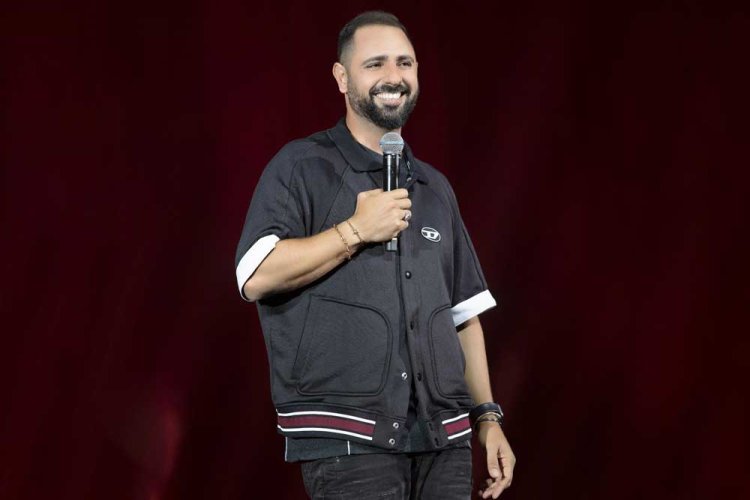 (Photo:Ofer Chen)
You also give a platform to rabbis and Torah speakers.
"Of course, and it’s a great privilege for me. In stand-up, I write jokes about my personal life, but in the podcast, I want to share my life insights, many of which come from Torah. In a podcast, you’re the one who chooses what to share – you can share good messages or not-so-good ones. Bringing rabbis means bringing good messages."
Ben Baruch has hosted, among others, Rabbi Yitzhak Fanger, Rabbi Yigal Cohen, and recently, Rabbi Ayal Amrami. "I fulfilled a dream of sitting with him one-on-one for three hours. That was the highlight of my podcast experience. During the coronavirus, Rabbi Amrami saved me – I was depressed, and his lectures lifted me from the depths. It was a privilege to express my gratitude."
What have been the most surprising responses you've received about the podcast?
"People hug me on the street and say, 'I feel like I know you from kindergarten because I’m so connected to you.' This podcast speaks to them."
To conclude, do you agree with the myth that stand-up comedians are always happy?
"It’s actually the opposite," he suddenly stops. "The myth is that stand-up comedians are the loneliest and saddest, and I really relate to that. I’m more worried during the day than happy, and it’s mainly because of the weight of this job as a stand-up comedian. I’m grateful for the privilege, but it’s quite a journey I’m going through. It’s a challenging job."
And when you’re sad – what comforts you?
"When I’m sad, I feel closer to God. It’s that closeness that comforts and strengthens me. In such times, I go to seclude myself, talk to the Creator. I pray always, but on sad days, I make sure to join minyanim. On such days, I pray more, learn more, because spirituality is what lifts my soul."
"Sometimes, a person forgets the main thing and gets caught up in the secondary. We get sucked into the daily race, but happiness is right under our noses. Anyone who seeks comfort, anyone looking for the secret to lifting sadness – in the end, they return home to holiness. I try never to forget the purpose for which I came here, and to connect as much as possible with the Creator."

