

Magazine
Beyond the Final Whistle: Guy Haimov’s Turning Point
When a sudden injury brought his football career to a halt, Guy Haimov was forced to confront fear, faith, and the limits of control. A powerful story of resilience, healing, and a life reshaped beyond the game.
- Moriah Luz
- | Updated
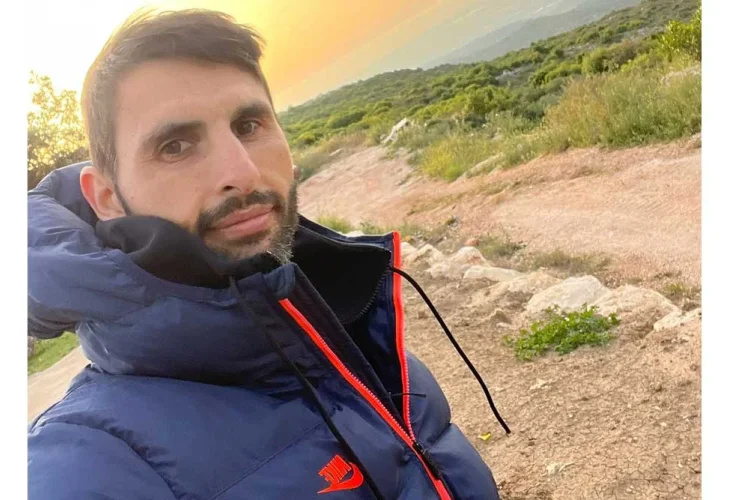 Guy Haimov
For nearly three decades, Guy Haimov was a well known professional football player who never imagined stopping. Football was not only his profession, but his identity. The event that forced him to pause and reexamine his life arrived without warning.
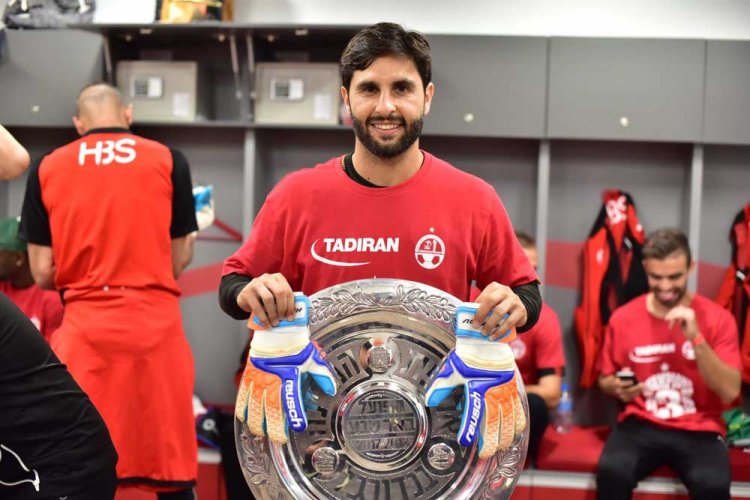 After the victory
In the midst of a tense match, before a crowd of roughly thirty thousand spectators, a ball struck him forcefully in the head. Haimov collapsed on the field. Paramedics diagnosed a concussion and insisted he go to a medical facility, but he refused. After a short recovery on the sidelines, he returned to the game.
Fifteen minutes later, another player accidentally delivered a powerful blow to his head. The pain was unbearable. The medics immediately understood that something highly unusual had occurred. Haimov had suffered two concussions within minutes. This time, there was no choice. He was evacuated on a stretcher and taken to the hospital.
“When I was taken off the field, I wasn’t fully coherent,” Haimov recalls in an interview with Hidabroot. “I remember feeling crushed. I kept thinking, what are the odds of getting two concussions in half an hour? That just doesn’t happen. At the time, I didn’t realize something much bigger was unfolding.”
A Life Built on the Field
At thirty nine, Haimov was married and a father of three. Football had been his second home since childhood. “I started playing at six,” he says. “I played for Maccabi Tel Aviv, Maccabi Haifa, Hapoel Be’er Sheva, Ironi Kiryat Shmona, Larnaca in Cyprus, and the Israel national team.”
At thirteen, he was selected for Israel’s youth national team. “Out of thousands of children, suddenly you are number one. We won a tournament and overnight you carry a ‘ticket’ on your back. Those experiences shaped me, but they also brought tremendous pressure.”
That pressure never disappeared. “You are constantly expected to deliver results. Win more titles. Maintain your achievements. It never ends. Like any profession, you are measured by performance, and the stress follows you everywhere.”
Faith Along the Way
Haimov describes a faith that fluctuated over the years. Around his Bar Mitzvah, he felt a brief strengthening, which later faded. At eighteen, something reignited. When he married at twenty four, that connection deepened again, even as he continued playing on Shabbat.
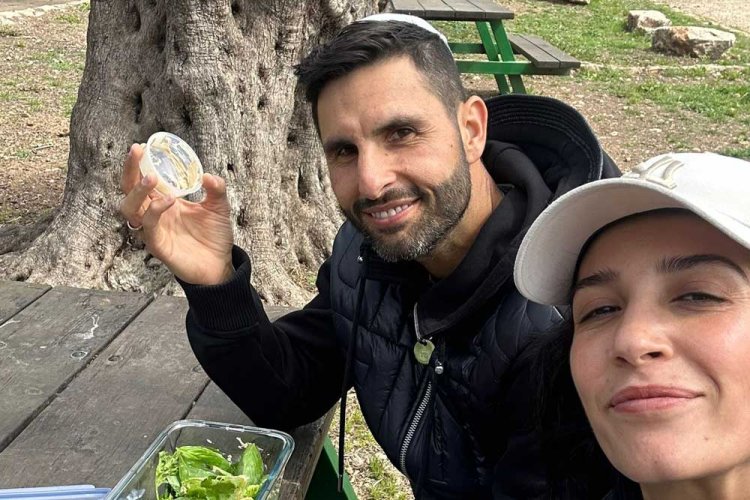 Guy and his wife, Cindy
A major turning point came when he was twenty seven, shortly before the birth of his second daughter. During a routine prenatal checkup, doctors discovered an enlarged brain chamber. What should have measured ten millimeters had grown to fifteen, and later to twenty two.
The medical outlook was terrifying. Doctors spoke of severe disability and even suggested termination, despite the advanced stage of the pregnancy. Haimov consulted two rabbis he trusted. Both advised against it. Still, the fear was overwhelming.
A Test of Trust
“My wife told me clearly,” he says, “I am not terminating this pregnancy. I trust Hashem that nothing is wrong.” Her certainty tipped the balance.
The baby was born via cesarean section and did not cry. She was rushed for testing. Doctors discovered a cyst in the brain chamber. After months of monitoring, it disappeared completely.
“Baruch Hashem, today she is healthy. She is twelve and has celebrated her Bat Mitzvah.”
The experience shook him deeply. “I asked myself how I could even consider terminating a child. I told Hashem that whatever she had should come upon me instead. I wanted her whole.”
That period strengthened his observance, but also left him with unresolved guilt. “I still hadn’t fully learned the lesson.”
The Tumor Revealed
Years later came the match that changed everything. Following the concussions, doctors ordered an MRI. Alongside the expected findings, they noticed something unrelated. A small tumor, no larger than a pea, described as a modular process.
At first, it did not alarm them. He was told to return for a follow up in six months.
When he did, the tumor had grown significantly. It was located inside the spinal cord.
“I immediately understood there was precise divine supervision,” Haimov says. He retired from football and entered a medical journey that would last nearly three years.
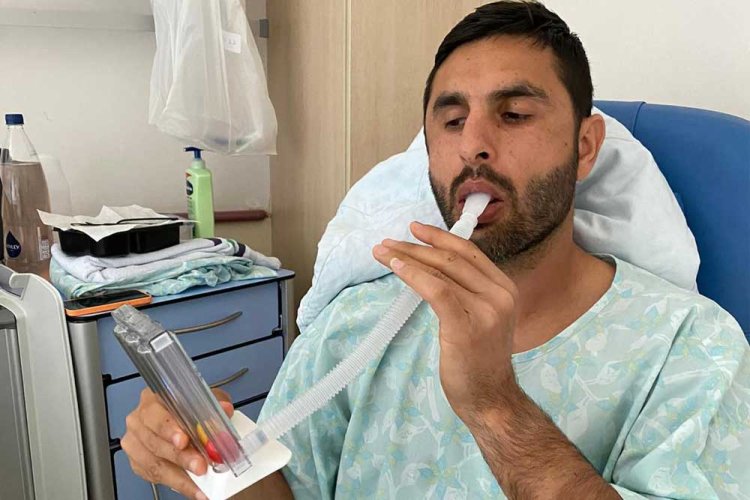 Guy in hospital
“You Might Not Walk Again”
The most difficult conversation came on the second night of Chanukah. Two hours before his entire family was due to arrive for candle lighting, he met with a senior specialist in Tel Aviv.
“He looked at the scans and said, ‘We’ve reached the point of no return.’ He explained the surgery would be long and complex, and then he added, ‘There’s a chance you won’t walk again.’”
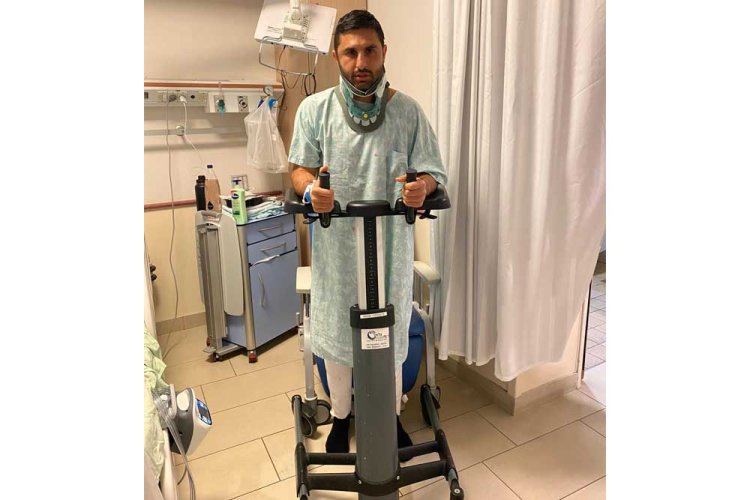 After the first surgery, with almost no sensation in his legs
Haimov returned home, welcomed his guests, lit candles, and smiled. After they left, he stood in the shower for an hour, alone.
Two months later, surgeons removed eighty percent of the tumor. The remainder was left to avoid catastrophic damage.
“When my wife told me twenty percent remained, I immediately said, ‘I know why. It’s to strengthen my faith.’”
Learning Gratitude
Recovery was slow and painful. Walking felt unstable. Balance was uncertain. Then came the recommendation for radiation.
He fell into depression and refused. Fearing irreversible damage, he sought alternative healing. He changed his diet, fasted, isolated himself in the north, prayed, and studied Tanya.
When the next MRI arrived, the tumor was unchanged.
“I felt anger toward Hashem. I asked Him what more I was supposed to do.”
The next morning, he saw a sentence that changed everything: Remember what you once prayed for, and what you already have.
“I realized how ungrateful I had been. I had everything. A family, health, livelihood, faith. Why focus on one dark spot?”
He thanked Hashem for everything, including the tumor.
Closing the Circle
Eventually, after repeated recommendations, he agreed to meet a neurosurgeon. When he entered the office, he recognized the name. This was the same doctor who had once been expected to operate on his daughter if her condition had worsened.
“I understood then that circles were closing, and that words matter.”
In August 2023, he underwent surgery. The tumor was completely removed.
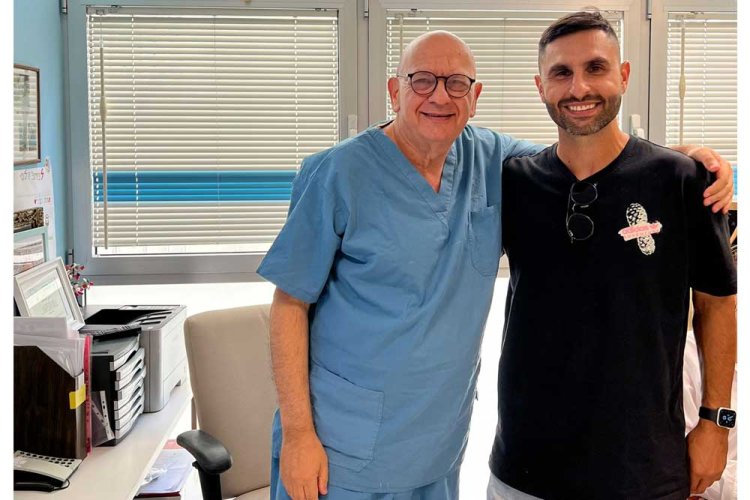 With Professor Konstantini, who performed his surgery
A New Life
Today, Haimov no longer plays professionally. Instead, he works with athletes on mental resilience and delivers lectures on stress, faith, and balance. He speaks to youth about adolescence, pressure, and meaning.
“My life is calmer now,” he says. “I pray, I learn Torah, I live more precisely. I no longer fight what is beyond my control.”
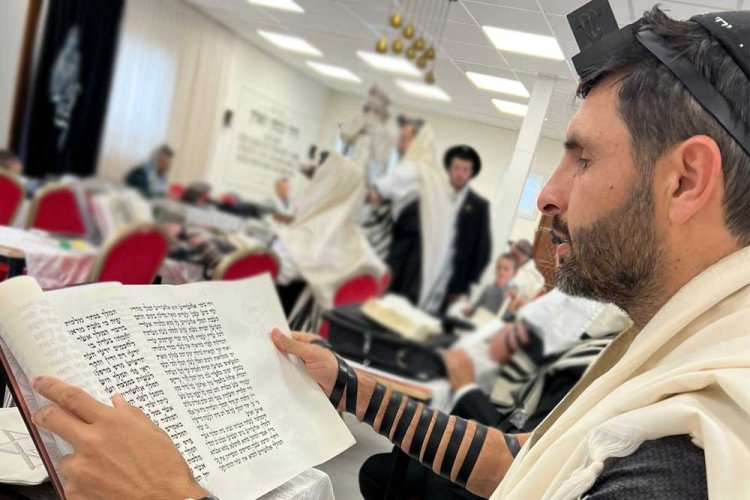 At the synagogue
He pauses, then adds quietly, “You do your part and leave space for Hashem. If it’s yours, it’s yours. And if not, it was never meant to be.”

