

Israel News
Iran Limits Oman Talks With U.S. to Nuclear Issue and Sanctions Relief
Iranian state media confirm Friday’s indirect negotiations in Muscat will exclude missiles and proxy forces, reinforcing Israeli fears of a nuclear-only framework
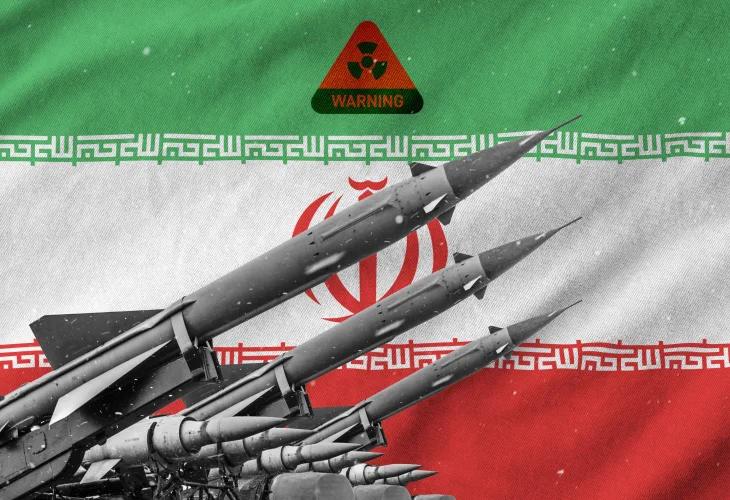 Iran missilies (Shutterstock)
Iran has formally narrowed the scope of upcoming indirect negotiations with the United States, saying talks scheduled for Friday in Muscat, Oman, will focus solely on the nuclear issue and the removal of sanctions, according to Iranian state media.
The clarification, reported by Tasnim, an Iranian state-aligned news agency, confirms that Iran intends to exclude discussions on its ballistic missile program and regional proxy activity as talks open, a limitation that Israeli officials have warned would leave Tehran’s broader military capabilities untouched.
According to the report, Iranian Foreign Minister Abbas Araqchi and U.S. President Donald Trump’s special envoy, Steve Witkoff, are expected to attend the talks in Oman. The negotiations will be held indirectly and are set to begin on Friday.
Iranian officials framed the scope restriction as deliberate and non-negotiable. On Monday, Iranian Foreign Ministry spokesman Esmaeil Baqaei said Tehran was carefully reviewing the structure of potential negotiations with Washington, stressing that sanctions relief remains Iran’s central objective.
Baqaei emphasized that the lifting of sanctions is a core priority for Tehran, portraying the nuclear issue as a tool long used to justify international pressure on Iran. In exchange for what he described as confidence-building measures regarding the peaceful nature of Iran’s nuclear program, Baqaei said Iran’s primary demand is the removal of what it calls unjust sanctions.
The statements reflect a broader Iranian effort to lock talks into a narrowly defined channel focused on uranium enrichment and economic relief, while keeping other aspects of Iran’s military posture off the table. Iranian officials have repeatedly insisted that issues such as missile development and support for regional proxy groups fall outside the scope of any negotiations with the United States.
In Israel, Israeli officials have warned that a nuclear-only framework would sharply constrain diplomatic leverage while leaving intact what they describe as Iran’s most immediate threats, including its growing missile arsenal and network of armed proxies across the Middle East. Israeli leaders have argued that any agreement addressing Iran’s nuclear program must also confront these additional capabilities.
Israeli officials have sought to reinforce U.S. red lines ahead of the negotiations, warning that limiting talks to the nuclear file alone could restrict future military options without producing a comprehensive solution to Iran’s regional posture. Washington, for its part, has acknowledged the difficulties posed by Iran’s demands but has said it is entering talks with clear expectations.
Friday’s meeting in Muscat is now expected to clarify whether Iran succeeds in formally confining diplomacy to nuclear issues and sanctions relief, or whether the United States attempts to press for a broader agenda despite Iran’s public stance. The outcome is likely to shape the trajectory of U.S.-Iran engagement in the weeks ahead, with Israel watching closely for signs that key security concerns will remain unaddressed.

