

Magazine
From the City to the Soil: How One Man is Connecting Communities with Nature
What began as a personal awareness of a growing disconnect became a nationwide initiative. The story of how Avishai Himelprab is bringing nature, Torah, and community back into conversation.
- Michal Arieli
- | Updated
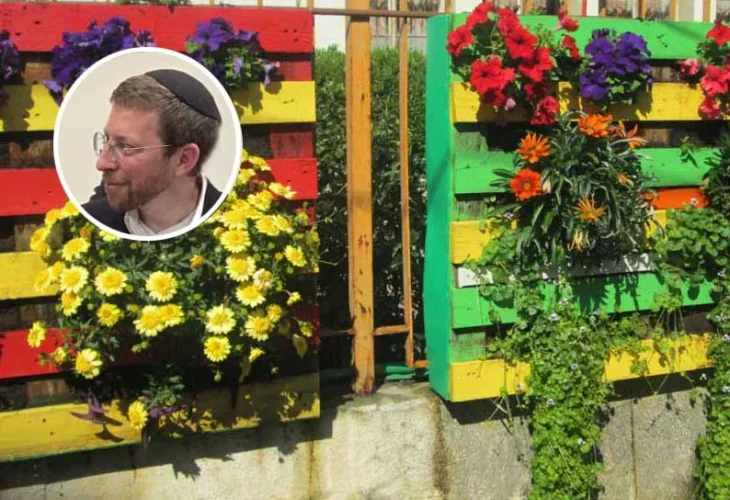 In the circle: Avishi Himelprab (Credit: Leshamra Association)
What does the word hantah mean to you? What are the laws of kilayim, and how does one turn a hadas into a hadas meshulash? This is not a trivia quiz for Tu BiShvat. These are the kinds of questions posed by Avishai Himelprab, founder of the organization Leshamra, who concluded more than eleven years ago that the Haredi community was insufficiently connected to, and knowledgeable about, the natural world.
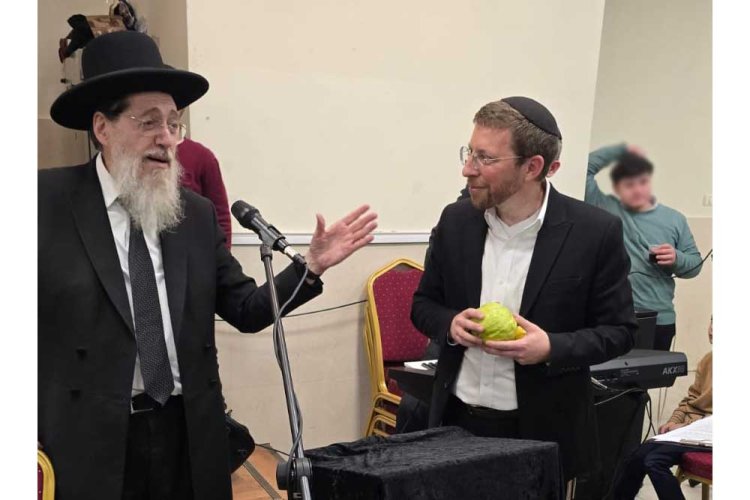 Avishai with Rabbi Kook, Tu BiShvat 5785 (Credit: Leshamra)
“I personally made a journey from the religious Zionist world to the Haredi world,” he explains, “and perhaps that is why I was able to notice things that those who grew up on the inside did not. I saw that the Haredi sector invests deeply and shows impressive expertise in many areas of halachah, but when it comes to nature, people are simply not exposed.”
He stresses that this gap is not limited to technical knowledge of agricultural laws. “It is an overall approach to nature. People feel that growing plants or understanding agriculture is complicated, so they avoid it altogether. This lack exists in all sectors, but when it comes to commandments tied to the Land of Israel, which hold such spiritual weight in the Torah, the absence of knowledge is far more striking.”
A Child of Nature
Himelprab did not grow up on a moshav or in a rural village. “I grew up in the Har Nof neighborhood of Jerusalem,” he says, almost apologetically. “But the connection to nature was always there. I was a child of nature.”
As a boy, he regularly passed through the Jerusalem Forest on his way home from school. After marrying, he became an agriculture teacher and led nature based educational programs for children. Still, he felt there was much more to be done.
“Both my parents and my parents in law lived on moshavim,” he adds. “My father in law, Rabbi Eliav Meir, served as the rabbi of the moshav Gimzo. From them, I absorbed a great deal of practical and halachic knowledge related to the commandments of the land.”
Discovering a Deep Need
Two shmitot ago, Himelprab decided to take that knowledge further. “I spread word that I was offering tours following the shmittah cycle in Gimzo,” he recalls. “I gathered a small team of guides, and without any advertising, nearly seven thousand children arrived within six months.”
That moment was a turning point. “I realized that the lack I felt was not mine alone. It was a collective need, something crying out from the ground itself. The Torah’s view of nature is not limited to agricultural laws. It includes values such as preserving creation and bal tashchit. These are foundations of spiritual life.”
Out of that realization, the Leshamra association was founded. Today, the organization works with approximately twenty five Haredi municipalities or areas with large Haredi populations. It conducts more than three hundred nature classes each week and collaborates with government ministries, the Jewish National Fund, and additional national organizations.
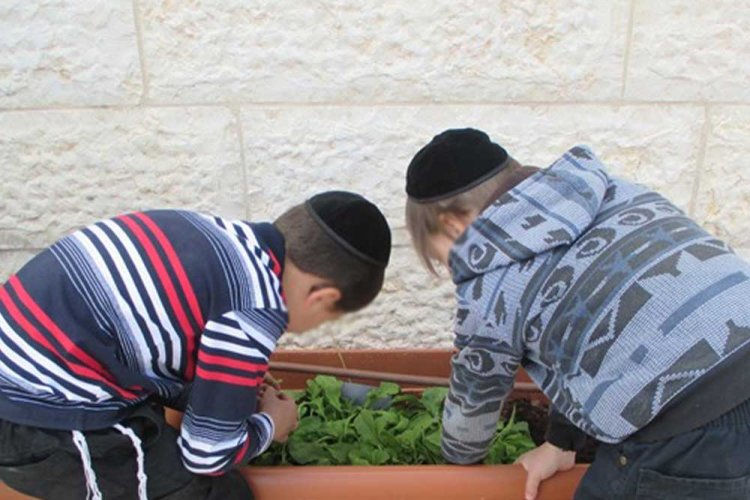 (Credit: Leshamra)
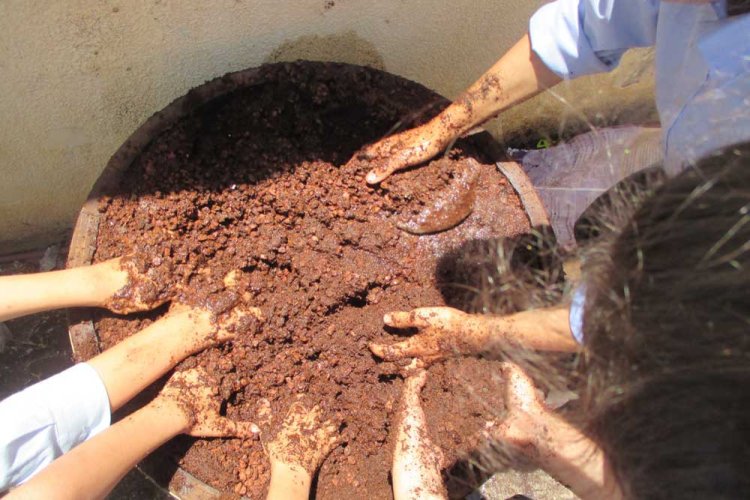
Asked where the instructors come from, Himelprab smiles. “Today this is no longer a question. We have graduates from our own programs who integrate naturally into the system. We also offer professional training, including therapeutic gardening, guiding courses for men and women, and more.”
 (Credit: Leshamra)
Standing with the Farmers
The organization’s work expanded significantly during the war, a period that brought a severe crisis to Israeli agriculture and also left many girls’ schools unable to conduct trips.
“We decided to connect the two challenges,” Himelprab explains. “Over the course of the war years, we sent nearly ten thousand seminar girls to help farmers in the fields.”
Great care was taken to ensure spiritual compatibility between the volunteers and the farmers. “It required a lot of coordination,” he admits, “but it was essential.”
 (Credit: Leshamra)
In one case, he learned of a farmer who had begun bringing volunteers on Shabbat due to labor shortages. “I told him honestly, ‘I will send you three hundred volunteers every day, on the condition that Shabbat is kept on the farm.’ He agreed, and everyone gained from it.”
Another story involved a veteran farmer who had observed shmittah faithfully for seven consecutive cycles but could no longer afford to harvest his grapes. During the summer bein hazmanim, Himelprab offered families the opportunity to come harvest independently, with a supervised station for separating tithes.
“To my complete surprise, dozens of families arrived every day,” he says. “For two full weeks, people harvested what the farmer could not afford to collect. The turnout was so large that traffic jams formed in Gimzo, something the area had never experienced.”
The initiative soon expanded to additional farmers, including mango and peach growers in the Upper Galilee. “It showed me how close these mitzvot are to people’s hearts. They are not distant concepts. They are within reach.”
Bringing Nature Back
Himelprab sees the expansion of knowledge as his ongoing mission. Leshamra runs courses year round for children, teenagers, and adults.
 (Credit: Leshamra)
“Something unprecedented is happening,” he says with excitement. “Major seminaries now offer our courses, and demand is high. Some graduates work with us, others open independent programs. The community needs as many educators in this field as possible.”
He notes a growing interest among therapists who incorporate therapeutic gardening into holistic treatment. “Nature has an incredible ability to calm, balance, and awaken emotion. It improves learning environments and restores something deeply human.”
When asked whether awareness is truly increasing, his answer is firm. “Without a doubt. People are searching for a connection with creation. Those who live in nature find it easy to say each morning, ‘How great are Your works, Hashem.’ Those who live in dense urban spaces sometimes say, ‘How great are Your works, architect.’ There is a spiritual hunger here, and this is where we step in, with love, passion, and action.”

