

Magazine
Tomer Zimmerman’s Journey: From Tennis Pro to Musician and Spiritual Growth
The inspiring story of Tomer Zimmerman, a former top tennis player who turned to music and Judaism, overcoming personal challenges, finding faith, and sharing his experiences through songs of gratitude and healing
- Michal Arieli
- | Updated
 In the circle: Tomer Zimmerman. (Credit: Reuven Hayun)
"Tennis was my whole world," says Tomer Zimmerman, former one of the top 300 tennis players in the world. "When I was nine, I started playing for the first time, and since then, tennis filled my whole life. If you had told me that one day I would stop playing tennis, and even wish that my children wouldn’t play – I would have thought that was crazy."
But reality surprised him, like many other things that have surprised him in his life. Now, after years of becoming closer to Judaism, with tennis now feeling like a distant past, he shares his moving story – a story of love, teshuvah (returning to Judaism), and closeness.
A World-Class Player
"When I was nine, I discovered tennis for the first time, and it happened almost by accident," Zimmerman takes us many years back. "At that time, a few wealthy people from South Africa came to the country and decided to establish a massive tennis center, investing tens of millions of dollars. Until then, tennis was an unknown sport in Israel, and because they wanted to introduce it to the country and make it accessible specifically to children from less privileged socio-economic backgrounds, I was one of those chosen to play."
"At first, tennis was part of that social project," he notes, "but very quickly it became something professional. I was talented in the field and trained a lot, which led me to join the Israeli national team and practice daily for five to six hours."
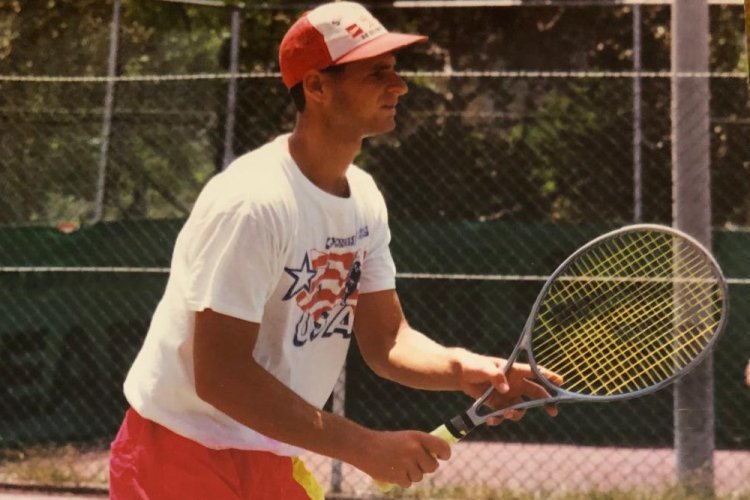 Tomer Zimmerman in his youth
Even during his army service, Zimmerman was considered an outstanding athlete, and after completing his military service, he continued to play. "At the age of 22, I flew to the U.S. to study at colleges, and as an athlete, I received full funding for all my studies, while also playing in the league. I returned to Israel at 27, with tennis still being a part of me. But I understood that I had to do other things too, and that’s how I entered the world of investments, got married, and had children."
A Life-Changing Moment
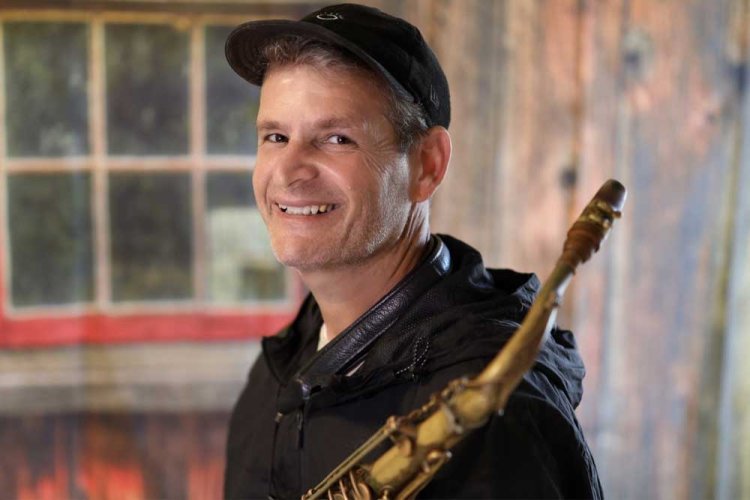
When he was 33, something interesting happened. "One day, I took my daughter to kindergarten, and on the way, we encountered a street performer playing the saxophone. We stopped next to him and watched him play. Suddenly, I felt something connect with me, and it penetrated my soul. I continued to stand there, watching him, and after a few long minutes, I asked him if he could come to my house to teach me how to play."
Zimmerman stops and adds with a smile: "When I think about it now, I realize how strange that request was, and the truth is, I’m not sure what drove me to ask it. But the musician responded positively, and later that same day, he came to my house. He was a recent immigrant and barely spoke Hebrew, but to teach me the basics of playing, it was enough."
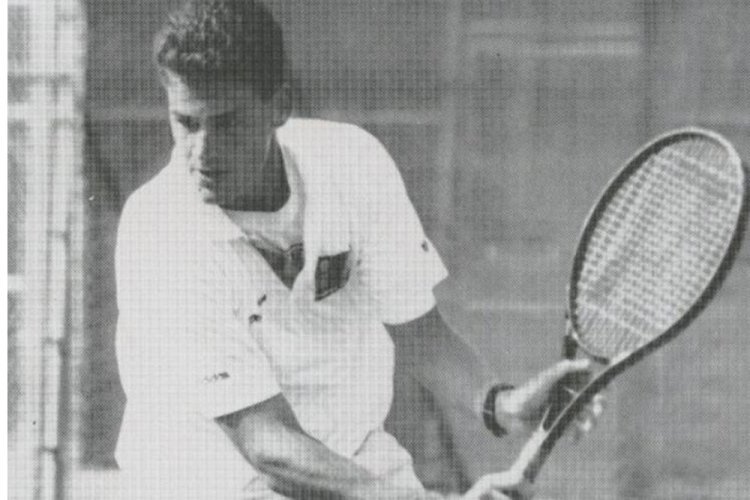 Playing tennis in his youth
A New Passion: Music
Since that day, Zimmerman threw himself into the task. "I was fascinated by the instrument," he says. "I began dedicating hours every day to practice and developing my skill. I applied the same perseverance I had in tennis training. But unlike tennis, which was a tough and harsh world for me, where my parents were my true partners, music revealed itself to me as something that connects people and brings hearts closer. I discovered good friends who were also into music, and together we would meet and play, share with each other, and even produce joint albums."
"As time passed, I also started writing and composing songs. All this while, by the age of 33, I hadn’t known I had any musical talent, and I didn’t even know the names of the notes."
The First Album and a Path to Judaism
About 15 years ago, Zimmerman fulfilled his dream when he released his first album, and at the same time, he began to explore his path to Judaism. "The involvement in music opened something in my heart," he explains. "Although I come from a non-religious home, and my close family is still not religious, something in my heart started to connect, and the bond I always had with Judaism grew stronger."
But just then, when he felt he had reached the peak of happiness and fulfillment, Zimmerman faced a serious illness. "At that time, I had to undergo very harsh treatments," he shares. "They lasted three months – six hours a day. The shock and physical pain were immense, and I felt I needed something strong to hold onto. During that time, a book of Tehillim came into my hands, and for the first time in my life, I started reading the chapters. I read one chapter after another, and I felt how I was connecting to the words. There was something in them that fascinated me, something that seemingly disconnected me from my body. Today, I can say that it was only thanks to the Tehillim that I got through that difficult and traumatic period."
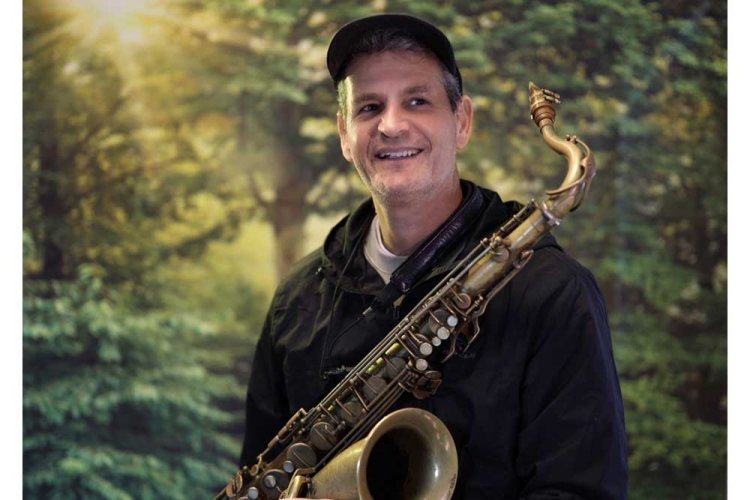 "I was fascinated by the instrument" (Tomer Zimmerman. Photo: Reuven Hayon)
Is that how you became closer to Judaism?
"No, at that time, it remained just reading Tehillim, and nothing more. But later, one of my friends who loved music invited me to a Rosh Chodesh prayer at the synagogue, and he convinced me: 'There will be good songs and tunes.' When I hear about music, it’s hard for me to refuse, so I was immediately persuaded, went, and was really fascinated. Afterward, I asked him: 'Are there other times when people sing so beautifully at the synagogue?' He answered: 'Of course, for example, on Shabbat.' So I started going to the synagogue every Shabbat. Naturally, the Shabbats started to look different to me, which led me to start keeping Shabbat, and later to go to the synagogue on weekdays too, and get closer to Judaism in other areas."
 "Until I was 33 I didn't even know the names of the notes" (Illustration)
Was it difficult for you to leave everything and connect to something new?
"No, it wasn’t hard for me, because I didn’t disconnect or abandon my past. I stayed with the same circle of friends, and I still love tennis and music. I see the change I’ve undergone as a tool to help me be an ambassador in my old world and set a good example in it, not as someone who disconnects from it, including from my immediate family who aren’t exactly following my path, but I respect and appreciate them greatly."
"I never look at the world I came from as bad, and I have no criticism of anyone. I just try to show everyone the joy and fulfillment I have thanks to the place I’m in, and I’m sure that has more impact than anything. When I want to bring people closer, I simply embrace, through personal example and with the firm belief that my path is the right one."
 "I have no criticism of anyone" (Photo: Reuven Hayon)
An Anchor of Faith
The conversation with Zimmerman unfolds smoothly. It’s not just his music that resonates, but also his voice during the conversation.
"I wasn’t always a calm person," he says honestly. "I remember myself as a tennis player constantly tense, but something about music has made me more peaceful. Also, the belief that there’s someone greater who manages my life calms me and helps me live with faith and confidence. That’s also why, when after a long period of treatments and recovery, they told me the illness had returned, and I saw all my loved ones going through trauma, I started dancing. On the outside, it seemed like I had lost my mind. But I had an inner voice that calmed me and promised that 'everything would be okay,' and thank God, it really was."
"Even in the two additional times I got sick, I had to undergo difficult treatments, and the greatest difficulty was the sense of helplessness, when even the most basic things a person does when waking up in the morning, I suddenly couldn’t do. But then I discovered the words of prayer, and suddenly I understood that we have an opportunity every morning to thank for those seemingly simple things – for washing hands, for getting dressed, for everything. That connected me even more."
"Of course, there have always been difficulties," he agrees, "but once you have an anchor to hold onto, it gives you a lot. During the recovery from the illness, I felt a long and ongoing process of closeness to God, but I didn’t experience it from difficulty, rather from love and deep connection. That’s also why I feel so connected to Hashem, and although the illness returned twice since, it doesn’t weaken me, because I have the tools to get through it."
“Dad Is Watching Over Me”
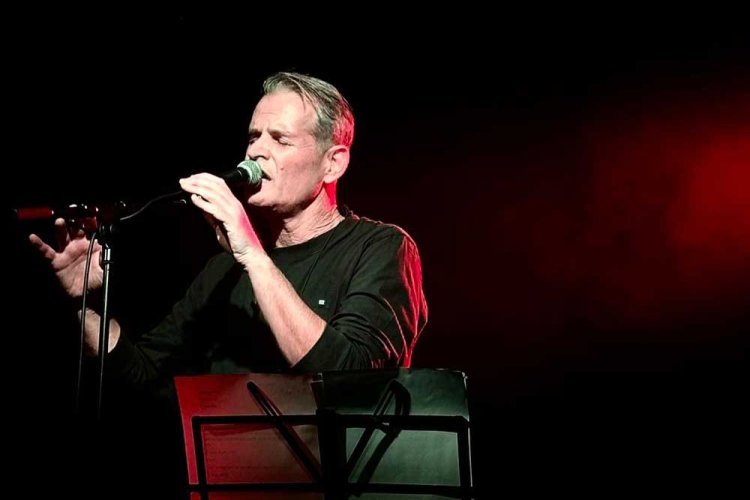
Zimmerman’s growing connection has affected many areas of his life, including his music. "If in the past I wrote about general topics, today I write and compose songs that incorporate verses from Tehillim, as well as songs of gratitude to Hashem. In general, I incorporate Hashem into my songs. Recently, for example, when I wrote the song ‘Umka D’Liba’ – a song of thanks to my wife for all the long time she supported me – I also included thanks to Hashem, because everything fits together, and there’s no other way."
 The proceeds always benefit any non-profit organization" (Credit: Segev Zimmerman)
And what about tennis?
"Tennis?" he smiles. "I still have an interest in the field, but I’ve completely stopped pursuing it. Fortunately, my children don’t continue my path in tennis, though one of them tried, but quickly stopped, and the truth is, I was glad because, from my experience, when you’re enslaved to tennis, it stops your life."
Zimmerman continues to release new songs, with the help of talented music professionals in the field of production. "I also perform," he says. "And I make sure that all the proceeds always go to a charitable cause. My last performance was for children with juvenile diabetes, and thank God, it was big and successful. What makes me happiest is when I hear that people have been strengthened because of my songs. That gives me a lot of strength."

