

Magazine
From Ethiopia to Israel: The Dress I Left Behind
Gila Hadrai’s journey from Ethiopia to Israel, told through the garments that shaped her identity, reveals how clothing can carry memory, loss, and healing across generations.
- Shira Dabush (Cohen)
- | Updated
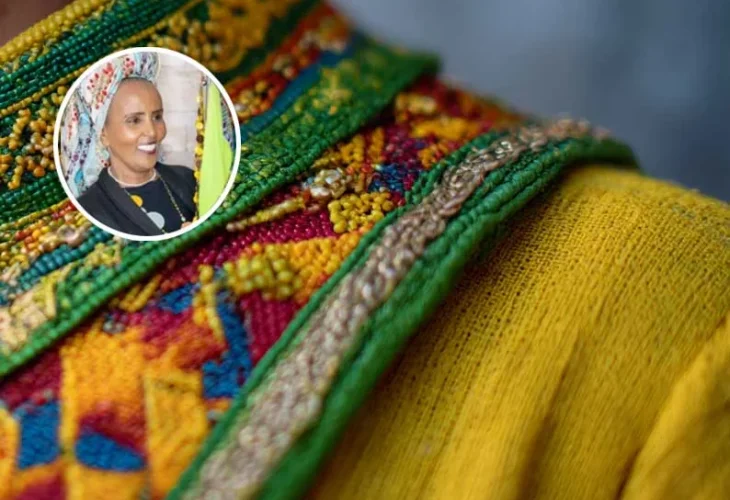 Inset: Gila Hadrai
She was only eight years old, and she remembers that night as if it were yesterday.
“There was no time for questions and no time for fear. My mother woke me in the middle of the night and told me to get dressed because we were leaving. I put on my prettiest dress, the kamis my grandmother had sewn for me, and we left the village where I was born and raised. We walked for two weeks from Ethiopia to Sudan.”
With these words, therapeutic stylist Gila Hadrai (54), today living in Kiryat Gat, opens our conversation. Her story moves gently between childhood memory and clothing, between loss and belonging.
For Hadrai, clothes are not a profession or an external layer. They are a language. A vocabulary of memory from her childhood in Ethiopia, and later, a bridge toward belonging in Israeli society. Clothing became the precise tool through which she learned to tell her life story, carrying messages meant to touch something deep within every woman.
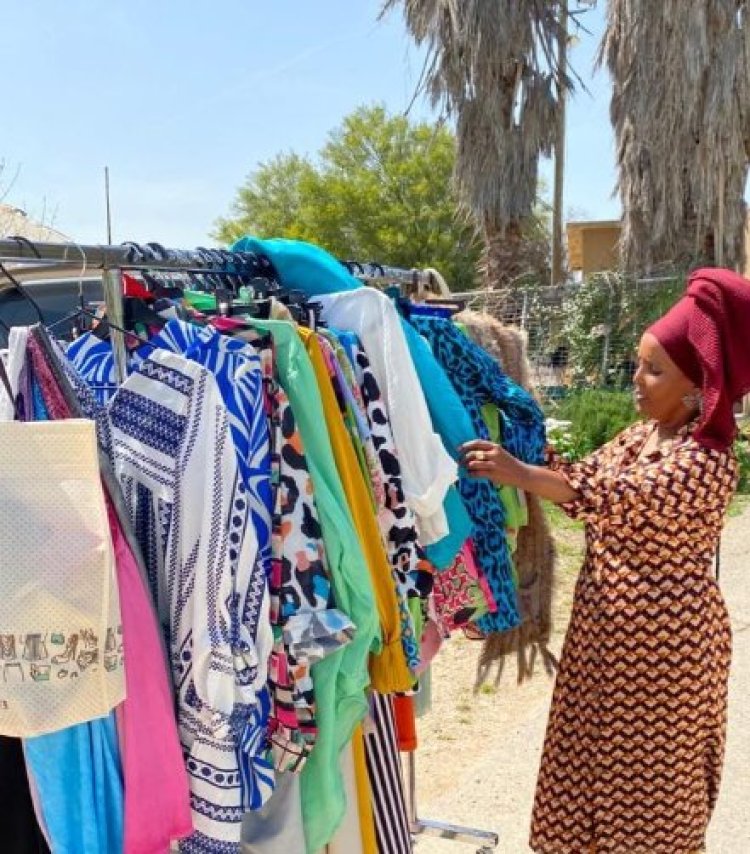 Gila Hadrai
 What does it mean to be a therapeutic stylist? It means standing before an audience holding the same colorful dress she wore at eight years old, the one that always felt like home, and acknowledging that it remained behind in Sudan. It took her many years to face the weight of that moment.
“I was told to throw the dress away after walking with it through the desert for two weeks,” she says quietly. “I threw it away because I did not understand what it meant. I was just a child. But as I grew older, I felt that I had left a piece of myself there, in Sudan.”
For her, discarding the kamis was like discarding her entire childhood. Her roots. The image of her beloved grandmother and everything she learned from her. She wore the new dress her father bought her with trembling hands, but something inside her fractured.
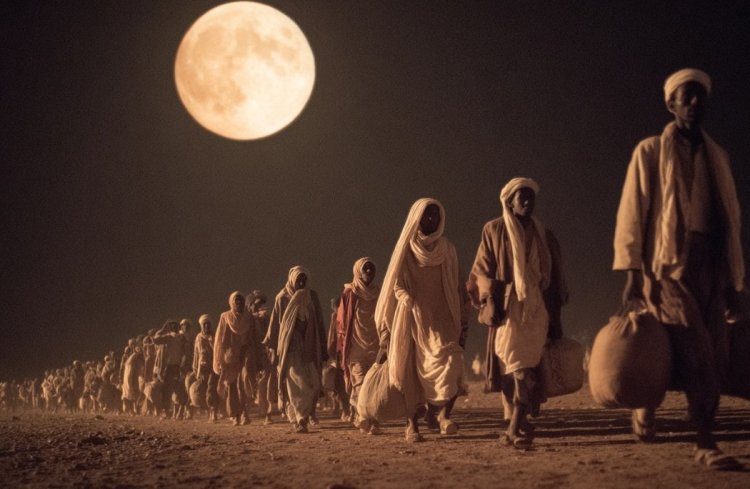 The march from Ethiopia to Sudan (illustration).
“I wore it because there was no other choice,” she whispers. “But the moment I put it on, I felt my body change. It was as if I was separating from who I was, stepping into something unfamiliar. That separation is etched in my soul to this day. It is the reason I later became a therapeutic stylist. Everything in my life connects to clothing. All my journeys converge there.”
Asked how the loss of that piece of identity affected her early years in Israel, she pauses.
“It is not just fabric in the eyes of a child. First, there was the dress. Then I was given a different name, different clothes, and suddenly people told me who I was. It was terribly frustrating. I did not know how to behave in Israeli society. My parents hugged me, but they were new immigrants with their own struggles. It took me many years to reconnect with who I was and what I had left behind.”
“Crying Would Not Have Helped”
According to Hadrai, the pain did not begin with the dress, but with being uprooted without explanation.
“There, I was loved as I was. I did not need to choose a new name or new clothes. I had a joyful childhood, and suddenly I was on a journey I could not resist. No one explained that on the way to Israel there was a place called Sudan, where we stayed for two years. No one prepared me for a foreign land, a foreign language, unfamiliar food, strange clothing, and terrible illnesses. We saw very difficult things.”
When her family arrived in Israel during Operation Brothers and reached Atlit, a new struggle began.
“Life in Israeli society is not simple. Those with support and confidence manage. Those without are left behind.”
Even at ten years old, she understood she had two choices. To cry and beg her parents to return to Ethiopia, which would not have helped. Or to accept that this was the land she had dreamed of and face the challenges ahead.
“I chose the second option, but it took years to feel comfortable with myself, with my appearance, with my clothing. I had to go through deep internal processes to accept who I was.”
The garments marking each stage of her life were later recreated almost exactly and accompany her today as she travels across the country telling her story. The kamis and the Sudan dress are only the beginning. Then come the junior high dress and the wedding gown.
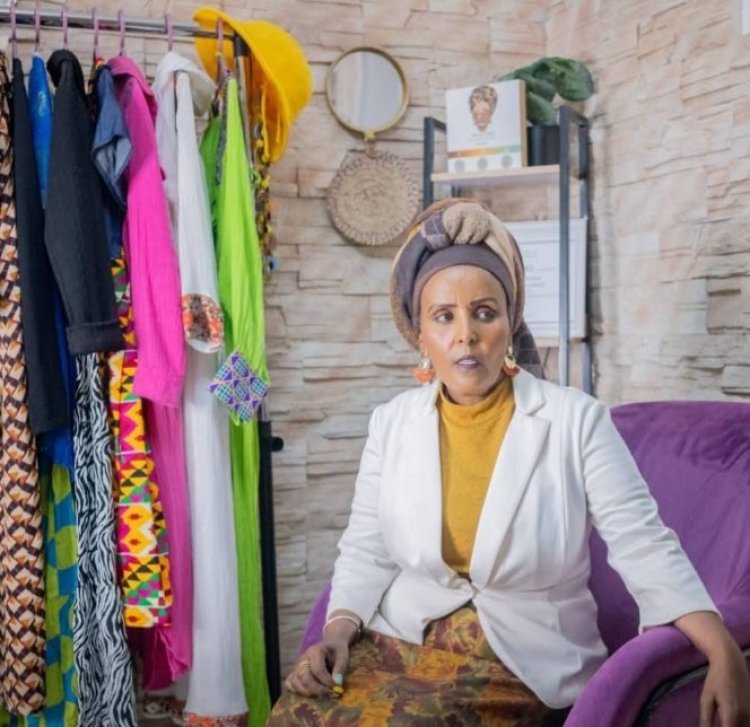 Gila Hadrai
 “When I reached junior high, everyone talked about buying new clothes. We had no extra money. My father was the only one working, and I did not ask. One day, on the way to the grocery store, I found a bundle of money on the sidewalk. I ran home in fear. My mother told me to put it aside in case someone came looking for it. After three weeks, with graduation approaching, she told me to buy a dress.”
She chose a white dress stitched with red thread.
“That was the first time I felt like everyone else. Like nothing was missing.”
Years later, when she married, the dress again became a milestone.
“I wanted to be like all Israeli women. I insisted on a wedding hall and went to an expensive salon in Tel Aviv. It was still very external. I was not yet at peace inside.”
“First Find the Inner Child”
Today, her work looks very different.
“Clothing is external,” she explains, “but what truly matters is what happens inside. You can look happy and well dressed while carrying deep pain. Real styling begins from within. A woman must first find her inner child, see how she feels, and embrace her. Only then can she choose clothing.”
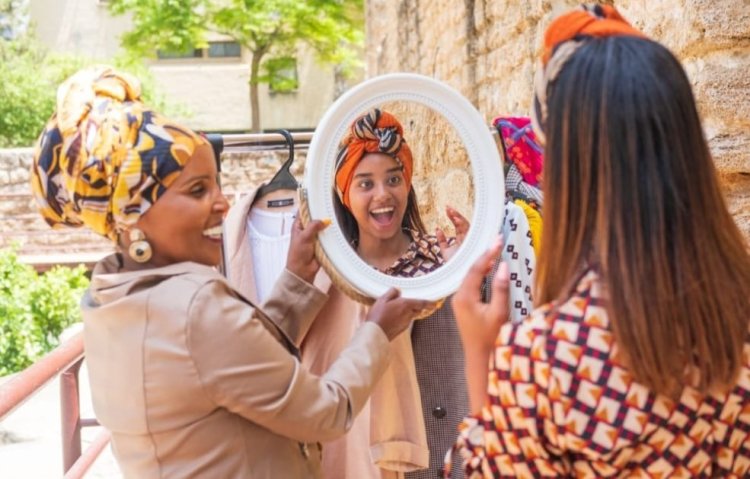
She contrasts this with conventional styling.
“A regular stylist matches colors and cuts. A therapeutic stylist listens to the heart. She cares about where your inner child was left behind.”
Asked whether she once used clothing to hide herself, she nods.
“As a teenager, I was overweight, and I did not know how to dress properly. Looking back, it was a kind of social exile. I did not yet understand how society treats those who look different.”
Where did she find the strength to cope as a child?
“In an Ethiopian home, life prepares you early. You see struggle, you learn resilience without words. You understand that you must be content with little and not demand. It becomes part of you.”
Today, helping women through clothing, she feels that the little girl who lost her kamis has healed.
“The garment is identity. A certificate of who you are. That girl feels whole today, together with me. When you are connected to your roots, to who you are and where you came from, you can overcome anything. That is where true wholeness lives.”

