

Magazine
From India to Faith: Choosing Life After Tragedy
The sudden loss of her infant daughter in India shattered Libi Gromach’s world. In a candid interview, she reflects on grief, self-blame, faith, and the strength that carried her family forward.
- Moriah Luz
- | Updated
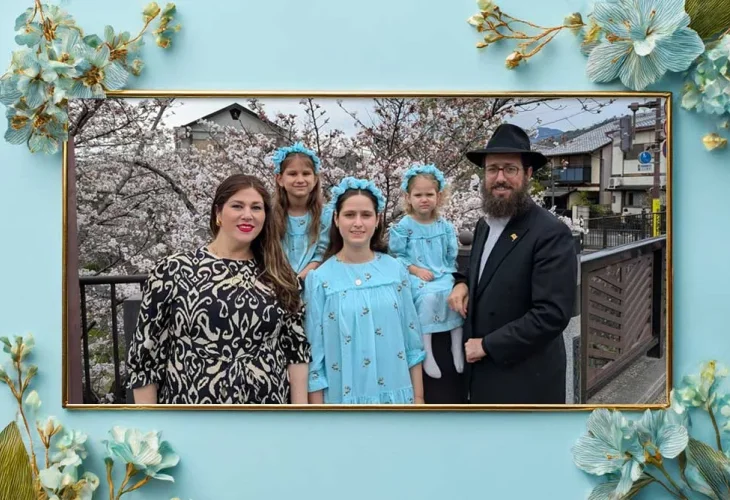 The Gromach family. (Photo by Eliesaf Rubinstein)
Rabbi Moti and Libi Gromach made their home in the picturesque village of Hampi in southern India. Dense vegetation surrounded the thatched houses, and animals wandered freely through the streets. “At the beginning of our life in the village, I was startled when a snake slithered past me,” Libi recalls. “The landlord said, ‘Remember, they are the locals, and you are the guest.’ We lived in what was essentially a jungle. It is breathtakingly beautiful, but living there is not simple.”
When she says “not simple,” she means the polluted water that flowed from the taps, the homes without proper roofs or flooring, and the complete absence of basic infrastructure. There was no grocery store to rely on and no accessible clinic. And yet, the village’s charm drew many travelers, and as Chabad emissaries, the Gromachs chose to establish their home there.
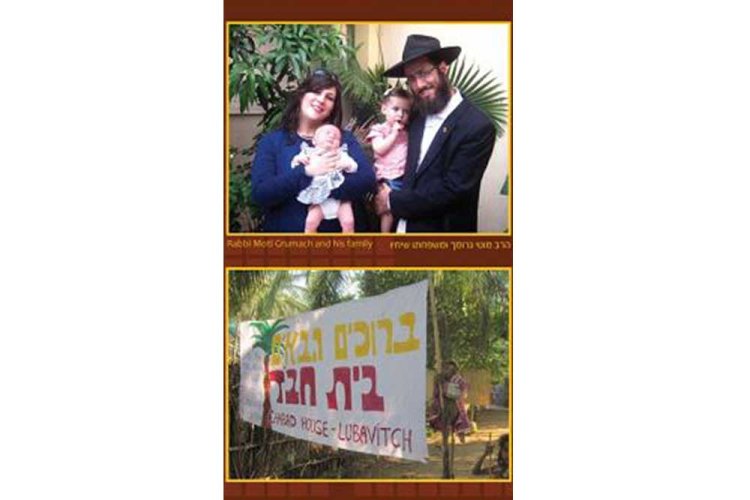 Rabbi Moti, Libi, and their daughters Mushka and Dvora Leah Geula z"l
“Our First Flight Destination”
Two years after their arrival, their first daughter, Mushka, was born. A year and a month later, Dvora Leah Geula joined the family. “Raising two daughters so close in age was a blessing,” Libi says. “Living in the village actually made certain things easier. I could receive help from local workers and focus on being a mother.”
Both girls were sensitive to milk, so the couple made sure to bring special formula from Israel. Hygiene remained a constant concern. “Once, I took Mushka to a local pediatrician and was shocked by the dirt and the lack of medical advancement. It was frightening. I prayed that we would never need that system. Thank G d, our daughters were healthy.”
One Friday night, when Dvora Leah Geula was eleven months old, she developed a fever. “She was teething, and since she was my second child, I didn’t panic. I gave her acetaminophen.” Guests filled the house for Shabbat, and Libi hosted with her daughter in her arms. But as the night went on, the fever would not subside.
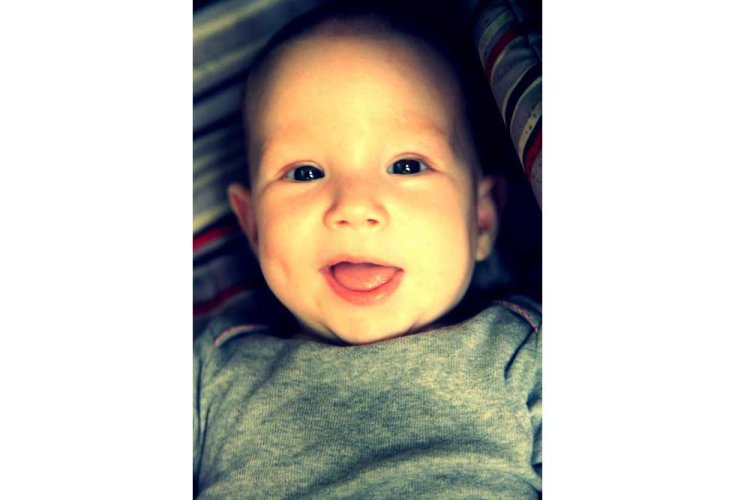 Dvora Leah Geula z"l
“I tried everything I knew, all kinds of home remedies. I told myself that by morning it would pass.”
It did not. On Sunday morning, the fever persisted, and Libi took her daughter to the clinic, only to find it closed. “Sunday,” the receptionist explained. With no other option, she tried to keep her daughter hydrated, fearing dehydration. “I used a syringe to give her fluids, and meanwhile, sores appeared in her throat.”
They consulted a pediatrician in Israel, who believed dehydration was the cause. The heat was intense, and it was the end of Adar. On Monday, they reached the best doctor in the region, a physician trained in England who ran a private clinic.
“He said she was dehydrated and needed twenty four hours of fluids.” But by the next day, her condition had not improved. “That is when he told me to go to a district hospital in a larger city. At that moment, I knew I was not taking chances. We booked the first flight to Israel.”
“Someone Is Managing This”
The next flight was three days away. In the meantime, Libi took her daughter to a university hospital near the airport. There, doctors discovered that her oxygen levels were dangerously low. Tests revealed pneumonia.
“I was alone,” she says quietly. “My husband stayed with our older daughter and continued running the Chabad house.” The doctors immediately administered oxygen and antibiotics, but their expressions were grim.
“They explained that there is a common bacteria present in children with colds. In extremely rare cases, it attacks the lungs and becomes fatal. That is what happened. One of her lungs had almost completely stopped functioning.”
Rabbi Moti began the seventeen hour drive to reach them. But when he arrived, the doctor had already signed the death certificate. They chose to bury their daughter in the Land of Israel.
Asked what goes through a parent’s heart after losing an infant so suddenly, Libi pauses.
“At first, nothing. We were surrounded by love. Family, friends, travelers we had hosted over the years. We were strong, and even strengthened others. But with time, the realization settles. The pain cuts into the flesh in a way I would not wish on any Jew.”
Their strength to rise each morning came from their two year old daughter. “We knew we had a reason to wake up. Faith in Hashem does not only give strength. It gives sanity. You understand that someone is managing this reality.”
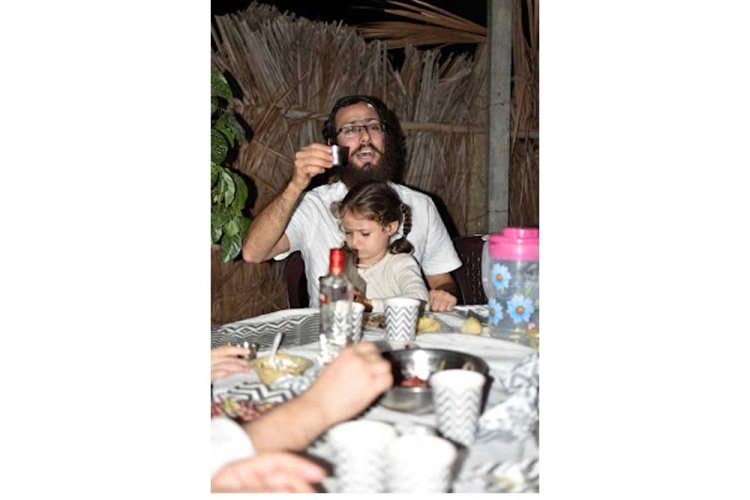 Rabbi Moti with Mushka
The pregnancy with Dvora Leah Geula had been miraculous, and Libi believed her daughter had come into the world with a specific mission. “Hashem gave, and Hashem took. It took time until I could truly accept that.”
Still, difficult questions lingered. “I wondered if things would have been different in Israel.”
“When Hashem Decides, He Decides”
Three years later, another event reshaped her understanding. While living in Israel, a fourteen year old girl in their building, who often babysat for Mushka, fell ill. She visited a doctor, who found nothing concerning.
“It was the same story,” Libi says, her voice breaking. “Hidden pneumonia. She was in Israel, in a medical system, and everything was done correctly. But when Hashem decides, He decides.”
Four months after their loss, as the High Holidays approached, the couple returned to their mission in India. “We knew we had to go back. Not only to continue, but to strengthen.”
They expanded the Chabad house, opened a kosher restaurant and a kindergarten, and deepened the learning. “Everything grew.”
Were they afraid to return with a small child?
“I became more alert medically, but our strength came from action. I could no longer hold my daughter at night, but I could do spiritual acts for her soul. We saw blessing in everything we did.”
Two years later, they built a mikvah in a nearby village in her memory. Until then, the closest mikvah was seventeen hours away. “It was a complex project, halachically and physically. Materials came from India, Israel, the United States, and Sri Lanka. Today, it serves women daily.”
 The mikvah in India, dedicated in memory of Dvora Leah Geula z"l
Later, for bureaucratic reasons, the Gromachs left India. Another couple continued their work there, while they began a new mission in Kyoto, Japan. Today, they serve the small Jewish community and countless travelers, and they have built another mikvah.
Over the years, they were blessed with two more daughters. “They know they have another sister. When Mashiach comes, she will return to us. We speak about her openly. She is part of our family.”
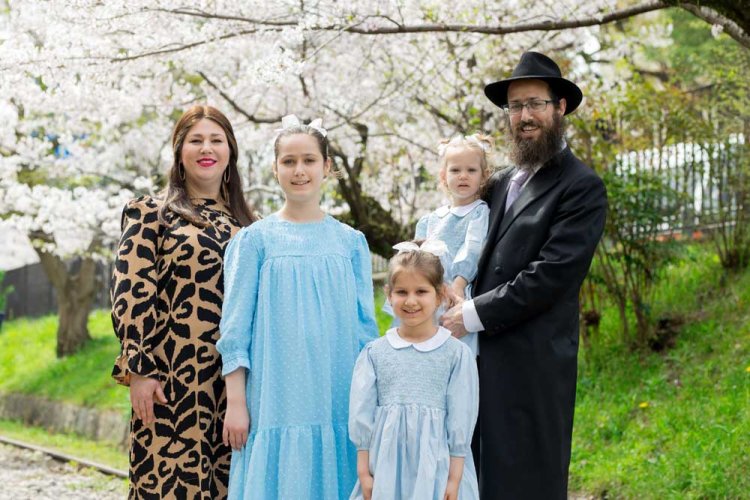 The Gromach family (Photo: Elyasaf Rubinstein)
Through it all, Libi reflects, “I learned about the strength Hashem placed within me. Faith can destroy a person, or it can lift them. Belief in Hashem is a gift. And for us, the anticipation of redemption is no longer abstract. It is personal. We do not only wait for Mashiach. We feel the waiting in our very flesh.”

