

Magazine
“Continue Living”: The Last Words of a Fallen Firefighter
During the October 7th massacre, firefighter Roi Moshe managed to send one final voice message to his wife before being killed. His widow, Linor, shares their love story, her faith through grief, and the life that continues in his absence.
- Moriah Luz
- | Updated
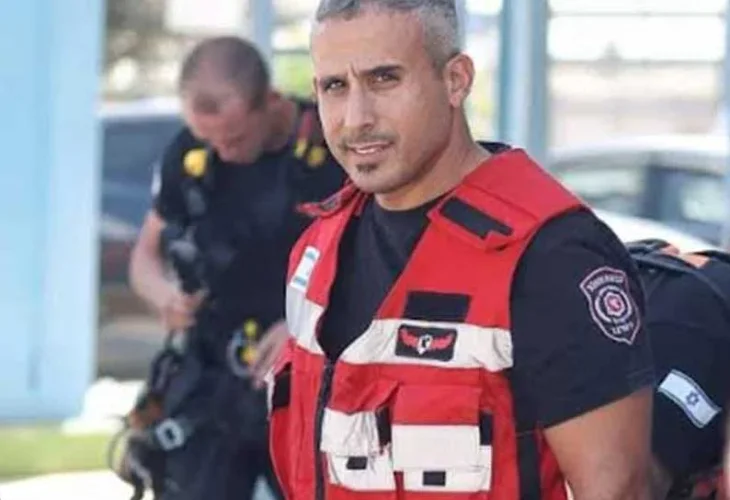 Roi Moshe (Credit: Metanel Bushari)
Among the many victims of the tragic attack on Simchat Torah, few were given the chance to say goodbye to their loved ones. Roi Moshe, a firefighter who was on his way home from duty, was one of them. While fighting for his life, he managed to send a voice message to his wife, Linor. In it, he expressed his love for her and their children and asked her to pass on his love to his parents. “Continue living your life,” he urged, summoning his remaining strength.
This was the last contact Linor had with him. His abandoned vehicle was found the following day on the roadside, and two days later his body was discovered in a nearby field. Linor was left to raise their two children while carrying their third. At the time, she was seven months pregnant.
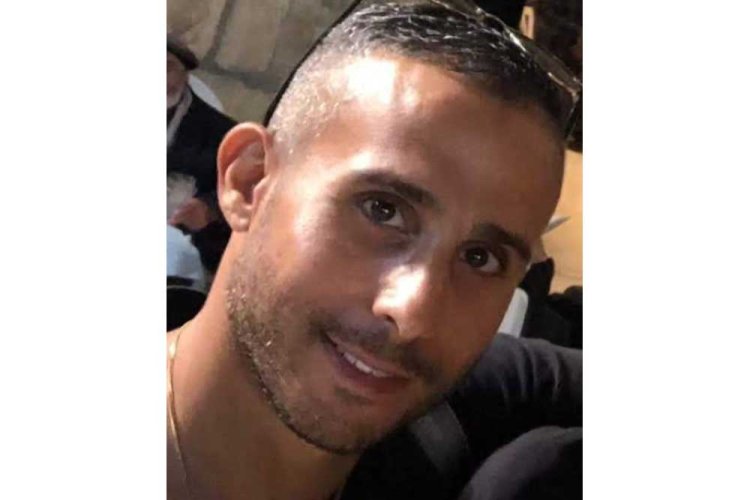 Roi Moshe z"l
A Connection of Souls
Linor, a social worker by profession, has since her husband’s passing become a full-time mother. She now lives in a community in southern Israel, close to her parents.
She and Roi were married for a decade before his tragic death. “We had a connection of souls,” she says. “From the first moment I saw him, my soul felt at home.”
“There was never anything we didn’t talk about,” she adds. “We discussed everything that bothered us, broke down tensions, analyzed things together. Our relationship only deepened over time. We learned how to argue, how to make each other happy, what mattered and what could be let go.”
 Roi and Linor
Linor describes Roi as joyful and optimistic, and above all, a man of action. “We made a sticker in his memory that says, ‘Say little and do much.’ It’s something I used to say to him when he was alive.” She recalls an evening they sat talking on the porch, when she discovered by chance that Roi spent much of his free time helping her brother. “When I realized that, I told him that the phrase fit him perfectly.”
Beyond his kindness and quiet action, Roi was deeply rooted in faith. During his military service, he grew more observant. After completing his service, he chose to dedicate three years to serious Torah study in a yeshiva, encouraging those around him. “After he was killed, friends came to us and said, ‘I have a home of Torah because of him. He didn’t give up on me.’”
A Role Model for the Children
Roi chose a demanding profession as a firefighter. What drew him to it?
“He originally studied toward a technician’s certificate and was even on the dean’s list,” Linor explains. “During his studies, he signed up for firefighting. When he told me, I was hesitant. It meant night shifts, Shabbat work, and constant danger. But Roi said to me, ‘Linor, I can’t sit in an office. I need to move. I need to save lives.’”
“When people think of firefighters, they imagine extinguishing fires, but most of the work involves rescues, traffic accidents, and dangerous extractions.”
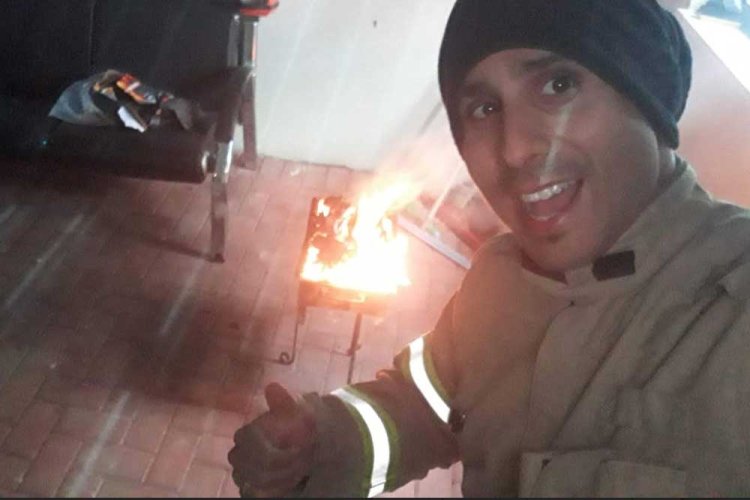 Firefighter, Roi Moshe z"l
Did he ever share stories from the field?
“Almost never,” she answers after a pause. “Sometimes I’d see an incident on social media and ask him if he was involved. He’d shrug and say, ‘A bit.’ Only later, through articles or people who came to thank the station, did I understand the extent of what he did.”
His quiet devotion was felt most strongly at home. “After his passing, neighbors told me stories I never knew. One spoke of Roi stopping to tow a car. Another mentioned groceries he carried without being asked. A woman told me how her car broke down one morning and she panicked. Roi told her calmly, ‘Why are you crying? I’m here,’ and fixed it.”
Roi served as a deputy team leader and commanded volunteer courses. His shifts were long, twenty four hours on, forty eight hours off. On his days at home, he was fully present. “He took the children out, played with them, explored with them. During COVID, he even created a ‘beach’ at home with umbrellas and floats. But alongside the fun, he insisted on values, respect, and boundaries. He was their role model, and there isn’t a day they don’t miss him.”
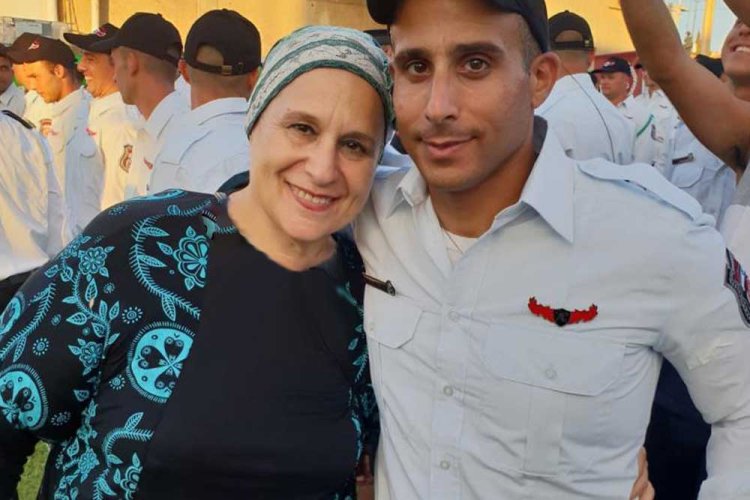 Roi z״l with his mother at his firefighters’ course graduation
We Were Able to Say Goodbye to Everyone
Roi’s final shift began on Friday morning and ended on Simchat Torah. “The day before, during the intermediate days of Sukkot, we unknowingly said goodbye to everyone,” Linor recalls. “We went to a friend’s sukkah in Netivot, then to my parents’ community to celebrate my father’s birthday. Late that night, I drove Roi to his parents and returned home with the children.”
On Hoshana Rabbah night, Roi studied Torah while Linor stayed home reading Deuteronomy. After midnight, she called and suggested he come home to sleep before his shift. He returned, they slept briefly, and at seven in the morning he left for work.
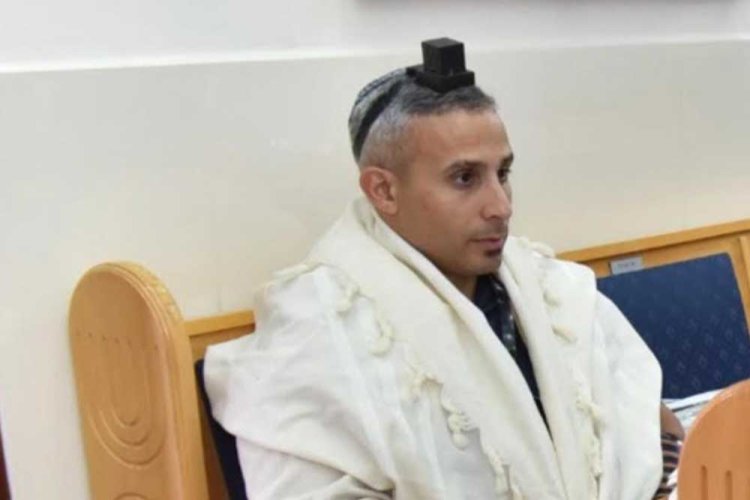 Roi z"l wearing Tefillin
 Linor spent Simchat Torah in Ashkelon at her in-laws’ home. Before the holiday, she spoke with Roi. He wished her a happy festival and jokingly reminded her to save him some tortillas she had prepared.
That morning, the sirens began. “We went into the safe room, and the alarms didn’t stop,” she says. Though she knew Roi was finishing his shift and heading home, she wasn’t immediately alarmed. “He’d worked through many emergencies. I trusted he would return.”
When eight o’clock passed and he still hadn’t arrived, she checked her phone. There was a voice message. “I listened, and his voice sounded wrong. He was saying goodbye. I screamed, threw the phone to his brother, and from that moment our nightmare began.”
Roi didn’t answer calls. Terrorists were everywhere. Linor tracked his phone and saw it was near Sderot, on the road from Be’er Sheva to Ashkelon. No one could reach him. On Monday afternoon, his body was found.
A Name of Prophetic Comfort
Three months later, Linor gave birth. Her older children were nine and seven. “Everything felt dark,” she admits. “I prepared the hospital bag in sadness. The physical pain was nothing compared to the emotional pain.”
Did she feel Roi’s presence?
“Yes,” she answers immediately. “It was important to me that his mother be with me. Through her, I felt him.”
Her twin sister, also pregnant, accompanied her. Six hours after Linor gave birth to a daughter, her sister went into labor and delivered a girl as well. “I always say Roi went to Hashem and asked, ‘She’s not alone in the hospital, right?’”
During the pregnancy, Roi had chosen the baby’s name. “When he heard ‘Gili,’ he said, ‘That’s it.’ He asked we not tell anyone. Later I discovered the name appears repeatedly in prophecies of comfort.”
“Gili resembles him,” Linor says softly. “She is joyful, full of light. The contrast between her presence and his absence is painful, but the name fits her perfectly.”
Waiting for the Resurrection
“I don’t feel strong,” Linor says. “I hear people say, ‘The world is sad, but we must go on.’ For me, that’s not faith. Hashem is good. He has always been good to me. I don’t settle for less than complete goodness because He is perfect.”
“I tell Him, ‘You made this day unbearably cruel. Bring redemption. Comfort us with full comfort. I don’t want consolation from this world. I trust You.’”
In closing, she adds quietly, “I am waiting for the resurrection of the dead. I am waiting to see Roi again.”

