

History and Archaeology
The Return of Poland’s Hidden Jews: Inside Rabbi Michael Schudrich’s Mission to Rebuild a Lost Community
How descendants of concealed Jewish families are reconnecting to their heritage through faith, memory, and community life in modern-day Poland
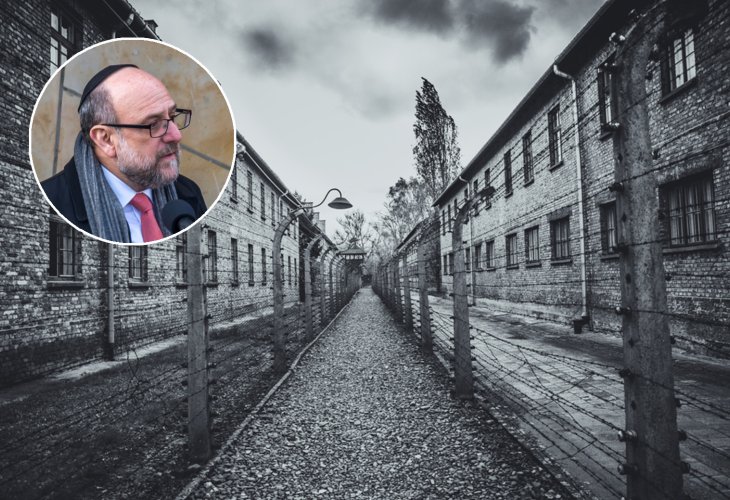 Inset: Rabbi Michael Schudrich (Photos: Shutterstock)
We conduct our interview with Rabbi Michael Schudrich, Chief Rabbi of Poland, just moments after he returns from the March of the Living in the city of Oświęcim, held in honor of Holocaust Remembrance Day. This is the city where the Auschwitz-Birkenau extermination camp — the largest of the death camps, is located.
“Most of those murdered in Auschwitz were Polish Jews. Ninety percent of Polish Jewry perished in the Holocaust, more than three million people,” says Rabbi Schudrich. “Tragically, only ten percent of Poland’s Jews survived. Fewer than 300,000 Jews remained in the country.”
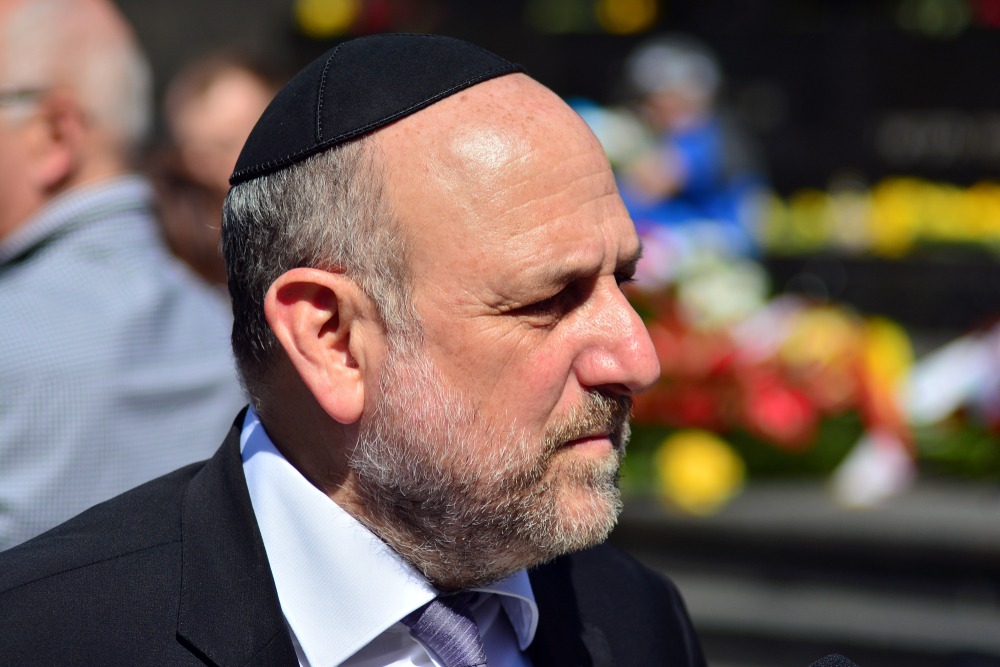 הרב הראשי לפולין, מיכאל שודריך (צילום: shutterstock)
“A Moving Phenomenon”
At the end of World War II, most of Poland’s surviving Jews left for the United States and elsewhere. “They no longer wanted to live in fear of saying the words ‘I am a Jew,’ so it was natural that they fled,” explains Rabbi Schudrich. “In addition, Soviet-aligned politicians took control of Poland and established a communist regime. Those Jews who stayed decided not to live as Jews anymore and hid their Jewish identity completely.”
With the fall of communism in the early 1980s, a moving phenomenon began of “the hidden Jews” returning to Judaism. It started with a first wave of people who unexpectedly discovered they were Jewish and turned to Rabbi Schudrich, who was essentially the only Jewish address in the country.
“People began coming to me with stories about elderly Jews who had lived their entire lives as non-Jews, but shortly before their deaths revealed to their children that they were Jewish. In one of the earliest cases, a man told me that after his great-grandmother passed away, he found Jewish ritual items while cleaning her apartment. He realized on his own that his family was Jewish,” recalls the rabbi.
How do people usually discover that they are Jewish?
“There isn’t just one way,” says Rabbi Schudrich. “But the most common scenario is when a dying grandmother reveals to her children, moments before her death, that she is Jewish.”
He shares one especially emotional story: “Many years ago, a man came to me and said that his mother had recently passed away. After the funeral, the neighbors told him that she had not been his biological mother. They said his birth mother gave birth to him during the war and handed him over to a Polish Christian woman to save his life.
“He told me: ‘If my mother was Jewish, then I want to be Jewish — but I have no idea what I need to do.’ It was like standing at Mount Sinai — first saying ‘we will do,’ and only afterward ‘we will understand.’”
Rabbi Schudrich also encounters unusual cases. “Recently, a woman came to me and said, ‘I think my grandmother was Jewish, because she baked a special kind of cracker that no one else made.’ Of course, she meant matzah. She later mentioned that her grandmother wouldn’t let them drink milk after eating meat, and she used certain words no one understood — like ‘oy vey.’
“It seems the grandmother carried deep trauma and didn’t dare say openly, ‘I am Jewish,’ but she still passed Jewish ideas to her grandchildren in subtle ways.”
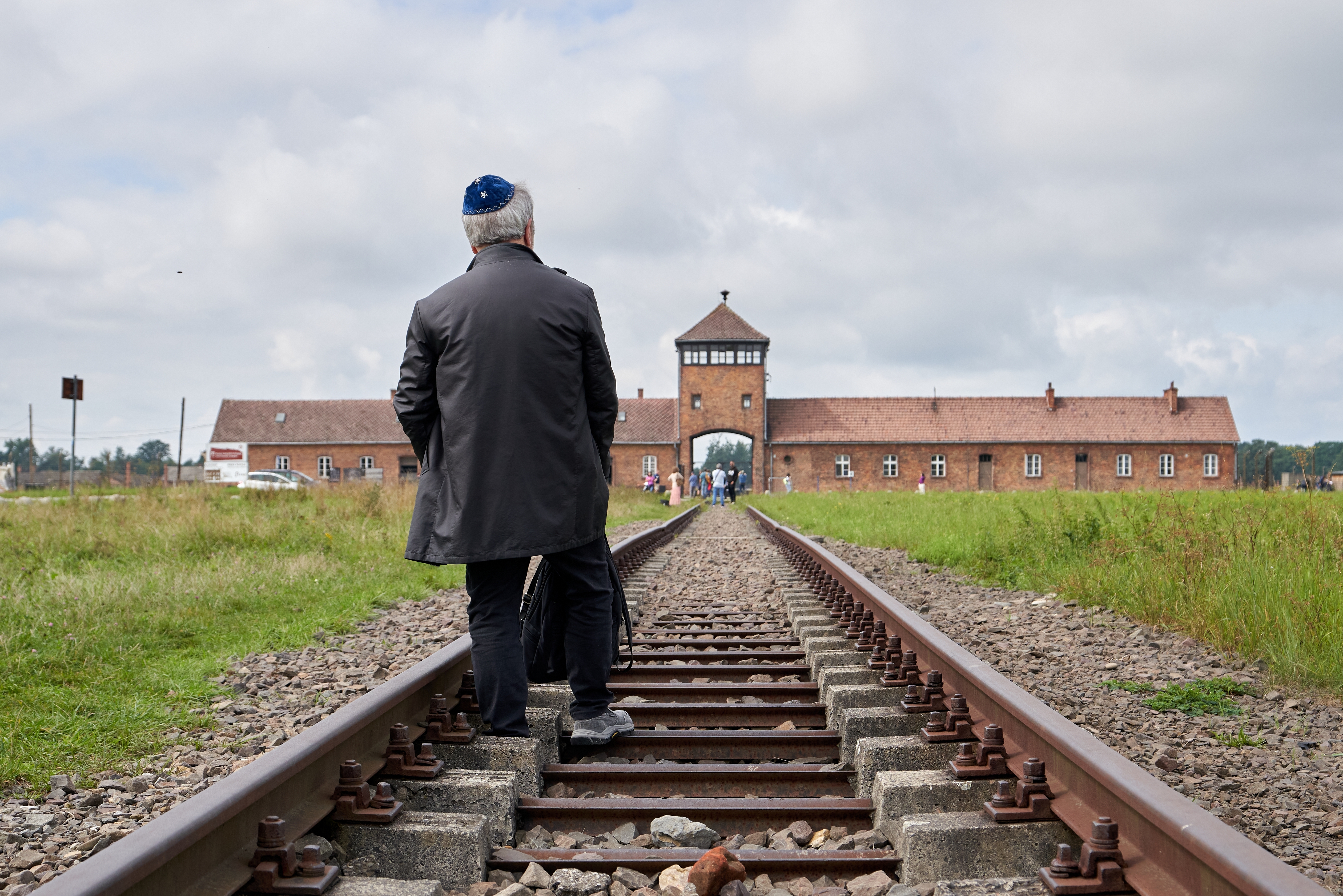 (צילום: shutterstock)
How do people react when they discover they are Jewish?
“It varies greatly,” says Rabbi Schudrich. “Some say, ‘Now I understand how meaningful my life is.’ Others resist and refuse to accept it unless presented with absolute proof. I’ve heard every possible reaction, and even some impossible ones.”
“Everything Is New and Strange for Them”
As the years pass, Rabbi Schudrich continues to be surprised by how many “hidden Jews” come forward — but more than surprise, he says, it fills him with hope.
“No one really knows how many hidden Jews live across the country. The number could be far greater than we imagine. We do everything we can to help them return to the Jewish people.”
What does that involve?
“The most important thing is that the door is open — to welcome them, listen to them, and guide them. Then we bring them to prayers, classes, and communal Shabbat meals in the synagogue. Along with helping them reconnect to Jewish identity, we must also provide a warm, caring community framework.”
Building a Living Jewish Community
Rabbi Schudrich describes the communal programs as deeply emotional experiences.
“Consider our weekly communal Shabbat meal. When I started this project decades ago, people sat at the table and had no idea what to do. It was totally new and foreign to them. Over the years they learned, and today they conduct Shabbat meals on their own.”
He shares an example from Passover: “This past Pesach we held a communal Seder for about 400 people. There wasn’t enough room in the synagogue, so we moved it to a hotel. So many people came that we had to run two Seders on two separate floors.
“But the most meaningful thing is that we didn’t run one big Seder — each table held its own Seder, led by a community member. It’s vital that they learn to do it themselves, not rely on a rabbi to lead everything.”
The generational mix presents a unique challenge: “Thirty years ago, the participants were mostly elderly Jews. Today, a third generation is arriving. On one side of the table sit people who have lived as Jews for decades — and facing them are people who discovered they were Jewish only a year ago. My challenge is to help them grow together as one community.”
“We’ve Only Just Begun”
Today, most of Poland’s Jewish community is built from families who once lived as hidden Jews.
“I believe the overwhelming majority of today’s community did not originally know they were Jewish,” says Rabbi Schudrich.
He reflects on history: “Sometimes I ask myself — what would the Jewish world look like if we could go back to the time of the Portuguese Inquisition? Could we have brought the forced converts back to Judaism? Back then it was impossible.
“But today — 500 years later, there are women in Portugal who light candles every Friday night in a basement without even knowing why. Here in Poland, we are only 80 years after the Holocaust. Our ability to bring hidden Jews back depends entirely on our willingness to help them.”
Do you believe many more Jews may still be discovered?
“I have no doubt,” he says firmly. “The return of hidden Jews to Judaism continues to this day. I don’t know how far it will go or how many people we will discover in the coming years — but I am sure of one thing: We’ve only just begun.”

