

Health and Nutrition
Too Bitter? The Surprising Science of Adding Salt to Your Coffee
Facing a bitter coffee dilemma? Science suggests a sprinkle of salt might be your best bet, even better than sugar!
- Shira Dabush (Cohen)
- | Updated
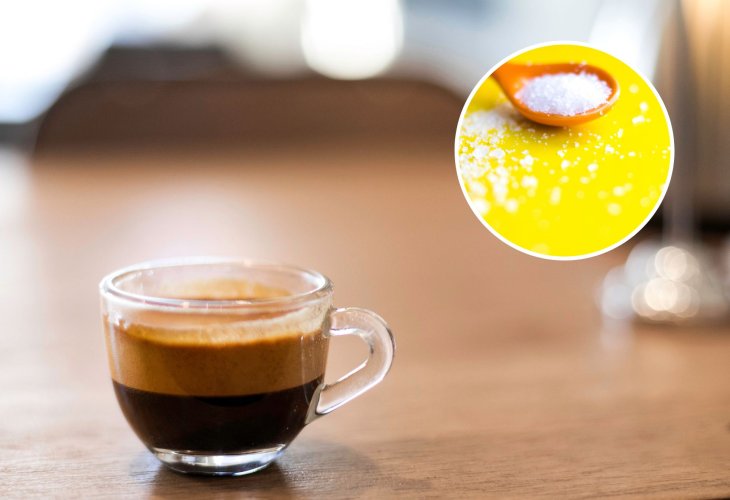
Even if we’re die-hard coffee lovers, sometimes coffee’s bitterness leaves an unpleasant aftertaste. So how can we overcome this problem when getting a fresh cup isn’t an option?
An intriguing scientific study sheds light on the issue and offers an unexpected solution: adding a teaspoon of salt to your cup of coffee.
Now, wait a moment. Salt has many uses—but in coffee? You might be surprised to learn that in certain cultures, adding salt to coffee is actually a longstanding tradition. Salt not only reduces bitterness but also enhances the coffee’s desired flavors.
In cultures around the world, adding salt to coffee has been practiced for years. In Turkey, for example, it is customary for a bride-to-be to prepare salted coffee for her future husband and his family as part of an unofficial pre-wedding ritual. In Taiwan, “sea salt coffee,” which features salted milk foam atop an iced Americano, is a popular drink. In northern Scandinavia, people have been adding salt to brewed coffee for decades. In some coastal regions of Europe, coffee is often made with water that has a high salt content.
So why do people do this?
In an interview, Sarah Marquardt, head of flavors at the Center of Excellence for Coffee, a leading public center for science, technology, and innovation, explained: “Adding salt to coffee reduces bitterness without the need for other additives that might distort the coffee’s natural taste.”
“Salt naturally enhances the sweetness in coffee while preserving its aroma and flavor. For those who are sensitive to bitterness, I definitely recommend adding a teaspoon of salt to their coffee,” she added.
And she’s not alone.
In 2009, food science expert Alton Brown suggested adding salt to coffee during an episode of his cooking show Good Eats. He recommended adding half a teaspoon of salt for every cup of water and two teaspoons of ground coffee to neutralize bitterness. “Not only does salt cut bitterness, but it also smooths out the stale taste of water stored in tanks. Research has shown that salt is actually better at neutralizing bitterness than sugar,” he explained.
Although Brown was not the first to introduce salt into coffee, he brought widespread attention to the technique. Today, many people refer to it as the “Alton Brown trick.”
The Science Behind Salt and Bitterness Reduction
Our taste buds allow us to recognize sweet, sour, salty, and bitter flavors, but our biological response to bitterness differs from our response to other tastes. When we consume something bitter, calcium ions are sent to the brain. While salt can enhance both sweet and sour flavors, it tends to reduce our perception of bitterness.
“Bitter flavors activate our bitter taste receptors, signaling to the brain that we’ve tasted something bitter,” Sarah explains. “Salt—specifically sodium ions—activates salt receptors on the palate. These sodium ions bind to salt receptors on the tongue and inhibit our perception of bitterness, helping to balance the flavors.”
“When both bitter and salt receptors are activated at the same time, the bitter taste can be suppressed, and other flavor sensations, like sweetness, are enhanced. This means that when salt is added, the natural sweetness in coffee becomes more pronounced,” she concludes.

