

Health and Nutrition
The Rice Dilemma: Choosing the Best for Your Shabbat Table
Ever stood in the supermarket aisle unsure about which rice to get? Dr. Maya Roseman busts myths and shares which is the healthiest choice.
- Yitzhak Eitan
- | Updated
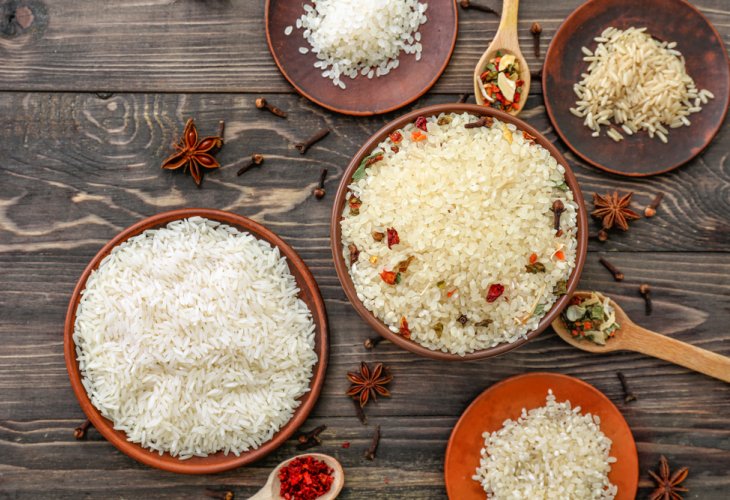
How many times have you found yourself staring at supermarket shelves, wondering which rice to choose for your Shabbat meal? One day it's jasmine rice, the next it's basmati, and another time you opt for Persian or round rice. Often, price influences the choice – but without a special offer, the decision isn’t so simple.
The question arises: are there nutritional differences between these types of rice? Before answering, it’s important to note that rice has a similar calorie content to other grains and carbohydrates, such as wheat, bulgur, couscous, corn, buckwheat, and quinoa.
Dr. Maya Roseman explains in Maariv that half a cup of cooked rice (about 2–3 tablespoons) contains roughly 100 calories. “That’s equivalent in calories and carbohydrates to half a cup of pasta, potatoes, or bulgur, or to two slices of light bread,” she says. “In other words, just one tablespoon of cooked rice has calories comparable to a slice of light bread. So, if you serve 10 tablespoons of rice, it’s like eating 10 slices of light bread.”
And what about brown rice? “It contains significant amounts of vitamins such as B-complex vitamins and folic acid, as well as minerals like phosphorus, potassium, magnesium, zinc, and selenium. Essentially, most of the nutritional value of rice is in its husk, so white rice is less beneficial. From a nutritional standpoint, you can do without it.”
Regarding rice noodles, Dr. Roseman explains they are made from white rice, so nutritionally and calorically they are very similar to wheat noodles. “The key advantage of rice noodles is that they are suitable for celiac patients,” she adds. Rice cakes made from brown rice, she notes, have higher nutritional value. “They are low in fat, but 100 grams of rice cakes contain more calories than 100 grams of bread. The reason a single rice cake seems low in calories is simply because it doesn’t weigh much. Two rice cakes are likely less satisfying than two slices of light bread.”
Dr. Roseman was also asked about concerns regarding arsenic in brown rice. “That’s a myth,” she responded. “While it’s true that arsenic exists in soil in various parts of the world and can be absorbed by crops, it is primarily found in the rice husk, not in polished white rice. However, it’s impossible to know if a particular batch of rice contains arsenic or where it was grown.”
She added that arsenic is present in many agricultural crops because it naturally exists in soil. “In conclusion, the nutritional value of brown rice is far superior. Most dietary fiber, B vitamins, iron, zinc, and other minerals are in the husk. Once rice is stripped of its husk, as with white rice, much of its nutritional value is lost.”

