

Naturopathy and Natural Medicine
Why Are Fungal Infections Increasing?
Remember: Carbs + extra gluten + industrial yeast = thriving gut fungus, bloating, and more unwelcome symptoms. Dive into the first article of our series.
- Rut Liat Faltz
- | Updated
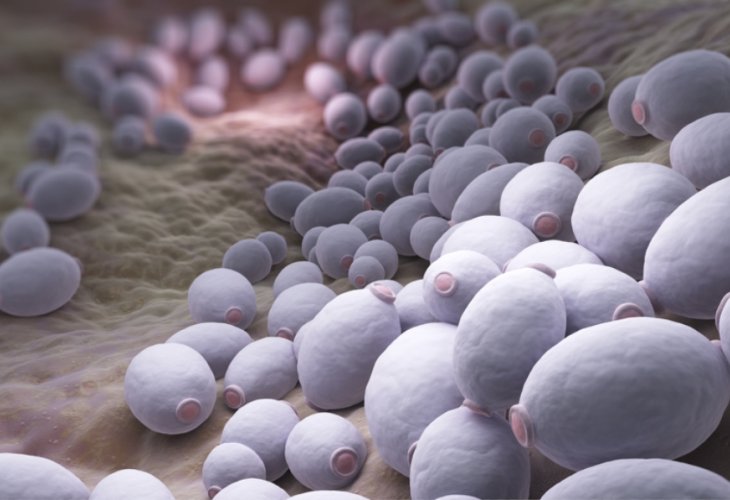
Candida is a single-celled yeast fungus that is a regular resident of the human body and part of the gut’s natural flora (though some argue otherwise). Many types of Candida exist, but the most common is Candida albicans. In a healthy person, its primary role is to break down leftover, undigested food. After a person dies, Candida also plays a crucial role in the decomposition of dead cells. Candida is found almost everywhere—in the air and all around us. It thrives in conditions of moisture, air, food, and warmth (ideally body temperature) and feeds on sugars (carbohydrates).
When Candida becomes imbalanced, it weaves threads in the gut, creates tiny holes, and allows its toxins—along with undigested food proteins—to enter the bloodstream and various organs. This can lead to different diseases and over 100 symptoms, such as chronic runny nose, allergies, headaches, digestive issues, skin and joint problems, insomnia, weight gain, unpredictable mood swings, and more. To balance Candida in the body, it is advised to change one’s daily diet and lifestyle.
In natural approaches to eliminating Candida, the goal is not to fight or kill it, but rather to create less favorable living conditions for it (such as temporarily reducing sugar intake). This allows Candida levels to decrease and return to their proper balance, where it can benefit gut processes without causing harm.
In various anti-Candida diets, it is recommended to completely avoid yeast and empty carbohydrates so as not to encourage Candida overgrowth. It is important to understand that yeast itself is not what worsens Candida. However, yeast can cause gas in the digestive system—especially if the fermentation or baking process is incomplete, or if the amount of yeast is not proportional to the dough—causing fermentation to continue in the stomach. What typically aggravates Candida is the consumption of large quantities of non-whole carbohydrates (sugars) and/or stress.
Additionally, the gluten in flour, which helps dough maintain its structure and enables yeast to function efficiently, also plays a significant role in supporting Candida proliferation. This is one reason why most breads use flour with relatively high gluten content.
Remember: carbohydrates plus extra gluten plus industrial yeast equal a thriving gut fungus, bloating, and further complications, as mentioned above. Stay tuned for more in our next article, with the help of Hashem.

