

In Search of God
The Sacred Quest for Wisdom: Rabbi Yosef Karo's Spiritual Journey
In a snowy winter in Tzfat, Rabbi Yosef Karo questions why a young scholar easily solved a problem that cost him great effort, only to be comforted by an angelic revelation.
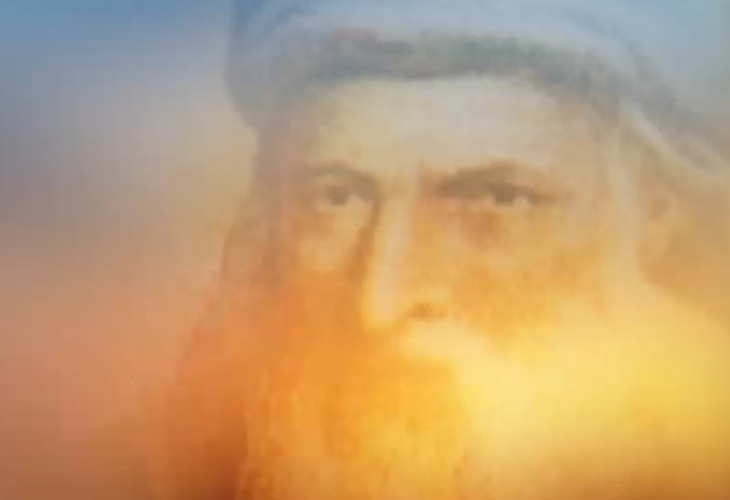 Rabbi Yosef Karo
The Torah states, “In the heart of every wise-hearted person I have given wisdom” (Exodus 31:6). Does this mean the wisdom was already present in the heart of the wise, or was it granted only afterward?
Winter, the year 1555. Heavy snow falls for hours upon the city of Tzfat. Midnight has long passed, and even the elders of Tzfat have gone to sleep. Yet in the synagogue of Rabbi Yaakov Abuav sits the holy Rabbi Yosef Karo, wrapped tightly in his cloak against the cold, refusing to rise from his table. Tonight, he cannot rest as usual, for he has been unable to reconcile a difficult passage in the writings of Maimonides.
Rabbi Yosef Karo was the author of Kesef Mishneh, a work dedicated to explaining and resolving all the questions raised about Maimonides’ writings. Often, he could offer several answers to a single difficulty. But to leave a question unresolved? That was unthinkable.
For many hours, Rabbi Yosef labored intensely. Books piled high upon his table until, near dawn, he finally uncovered the long-sought solution and allowed himself a brief rest.
The following day, after prayers, Rabbi Yosef walked among the scholars in the synagogue when, to his astonishment, he overheard two young students discussing the very topic that had tormented him the night before. Drawn by his love of Torah, Rabbi Yosef listened carefully. One student articulated the profound question he had struggled with, and his companion replied effortlessly: “It’s not such a difficult question. One could simply say…” and proceeded to present the exact explanation that had cost Rabbi Karo so many hours of toil.
Rabbi Yosef’s face fell.
A few days later, when his angelic guide appeared to him on Shabbat night, Rabbi Yosef asked, broken-hearted, “How could that young man grasp so easily the answer over which I labored for so long?” The angel replied, “It is because of you. After you struggled to bring this wisdom into the world, others are able to understand it as well.”
Cambridge University, England, 1995.
Dr. Rupert Sheldrake, a researcher of consciousness, conducted experiments to test his theory of morphic resonance, which proposes that nature possesses memory. According to this idea, once something occurs in nature, it remains, so to speak, in the world’s memory, making it easier to occur again.
Sheldrake measured how long it took rats to learn to navigate a maze. Dozens of rats struggled through the maze, and their completion times were recorded. The following day, new rats were placed into the same maze. Remarkably, they completed it far more quickly. The experiments were conducted in separate locations, and the rats could not communicate with one another—not even via WhatsApp.
Sheldrake repeated the experiment with inanimate matter. There exists a process known as crystallization, in which particles are chemically induced to form a crystal. At first, the process is complex and difficult. Once it has occurred, however, it becomes significantly easier and faster to replicate.
The wisdom in the world is the wisdom of the Creator. It precedes the world and exists above it. The wise have the ability to draw this wisdom down into the physical realm. Once it enters the world, it becomes more accessible to others. The wise labor to attain this wisdom, and afterward, the Creator places it within their hearts—so that the entire world may benefit from it.

