

History and Archaeology
Identification Tags of Jewish Children Discovered at Sobibor Death Camp Reveal Heartbreaking Holocaust Story
Archaeologists uncover personal metal pendants of four children from Amsterdam — preserving their names, faces, and memories through rare artifacts found near the cremation area
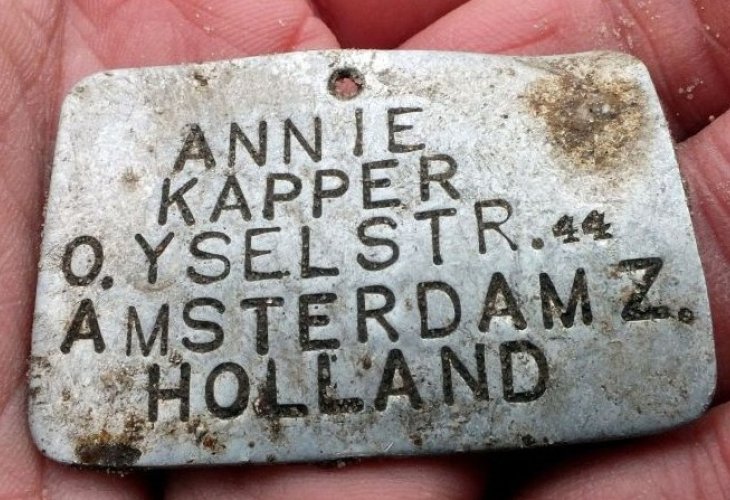 Annie Kapper's identification tag (Photo: Yoram Haimi)
Personal identification tags belonging to four children aged 5–11 from Amsterdam were uncovered during archaeological excavations at the Sobibor death camp in Poland.
The tags — small metal pendants worn around the neck, bore the children’s names, birthdates, and hometown.
The excavation, conducted in preparation for the construction of a new visitors’ center at the site, is being led by archaeologists Włodzimierz Mazurek (Poland), Yoram Haimi (Israel Antiquities Authority), and Ivar Schute (Netherlands), with assistance from local volunteers.
The children whose tags were found are:
Lea Judith De La Penha
Deddie Zak
Annie Kapper
David Yehuda
“As far as we know, children’s name pendants like these have only been found at Sobibor and are unknown from any other site,” said archaeologist Yoram Haimi. “It is striking that the tags differ from one another, which suggests they were not part of an organized effort, but rather personal initiatives by parents who created identification tags for their children. It is likely that the parents wanted to ensure their loved ones could be traced amid the chaos of the war.”
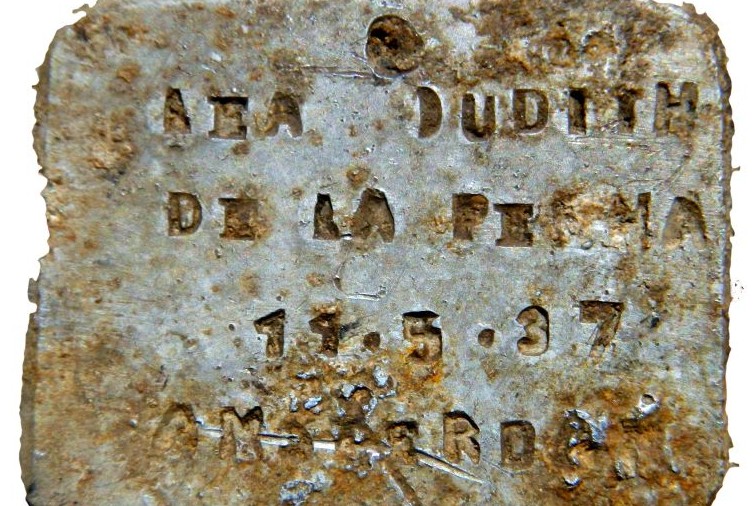 Lea Judith Delepinea's tag (Photo: Yoram Haimi)
To learn more about the children, the research team contacted Camp Westerbork Memorial Center— formerly the transit camp from which Dutch Jews were deported to Eastern Europe during the Holocaust, and today a museum and memorial site.
According to Haimi: “The metal tags of Lea, Deddie, Annie, and David allow us to give a face and a story to names that until now existed only as anonymous entries in Nazi records. The excavation gives us the opportunity to tell their stories and honor their memory.”
Haimi added: “I’ve been excavating at Sobibor for ten years, and this was the hardest day of all. We stood there in the field, near the cremation pits, holding the tags and phoned the center to report the names. The response was immediate — within minutes they sent us photographs of smiling young children. The most painful moment was hearing that one of the children whose tag we were holding arrived in a transport made up entirely of children aged 4–8, sent here to die alone. I looked at the pictures and asked myself: how could anyone be so cruel?”

