

World News
State Comptroller Warns Jerusalem Seam Line Barrier Is Ineffective
Audit published after October 7 finds only partial physical barrier coverage, lack of preparedness for mass breaches, and unresolved budget disputes
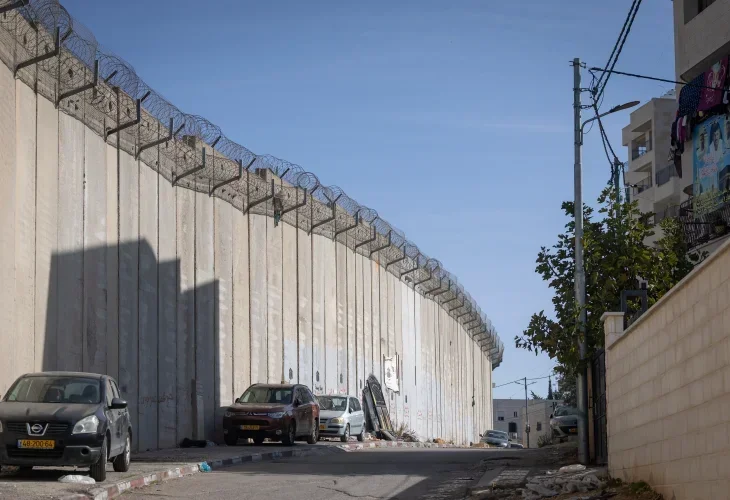 The separation barrier in eastern Jerusalem (Chaim Goldberg/Flash90)
Israel’s State Comptroller, Matanyahu Englman, published a report on Tuesday examining the operational readiness and effectiveness of the seam line barrier and crossings surrounding Jerusalem, warning that longstanding failures leave the area vulnerable to infiltration and attack. The review was launched in the aftermath of the October 7 massacre due to concern that a similar scenario could unfold near Jerusalem.
The report describes years of neglect and poor follow-through, with repeated warnings ignored, government decisions left unimplemented, and no clear plan for how the barrier is supposed to be used in real emergencies. Englman concluded that the seam line barrier around Jerusalem simply does not provide the protection needed to stop illegal crossings or terror attacks, even as security threats in the area persist.
According to the report, the seam line route in the Jerusalem envelope spans dozens of miles, yet only 61 percent of it is reinforced by a physical wall. Large sections have no barrier at all. “Given the many years that have passed since the barrier was constructed and the openings that remain, the barrier does not provide the required response for preventing the entry of illegal residents or attackers into Israel,” the comptroller wrote.
The report backs up these concerns with concerning numbers. In 2023 alone, the Jerusalem envelope experienced 27 deadly terror attacks and 10 shooting incidents aimed at Israeli security forces. Hundreds of additional attacks followed, including Molotov cocktails, explosive devices, and widespread stone throwing. The scale of illegal crossings was also significant: authorities detained 2,427 illegal entrants in the first quarter of 2023, and another 1,233 in the first quarter of 2024, a sign, the report says, that the area remains easy to penetrate.
Englman placed responsibility for correcting these failures squarely on Israel’s senior leadership. “Responsibility for correcting the deficiencies detailed in this report rests primarily with the prime minister, the defense minister, the national security minister, the IDF chief of staff, the police commissioner, the commander of Central Command, the Jerusalem district commander, and the Border Police commander, each at his respective level,” he wrote.
The audit also points to serious problems in how Border Police forces operate in the Jerusalem area. According to the report, there is no clear plan for how the crossings should function in an emergency, and it is often unclear who is actually in charge. In at least one area, responsibility is split between Jerusalem’s municipal authorities and the IDF, creating what the comptroller described as a dangerous gap in governance. “Failure to provide even a basic response in maintaining law and public order constitutes a security risk to the citizens of the State of Israel,” he warned.
The report also found that Israel was not prepared for a scenario in which large numbers of people force their way across the barrier. Before October 7, no specific plan existed for handling a mass breach into Israeli territory. Even after that, updated orders still did not clearly explain how security forces should respond to coordinated, violent break-ins at multiple locations, despite intelligence assessments cited in the report that such crossings are widely seen as easy to carry out.
Finally, Englman highlighted an unresolved budget dispute between the Defense Ministry and the National Security Ministry over upgrading the barrier with a high concrete wall. “The lack of agreement endangers Israel’s residents, particularly in light of the events of October 7, 2023,” he wrote, urging tighter political and security oversight to address the risks without further delay.

