

Israel News
From Iran to Israel: The Dramatic Escape of a Jewish Family Who Risked Everything for Freedom
A powerful true story of courage, faith, and divine providence — from forged passports and airport interrogations in Iran to a miraculous arrival in the Land of Israel
- Hidabroot
- | Updated
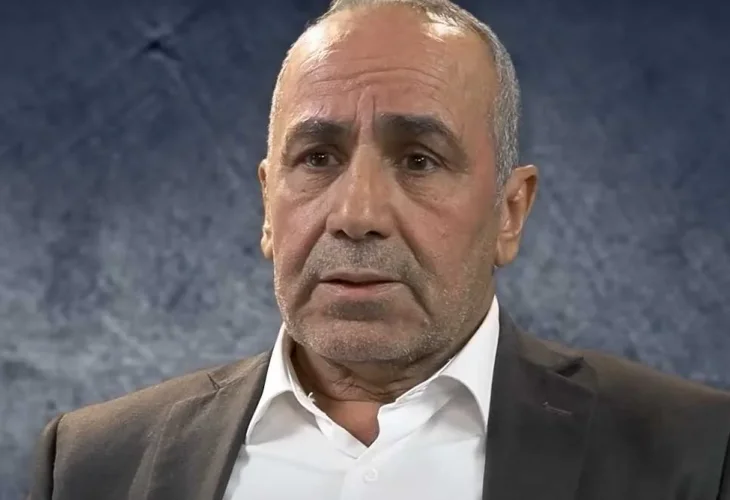 Rachamim Farjan
Rachamim Farjan was standing at the airport in Iran, moments before the plane to Turkey was scheduled to take off. He was supposed to board it together with his wife and their two daughters, ages one-and-a-half and three. Suddenly, a stern-faced official approached them and demanded to know: “Are you Jewish or Muslim?”
“I was holding a green Muslim passport in my hand, and logically I should have answered that I was Muslim — but I simply couldn’t,” Rachamim recalls today, thirty years after the dramatic incident at the airport. “I told him I was Jewish, and in my heart I didn’t know what frightened me more — that my wife and daughters would be allowed to board while I would be left behind in Iran, or that they would detain all of us and we would miss the flight. The fear was immense, and this was only one stop along the journey we went through on our way to the Holy Land.”
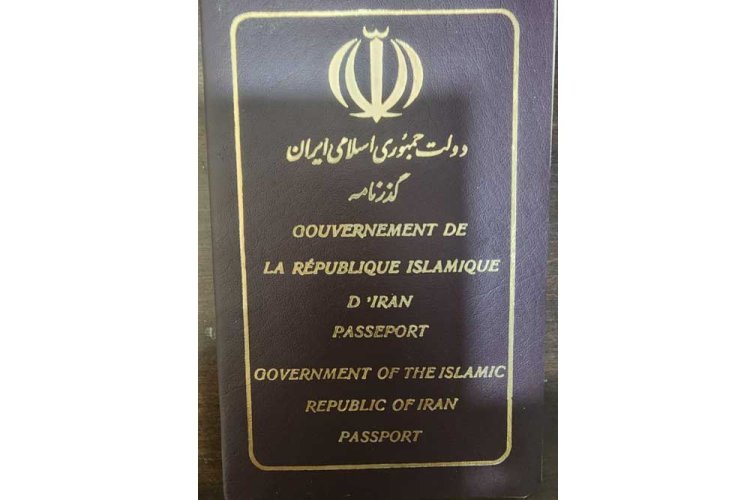
The Passport Operation
Rachamim’s story is chilling, and it actually begins many years earlier, when he grew up as a young boy in the city of Rafsanjan in Iran, in a warm, close-knit and very religious family.
“I studied in a Muslim school, like most Jewish children my age, and among other things we learned the Quran there,” he says.
“I always knew I wanted to move to Israel, because Jews have no other place — that was the message my parents constantly instilled in us. That desire grew stronger during the Iranian Revolution, when I heard in the media how they spoke against Israel and brainwashed the public, claiming Israel kills children and other nonsense that reflected the hatred toward the Jewish people. It was clear to me that I had no future in Iran. But like many Iranian Jews — some of whom remain there even today — it was difficult to leave because of the property I owned.
“After I got married, I ran an electronics store and employed many young Jewish men, helping them earn a living. Personally, I would encourage them to move to Israel, and in some cases I even assisted them and drove them to the border, from where they continued to other countries on their way to Israel. Among those I helped were my younger brother and my nephew. We made great efforts, and they managed to reach Israel at a time when fear of the regime was very great, and Jewish life had become unbearable — religiously, socially, and economically.
“Another reason I didn’t leave earlier was that I was the eldest son, and I lived with my elderly parents. I knew I would not move to Israel without them. So I stayed in Iran, outwardly living a normal life — running the store and raising our daughters with my wife, but inwardly constantly thinking about how to get my parents out of the country.
“After five years of effort, I finally managed to reach the Interior Ministry in Tehran, where they handed me an envelope containing a letter stating that my parents’ passports were ready. It was incredibly emotional news that we had waited for so long. I hurried to the address written on the letter to receive the passports. A 15-year-old boy opened the door, but when I handed him the envelope, he refused to give me the passports. It was clear he was filled with hatred toward Jews and refused to cooperate.
“In the end — after pleading, threatening, promising, and finally bribing, I managed to get the passports into my hands. I knew that at least for my parents, the gates had opened. And indeed, in complicated ways we managed to smuggle them out of the country and bring them to Israel.
“At that point I still needed a passport for myself, because my wife and daughters already had theirs. The authorities enforced a rule that each family could have a passport either for the husband or the wife — but not both — to prevent people from escaping. In our case, when we married, my wife had a Jewish passport, and she registered both girls under hers. I had a ‘green passport,’ meaning a forged Muslim passport.”
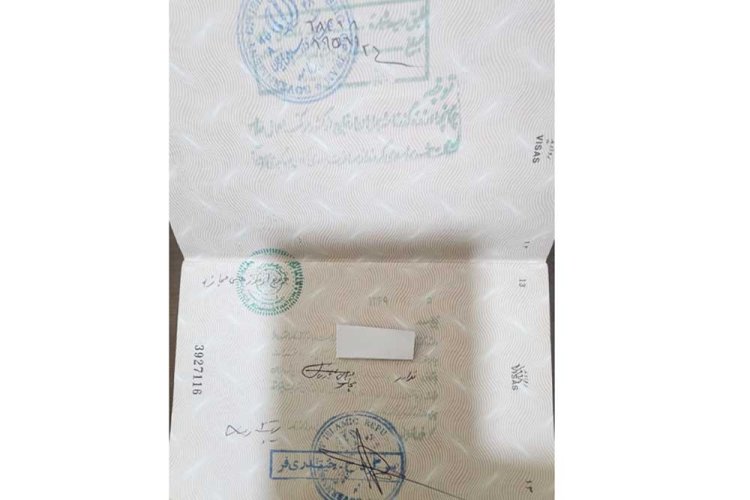
Leaving in a Hurry
Rachamim continued running his business as usual on the surface — but deep down he knew everything was temporary.
“One day I noticed two men from the Revolutionary Guards who had broken into my yard through the wall, and it terrified all of us,” he recalls. “I told my wife that above all else, she must hide all of our documents. In the meantime, we went to stay at her parents’ home. But we knew even there we weren’t safe — the only truly safe place for us was Israel.
“I also knew they were watching me closely. I wasn’t surprised when a close friend, who had connections with people tied to the Revolutionary Guards and the police, contacted me and warned: ‘Someone filed a complaint about a property you sold, and they are going to investigate you soon. You must be careful.’
“I was terrified. I knew this wasn’t an empty warning. I realized I had to leave the country — and fast.
“That same day I bought plane tickets for myself, my wife and our daughters — at five times the normal price, because once they understood I was trying to escape, they immediately raised the price. Within three days I sold everything I owned — my apartment, both cars, and the store, at a huge loss, for only $160,000. The only thing that mattered was getting out.
“We packed very few belongings into one suitcase — that was everything we took with us to the airport.”
 אילוסטרציה
“Jewish or Muslim?”
Rachamim pauses and notes the Hebrew dates: “I received the warning on the night after Yom Kippur. We flew to Turkey on the night after the first day of Sukkot, and we arrived in Israel on Hoshana Rabbah.”
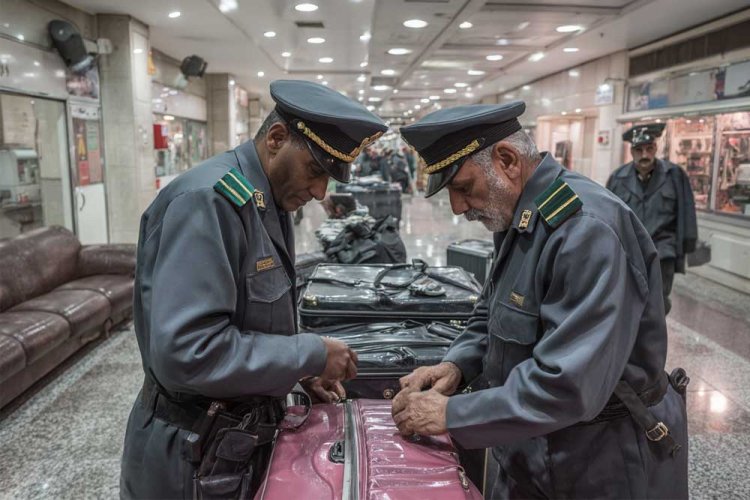
But the process was far from simple. “When we arrived at the airport, we stood in line for baggage inspection. The clerk checked and checked, and after about twenty minutes let us through. I thought everything was fine — but suddenly a tall man with a walkie-talkie approached and demanded: ‘Give me your passport.’
“I had no choice — I handed it to him. It took him only a few seconds to glance at it before asking, ‘Are you Jewish or Muslim?’
“Only later did I realize how he became suspicious — I had packed my tefillin in the suitcase and refused to leave them behind. Apparently, the security staff detected them and immediately understood that the nationality listed in the passport didn’t match my true identity.
“I knew that if I wanted him to let me through, I should answer ‘Muslim’ — but I simply couldn’t say it. I told the truth: ‘I am Jewish.’
“I was certain he would detain me on the spot. Instead, after a long silence, he said: ‘There is a problem with your passport — the birthdate of your younger daughter is different from the one in the identity records.’
“I was stunned. He didn’t mention the forged passport at all. He directed me to the Interior Office to correct the date. Miraculously, it was still open — and in the final minutes before the flight, we managed to fix the issue and board the plane to Turkey.
“Only once we were on the plane did we allow ourselves to breathe. It was at the very last moment — and clearly nothing short of divine intervention.”
 אילוסטרציה
“There’s No Future in Iran”
The family stayed in Turkey for three days. On Motzaei Shabbat — the night of Hoshana Rabbah, they boarded a flight to Israel.
“We arrived on the last day of Sukkot, the eve of Simchat Torah,” Rachamim says emotionally.
“For four days we stayed in a small apartment provided by the Jewish Agency. I kept shushing my wife and daughters constantly — afraid someone might hear us. The fear we lived with in Iran didn’t disappear overnight. I was afraid of everything. But as the days passed, we slowly relaxed. We reunited with my parents and with relatives and friends who were already in Israel.
“There was great joy — but also pain for those who remained behind.”
Why didn’t everyone from the community do what you did?
“We’re talking about a wealthy community — families living in large private homes,” he explains. “It’s hard for them to abandon everything and walk away.
“They could leave through other countries. But they don’t, because they can’t bring themselves to give up their property. And it pains me deeply.
“No Jew has a future in Iran. The situation is dangerous — socially, religiously, economically, and especially now, as tensions with Israel worsen.”
“Every year, when I retell our story on Hoshana Rabbah, I make a point to pray for those who still remain there — that they too will merit to reach Israel. Here they will be welcomed with love, warmth, and open arms. I know they will be safe here — the main thing is that they come.”

