

Magazine
Simchat Torah Under Fire: The Chabad Emissary in the Gaza Envelope Who Protected Nova Survivors
Eli Levi shares the hours of fear and miracles on October 7, and the long journey of trauma, healing, and choosing life
- Moriah Luz
- | Updated
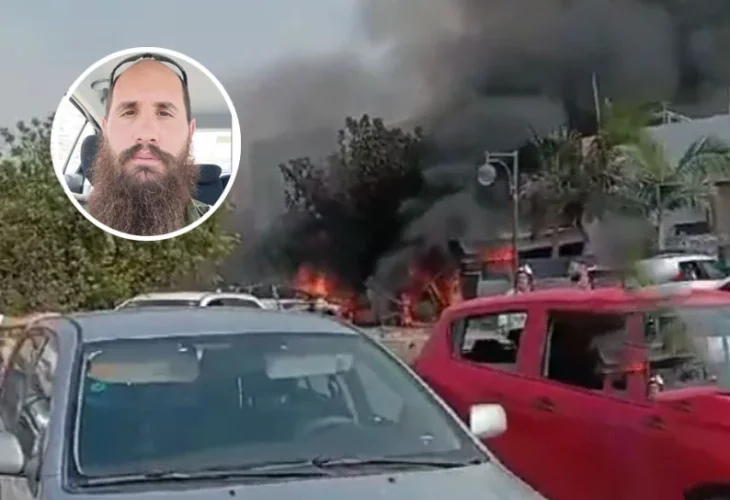 The missile strike in Yosheviyah during Simchat Torah 5784. Inset: Elie Levi
On the night of Simchat Torah 5784, with the joyous dancing and hakafot carrying deep into the night, Eli Levi — a Chabad shaliach in the Gaza Envelope, could never have imagined what the next day would bring. Two years after the massacre, he recounts the Nova survivors who fled into his moshav, the hundreds of terrorists who passed nearby, the open miracle — and the lingering trauma.
A Blend of Breslov and Chabad
Levi and his wife both became religious — each independently, in their early twenties. They met during their teshuvah process, when he was already wearing a hat and suit, and she still had dreadlocks. Today they live with their six children in Moshav Yoshivia in the Gaza Envelope.
He is the manager and guitarist of the musical ensemble “Atika Kadisha,” gives lectures and workshops, and serves as a Chabad emissary to IDF soldiers in the region. His wife, Hodaya, is a psychologist who works with people coping with mental-health challenges, and in the past two years has focused on therapy for Nova survivors and for youth from the local kibbutzim.
For 13 years, Yoshivia has had a community group called “Garin Or,” which brings together Breslov and Chabad chassidim living alongside the veteran moshav families. “We do everything together,” Levi says. “We go together to the soldiers on the border, and our Chabad mitzvah-tank is also the Breslov van."
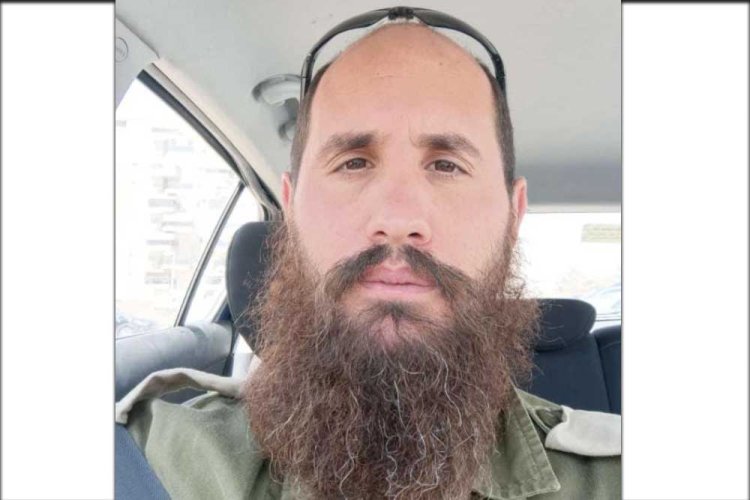 Elie Levi
How did Simchat Torah begin for you?
“The night of the holiday was vibrant and full of life. Around fifty teenage boys and young men came from different parts of the country to uplift the joy. We finished the dancing and hakafot only around eleven at night — and then we began the festive meal.”
They woke at 6:30 in the morning to the first Red Alert sirens.
“Because we live in the Gaza Envelope, we have fifteen seconds to reach a shelter. We stood inside the safe room, and I realized the siren wasn’t stopping. That’s when I began to suspect something much bigger was happening.”
Levi, who serves as deputy emergency coordinator of the moshav, opened the safe-room window and heard explosions — which he recognized as helicopter fire. He knew that the army does not conduct training exercises on Shabbat or holidays, and his sense grew stronger that a serious terror event was unfolding. Moments later, the emergency coordinator arrived and called him out with a megaphone to join the rapid-response security team.
![Levi's children during Sukkot before the massacre, visiting IDF soldiers in the border area]() Levi's children during Sukkot before the massacre, visiting IDF soldiers in the border area
Levi's children during Sukkot before the massacre, visiting IDF soldiers in the border area
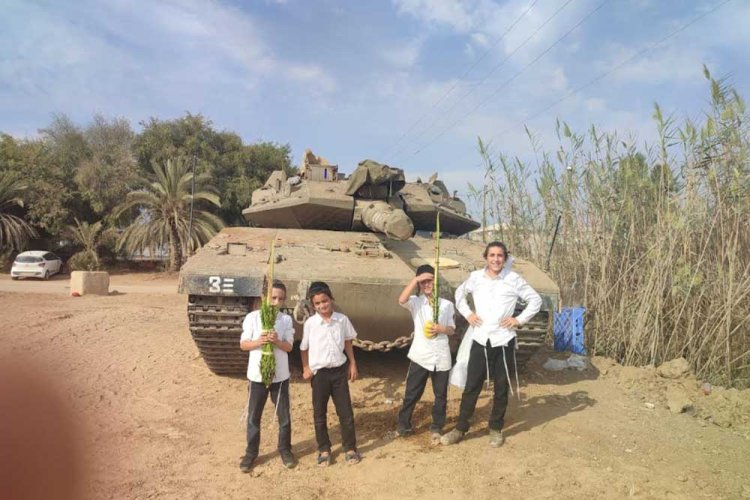 Levi's children during Sukkot before the massacre, visiting IDF soldiers in the border area
How many people are in the rapid-response team?
“Eight. And we had only pistols. Four months earlier they took all the long-range rifles from the moshav armory. I don’t know why — ask former Shin Bet chief Ronen Bar.” According to Levi, the same directive applied to neighboring communities as well.
From a few hundred meters away, on the main road, Levi saw white pickup trucks speeding along. He assumed they were Bedouins from a nearby town and expected to see police cars chasing them — but the trucks multiplied, and no police appeared.
At 8:00 AM, Levi was asked to check the public shelters and ensure they were opened. When he reached one of them, he entered the code — but the door didn’t open. After confirming with the coordinator that the code was correct, he began pounding on the door.
Suddenly it opened — and a tall young man with tattoos and dreadlocks stood there. He led Levi inside — where about ten traumatized young people lay on the floor, some lightly injured. They had escaped the Nova festival, and had run directly into the terrorists on their way out.
Levi tried to calm them in his warm Chabad style: “Good morning, holy souls… I’m from the security team. Don’t worry — it’s just rockets. The army will catch the terrorists. Everything will be okay.”
“They looked at me and said, ‘Brother, you have no idea what’s happening on the roads.’ One of them took out his phone and showed me footage from Arab social media. I recognized the kibbutzim — I knew the places.”
Levi immediately called his wife and a neighbor — both therapists. They rushed over with fruit and calming medication and began supporting the survivors.
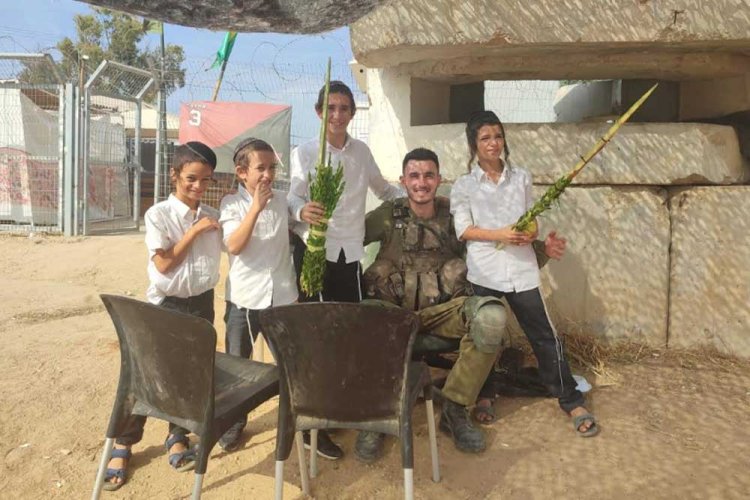 Dvir Zakai, may his memory be a blessing, shortly before his death with Levi's children
“It Was Just Us — and G-d”
“Hour after hour passed without change. The skies were black with rockets, sirens nonstop. We had no manpower — just eight of us — and everyone else locked in their homes.”
The lookouts were his two oldest sons — ages 12 and 10, together with several local teens.
“They stood on rooftops near the entrance to the moshav with makeshift defenses. Later we learned that on Route 34 — our road, there were about 400 terrorists and around 250 murdered civilians.”
He called the police and waited nearly an hour before someone answered.
The officer asked whether there were terrorists inside the moshav. When Levi answered no, the officer said, with deep regret, that he could not help — the entire region was under attack and people were being murdered inside their homes nearby. “At that moment I understood — it’s just us, and the Holy One, blessed be He.”
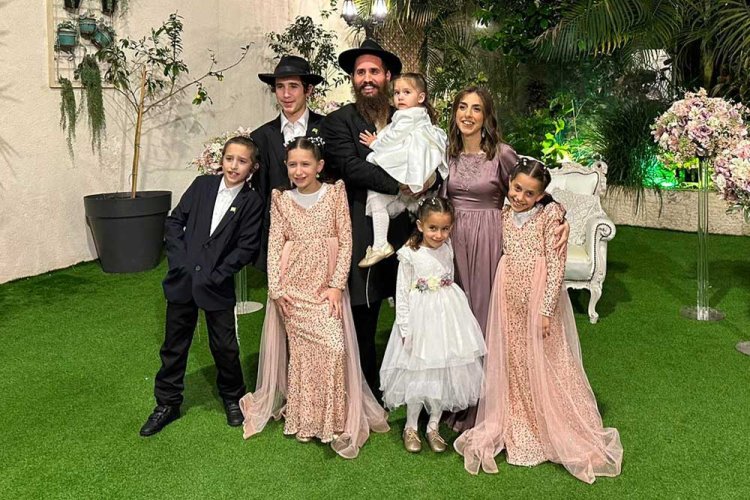 Levi family
A Miracle at the Entrance
Near midday, they gathered several families for a joint holiday meal — along with the teens and the Nova survivors. They sang, danced, shared words of Torah, with weapons beside their chairs.
Then, a massive explosion. Windows shattered, chandeliers fell, the table collapsed. Levi thought terrorists had breached the moshav — and rushed outside with two others.
A huge fireball greeted them. Levi — a combat trauma survivor from a previous war, felt the trauma flood back. But then he noticed a burning gas tank hit by shrapnel — seconds from exploding like a bomb, and evacuated everyone immediately.
The missile had landed seven meters from the house. By miracle, the home it struck was empty. Cars burned. Houses caught fire. Residents rescued trapped neighbors on their own.
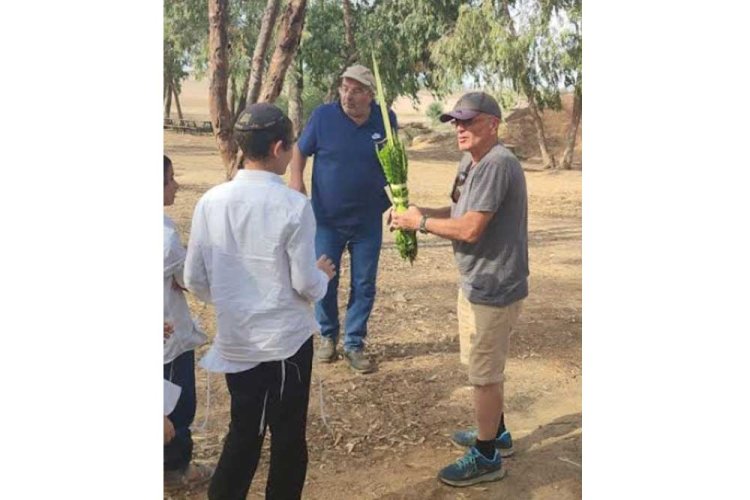 Offering to the residents of the border area to shake the Four Species shortly before the massacre
“They Had Maps of Our Homes”
Surveillance footage later revealed that they fired toward the entrance — and continued onward.
“We now know there were twelve Nukhba terrorists on their way to Yoshivia. They had detailed intelligence — maps of the moshav marking homes, including mine and the security chief’s, with the names and number of children in each family.”
According to Levi, they were eliminated hours later by an aerial strike.
“We were the only community on the road they didn’t enter. It’s beyond nature. There is a tremendous amount of Torah learning and spiritual activity here. The Torah protected us.”
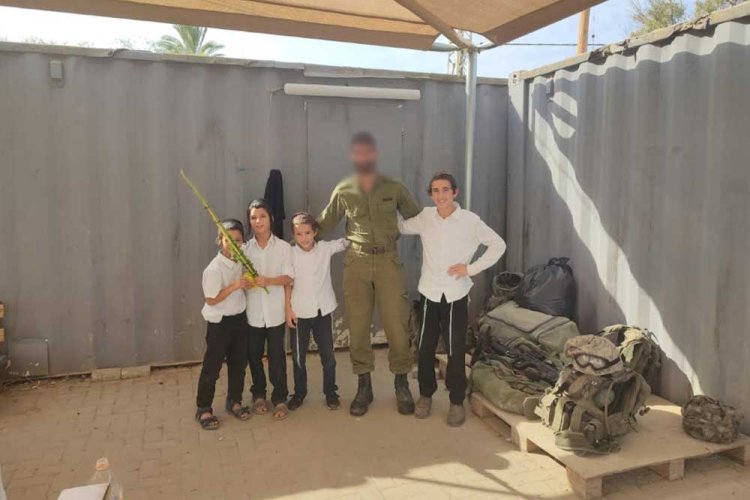 With soldiers at the border
Evacuation — and Healing
Around 8:30 PM, the first IDF force arrived. The soldiers told them the roads were full of terrorists — and the residents decided to evacuate in convoy.
The family was temporarily housed in Jerusalem — then four months in Tzfat, where generous people arranged housing and support.
“As a combat-trauma survivor, my body shut down. For almost five days, I couldn’t speak.”
Only afterward did he grasp the full scale of the massacre — including many soldiers he had visited and prayed with just the day before.
But Levi chose life. “I believe the power of life — and choosing life is the strongest thing we have.”
Today, he and his wife continue supporting Nova survivors who sheltered in their moshav that day — many still on a long healing journey. They return each Simchat Torah to Yoshivia for emotional closure — dancing again, this time in life and hope.
“Despite everything we went through, we chose life. The joy of the Torah is above everything — and it heals.”

