

Raising Children
Understanding the Holocaust: Reflections from Rabbi Shach
"Surely, Hashem has His reasons, and He does nothing without purpose." Rabbi Shach offers insights into the tragedy of the Holocaust and shares a letter of empowerment from "Shomer Emunim" for Holocaust survivors.
- Rabbi Yaakov Yisrael Lugasi
- | Updated
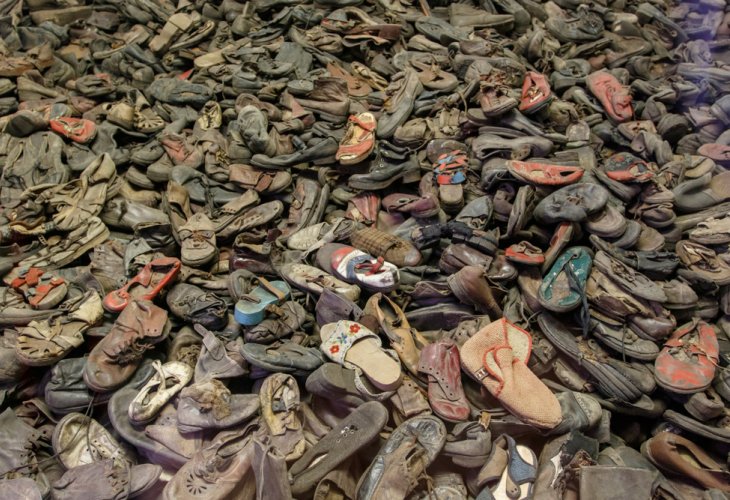 (Photo: Shutterstock)
 Why was there a Holocaust? A question that lingers with many. Decades ago, six million Jews perished in the Holocaust—a tragedy compounded by years of unrest dating back to World War I. This unrest extended to Russia, where countless Jews suffered, and the end is not yet in sight. Amid this intense sorrow for our six million brethren, there's a fundamental question we rarely pause to consider: Why did it happen? Could it be, Heaven forbid, that Hashem acts cruelly? Certainly not, for He is compassionate and merciful. What did Hashem intend by allowing such a decree upon our people? Is it conceivable that man, like Hitler, could have destroyed six million Jews alone? If that's our belief, it shows a misunderstanding of the divine governance in our world. The answer, however painful, is clear. Hashem orchestrated a divine reckoning, spanning centuries, leading up to six million Jews. The Holocaust was the result. For a Jew to believe otherwise is to deny this fundamental truth. If we do not accept it as a divine punishment, it implies disbelief in Hashem, Heaven forbid. Young people today might not realize that, prior to the war, in Russia's large Jewish population of six million, there were very few *yeshivot*. Cities like Vilna and Kovno hosted only a couple of yeshivot each, their students primarily from nearby settlements, not from the cities themselves. Where were the countless Jewish youth? They were entrenched in Russian schools, far removed from traditional Jewish life. Rabbi Shach continues: "When Jews align themselves too closely with European cultures, history shows that anti-Semitism rises. This has been evident in places like Germany and England, where Jews sought to assimilate, only to be met with heightened hatred. The same principle applies today: if Jews are indistinguishable from other nations, they face rejection. Conversely, where Jews maintain their identity, they are respected, sometimes even achieving high ranks. Looking further back, during the oppressive times in Egypt, when Jews tried to ease their burden by integrating with the Egyptians, it only fueled Egyptian hatred, ultimately leading to the Jews realizing their mistake and their eventual redemption. A comforting perspective comes from "Shomer Emunim," who wrote to Holocaust survivors about the merits and faith required amidst their suffering. He reminds them that while physical suffering is harsh, the essence of the Jewish soul remains untouchable and that Hashem's ultimate plan promises redemption and unparalleled joy in the times of our righteous Messiah. Moreover, even the seemingly wicked who suffer at the hands of a non-Jew acquire immense spiritual elevation and atonement through their trials. Rabbi "Shomer Emunim" notes that when Jews face pain from non-Jews, it constitutes a necessary correction for their souls, bringing them closer to spiritual redemption. Through this lens, we can see our trials not as Hashem abandoning us, but as part of a divine preparation for the incredible revelations and joy awaiting Israel. Perhaps we may struggle to fully grasp this promise, but our faith must remain unwavering. Strengthen your faith—Hashem's compassion and ultimate joy will come to us, bringing news of redemption and comfort to all of Israel.

