

Israel News
The Ultimate Guide to Eating Fruit — Fiber, Vitamins, Natural Sugars and Portion Tips
When to eat fruit, how it supports metabolism and fullness, the truth about fructose and glucose, colorful phytochemicals, and more
- Shira Bar Asher
- | Updated
 (Photo: shutterstock)
Fruit is nature’s candy — and long before the food industry invented candy, fruit was the sweetest thing in the world. Here are some things that are good to know!
Meal schedule: Snack times
The best times for eating fruit are your mid-morning snack and your afternoon snack — yes, exactly when you usually reach for something crunchy. When you eat fruit, it’s a good idea to also include a handful of nuts or almonds. That way you get a snack that contains all three major nutrient groups.
Feeling satisfied: Dietary fiber
Fruit contains a generous and impressive amount of dietary fiber.
Fiber is extremely important for healthy metabolism in our body, and it also creates a long-lasting feeling of fullness, which is definitely something you want to feel during the day.
A health powerhouse: A natural multivitamin
Want a burst of vitamins and minerals? Eat fruit. Fruit is rich in folic acid, vitamin C, vitamin K, potassium, magnesium, and more and more. Why miss out on all that goodness?
Sugar in fruit: Fructose and glucose
Fruit contains two natural sugars — fructose and glucose.
Unfortunately, this fact alone scares many people — “If it has sugar, it must make you gain weight.” Well… not exactly!
Fructose and glucose are natural sugars that do not undergo industrial processing like white or brown sugar. They are natural and truly nourishing. If you’re going to reduce sugar intake, reduce it from candy and junk food instead!
How much is a portion of fruit?
Another day went by and you didn’t eat three servings of fruit? One serving of fruit is equal to, for example:
one orange
or one apple
or two kiwis
or two dates
or one cup of cherries
or one cup of strawberries
Fruit “to go”: Juice
If you're craving a drink, the best choice (after water) is fruit juice.
Just remember two things:
Juice contains the fruit without dietary fiber (see the fiber section again).
One cup of juice contains a large amount of fruit — often much more than three whole fruits.
Built to last: Living in color
The pigments that give fruits their color contain substances called phytochemicals, which strengthen the immune system and do many other wonderful things:
Lycopene — red color
Carotenoids — orange and yellow
Chlorophyll, lutein, and sulforaphane — green
Allicin — white
Anthocyanins — purple
Each color has unique benefits — which is why a mix of colors is a winning combination.
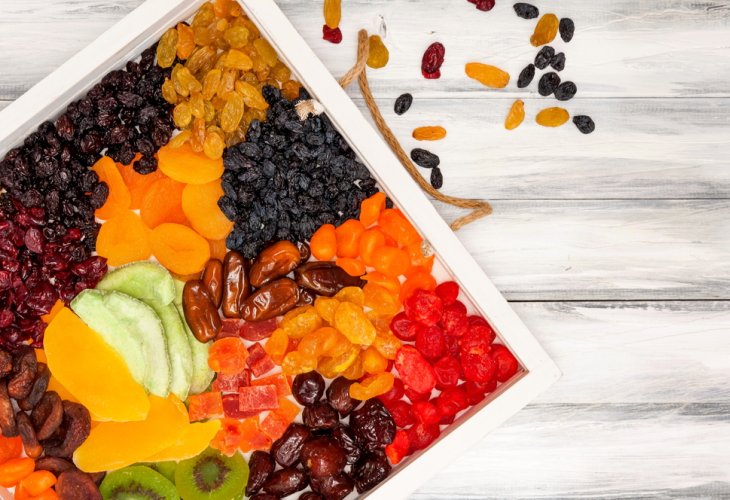
Dried fruit: Tu B'Shvat is here
If you're eating dried fruit, be aware that many dried fruits also contain additives such as:
E220 (sulfur dioxide),
E905 (paraffin),
E202 (potassium salt),
E223 (preservative),
E102 (tartrazine),
E509 (another preservative).
It's therefore better to eat:
dates — which wrinkle naturally on the tree, or
fruit dried naturally
Always read the package ingredients so that you can be well informed.

