

Jewish Dating
The Meaning of Tu b'Shevat Fruits: History, Symbolism & Healing Traditions
Discover the roots, cultural significance, health benefits, and fascinating Jewish heritage behind classic Tu B'Shvat fruits
- Hidabroot
- | Updated
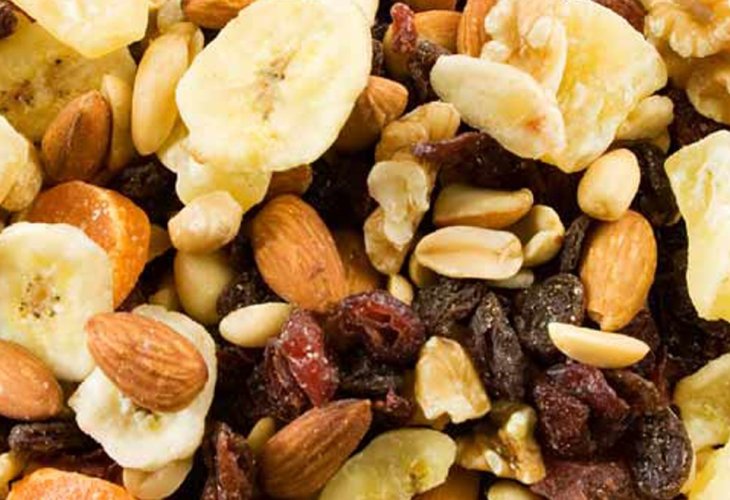
In this article we will explore the health benefits and significance of popular fruits and nuts.
Walnuts
The walnut is mentioned in the Bible only once: “I went down to the walnut garden” (Shir HaShirim 6).
The walnut originated in Asian lands, especially Persia and India. From there it spread to many parts of the world. Today there is a massive international trade in whole and shelled walnuts. Because of its delicate and refined taste, the walnut is considered a prestigious food. It is warming in nature and very rich in unsaturated oils, and is therefore regarded as beneficial for those who suffer from digestive problems and vascular diseases.
Walnuts contain many minerals as well as abundant vitamins. They are recommended for thin or underweight people. According to Arabic tradition, walnuts eaten together with dates are said to benefit heart conditions and strengthen the body’s physical energy. Soft walnuts have also been used for hair dye (similar to the use of henna). The green outer husk of the walnut, in which the nut grows on the tree, has traditionally been used to whiten teeth and to help treat gum inflammation and bleeding — by rubbing the affected area firmly back and forth.
Among Chassidic masters, a tradition was preserved regarding a special remedy passed down from their forefathers: if a person becomes paralyzed in his entire body or partially so, walnut leaves are to be cooked for a long time in water until the water absorbs their brown color (similar to tea). The patient is then to bathe in this infusion as often as possible for several months. For those suffering from kidney or urinary stones, some traditions recommend eating walnuts fried in honey for several days.
Most of the walnuts available in Israel today are imported. Attempts to cultivate a fine local variety have not been successful. Walnuts keep for a relatively long time, although their delicate taste gradually fades with age. They are eaten raw, added to salads and pastries, and walnut oil is also produced from them.
Traditional folk uses describe walnuts fried in honey as a remedy for dissolving urinary stones; decoctions of walnut bark for back pain; mixtures of bark and henna as a cleansing agent; roasted walnuts or leaves soaked in wine as a treatment for intestinal worms; walnut oil mixed with honey and semolina as an ointment for swelling; and walnut-leaf tea as a soothing digestive drink.
The blessing for walnuts is: “Borei Pri Ha’etz” — Who creates the fruit of the tree.
Carob
The carob tree grows mainly in the Galilee and Carmel mountain regions. It originates in the Land of Israel and from here spread throughout the Mediterranean. The carob grows wild and is one of the characteristic trees of the land. There are many varieties of carob, though only two are common in Israel.
The Hebrew word charuv (carob) is associated either with the word cherev (sword), because the pod resembles a curved or straight blade, or with chorav (dryness), since the carob grows in dry regions and its fruit itself is entirely dry. Although native to Israel, the carob is not mentioned in the Bible, but it is frequently referenced in the Mishnah. Rabbi Ovadiah of Bartenura wrote in his letters: “There are many carobs in this land, and they produce honey from them.”
Carob fruit is rich in sugar and protein and is therefore nourishing. Although edible for humans, its primary use today is as animal fodder. Maimonides wrote that carobs are “harmful to the body,” and another early source notes: “Carobs damage the teeth.”
Carob is also used to produce honey and alcohol. Many people attribute beneficial effects to it for digestion, appetite stimulation, respiratory problems, coughs, and diarrhea. Carob honey is considered useful for treating mouth sores. The Jewish National Fund has planted many carob trees as part of land-renewal projects, and they are also seen as a valuable economic crop.
The expression “a kav of carobs” became a symbol of simplicity and ascetic living, based on the Talmudic statement about Rabbi Chanina ben Dosa, who lived contentedly on “a kav of carobs from one Shabbat to the next.”
Although carob is not one of the Seven Species of the Land of Israel, it is greatly beloved among the Jewish people and often placed on the Tu B'Shvat table, where it is honored like the special fruits of the land — perhaps because it symbolizes modesty and humble living.
Carob is also famous because of the miracle associated with Rabbi Shimon bar Yochai and his son during their years of hiding in a cave near Peki’in. A carob tree miraculously grew at the cave entrance, and a spring flowed to sustain them for thirteen years (Talmud, Shabbat 33b). The cave and carob tree are still shown there today.
Carob is used to produce carob honey and syrups, flour for baking, infant food, alcohol for wine production and medicine, and resin for food and cosmetic industries.
The blessing for carob is: “Borei Pri Ha’etz.”
Papaya
The papaya is astonishing in nature. Though technically an herb, it stands tall like a tree and grows easily and quickly. Papaya fruit is highly valued and widely eaten in Europe and the Americas. It originated in Central America and later spread across tropical regions worldwide. While globally it is cultivated in great quantities, its growth in Israel is limited, as it does not adapt well to the local climate — though agricultural experts continue efforts to acclimate it.
Papaya is eaten fresh in salads, cooked, or pickled. It is rich in vitamins B, C, and E. Traditional health uses attribute to it benefits for digestive disorders, ulcers, gas, bloating, constipation, and intestinal inflammation.
Papaya leaves are also used to make herbal tea, believed to have similar beneficial effects. Dried papaya can be ground into a powder used as a meat tenderizer and seasoning. Some researchers claim papaya supports heart health, slows premature aging, and assists in wound care and tissue repair. It is also used in cosmetic and medicinal creams.
The blessing for papaya is: “Borei Pri Ha’etz.”
Plum
There are many varieties of plums, including wild-growing types. The plum is an important orchard fruit worldwide and is eaten fresh, cooked, dried, and used in beverages and preserves. A significant portion of the global crop is dried and sold as prunes.
Prune water (made by soaking dried plums) is considered nourishing and used traditionally for improving circulation and relieving constipation and hemorrhoids. Decoctions of plum leaves have been used externally for burns and hair loss, and internally for diabetes and lung inflammation. Crushed leaves mixed with olive oil were also used for hemorrhoid pain.
Plums vary greatly in taste (sweet or sour), fleshiness, juiciness, and color — green, yellow, purple, red, and black — depending on variety, not ripeness. They are rich in vitamins B and E and iron and are traditionally recommended for general weakness.
The blessing for plums is: “Borei Pri Ha’etz.”
Almond
The almond is mentioned in the Bible and Talmud and originated in Asia before being introduced to many lands, including Israel. Global almond production exceeds half a million tons, and many varieties exist, including bitter almonds used in the food industry. Almonds are eaten raw, salted, roasted, ground for pastries and sweets, and used in chocolate, marzipan, and liqueurs.
The almond tree is beautiful in its early spring blossom, which appears even before its leaves — hence its name shaked (hastening, diligence), as referenced in Yirmiyahu: “I see a rod of an almond tree… for I am watchful (shoked).”
Almonds contain healthy oils, iron, protein, and vitamins. Raw almonds are nutritionally preferable to roasted ones. Almond oil has traditionally been used for coughs, lung ailments, digestive issues, dry throat, and nursing mothers.
Unroasted almonds soaked to remove their thin skin are said to soothe heartburn. Bitter almond oil was historically valued for its medicinal qualities.
Traditional remedies also mention almond oil for hemorrhoids, digestive ailments, and skin irritations, as well as almond-based marzipan as a strengthening food.
The blessing for almonds is: “Borei Pri Ha’etz.”

