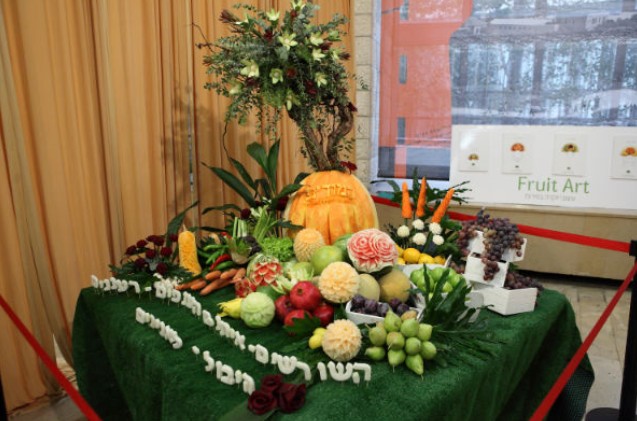
World News
From Market to Masterpiece: The Fruit and Vegetable Carving Art of Tzipi Cohen
Meet the Jerusalem culinary educator who transforms everyday produce into stunning handcrafted sculptures
- Hidabroot
- | Updated
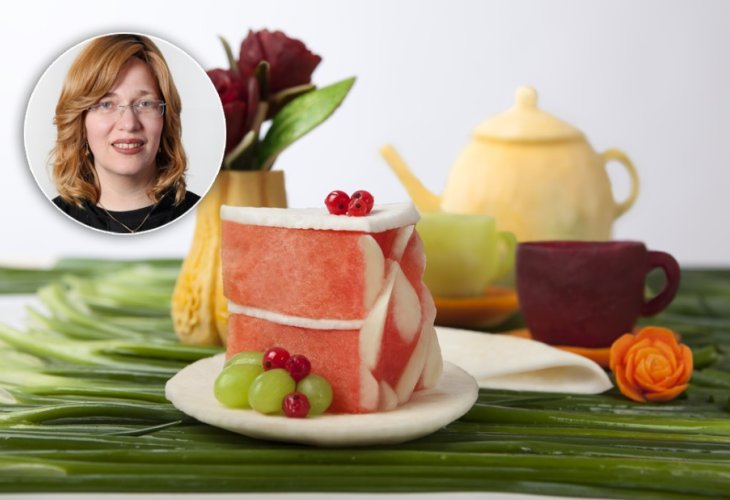 Tzipi Cohen, Director of the Culinary Campus
Tzipi Cohen is the director of the Culinary Campus in Jerusalem — but her day-to-day work often takes place somewhere a little unexpected… the market.
Several times a week, she visits market stalls, filling bags with watermelons, turnips, kohlrabi, pumpkins, and even carrots. With all of these fresh ingredients, she heads back to the culinary campus, where she teaches her students how to carve fruits and vegetables and transform them into beautiful artistic creations.
“It’s amazing to see the beauty and colors that the Creator formed in the world”
“I personally feel a deep connection to anything made from fruits or vegetables,” Tzipi shares. “It requires a lot of time and effort, but their colors are spectacular — very attractive and visually exciting. Every time I work with them, I’m moved all over again by the variety of shades and colors that God created in the world.
“I also really love the creativity involved. There are no limits to imagination — every time, you can create something new and unique that looks nothing like anything you made before.”
How complex is the process? How long does each piece take?
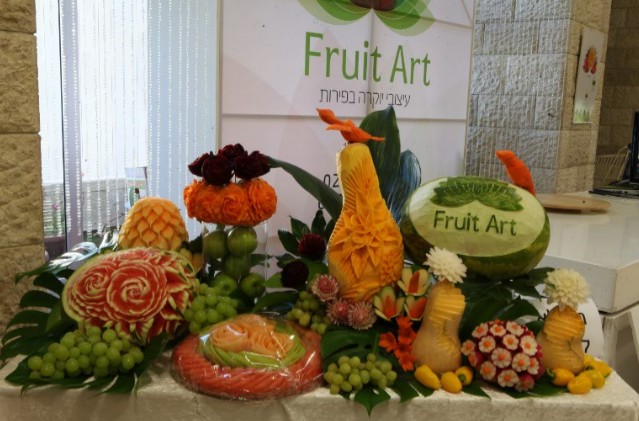
“That really depends on what I’m making,” Tzipi explains. “If we’re talking about slicing a simple fruit platter — that’s easy, something anyone can do. But if you want a more decorative and artistic fruit display, with designs and ornamentation — then it already takes much more time.”
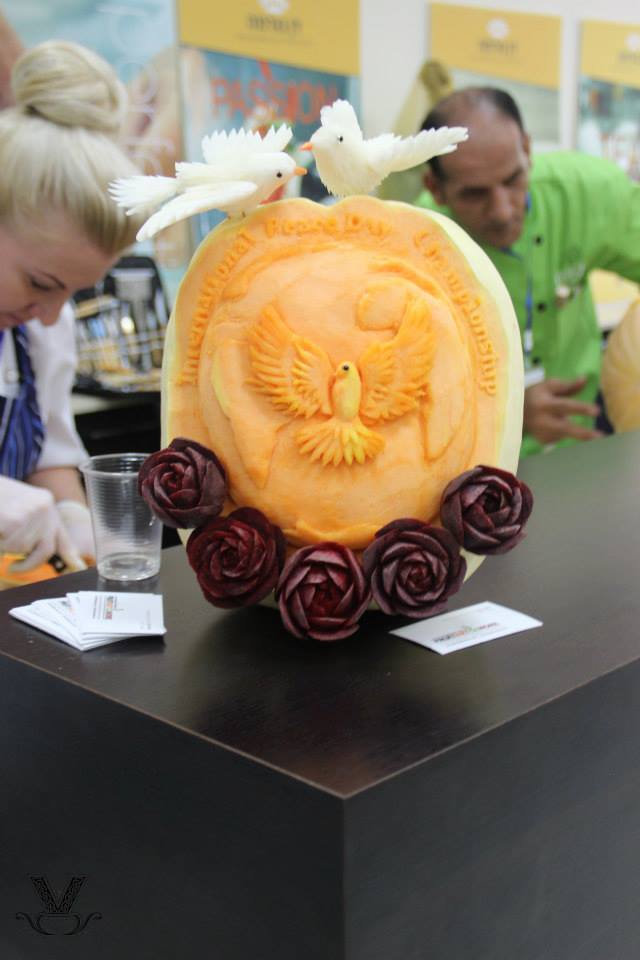
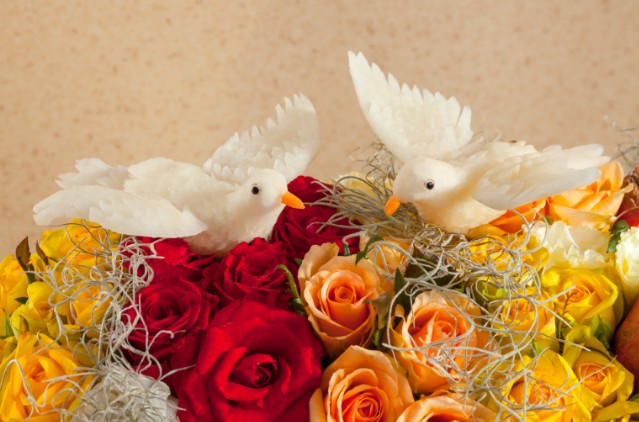
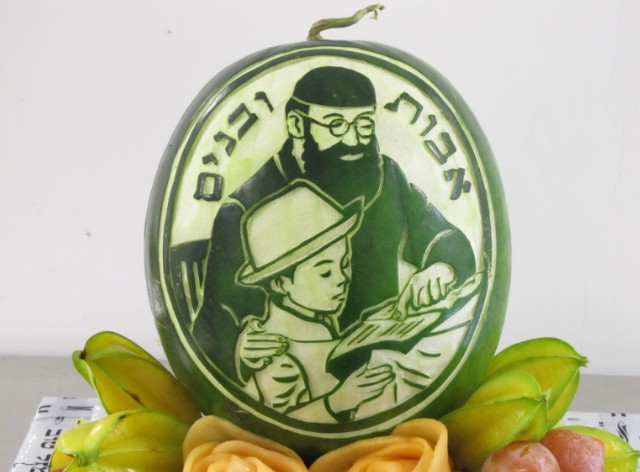
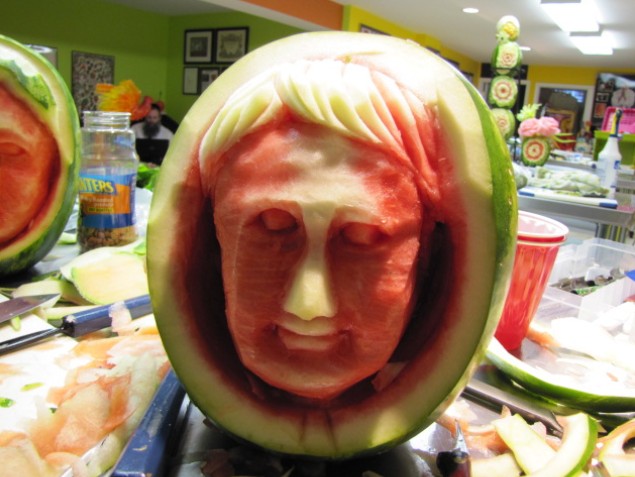
The most demanding work, she says, is when she creates highly detailed carved designs. “For example, when someone asked me to carve a watermelon with a special ‘Fathers and Sons’ theme, it took me three hours. Another time, I sculpted a pumpkin decorated with doves and various artistic patterns — that one took me more than five hours.”
In some cases, Tzipi is asked to design entire tables filled with carved fruit and vegetable decorations — a job that can require several full days of work.
“It’s very delicate, slow, handcrafted work,” she explains. “I use a very small carving knife and I have to work slowly and very precisely. Only that way can you achieve the highest level of detail and quality.”
Taking care not to waste
Throughout her work, Tzipi says she is very careful to preserve the fruits and vegetables so they won’t be wasted.
“Most of the time I carve mainly on the outer layer and peel, so the inside of the fruit isn’t damaged and can be eaten afterward,” she says.
“For that reason, there were rabbis who permitted me to carve even fruits with Shemittah sanctity — on the condition that the leftover pieces are not thrown away, but used in some way, while preserving their sanctity. Of course, the fruits themselves are also treated respectfully.”
Do people actually eat the carved fruits afterward?
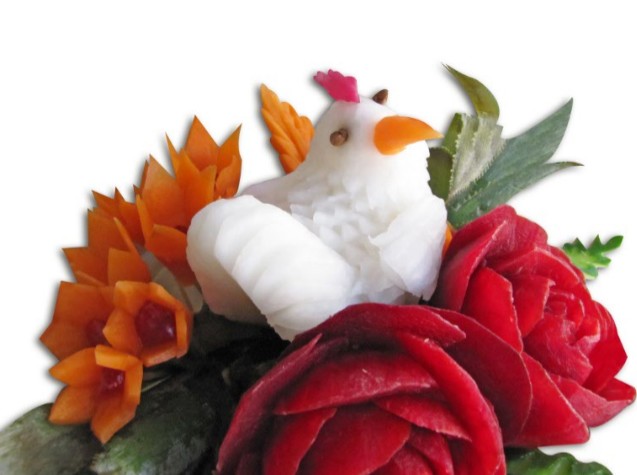
“Usually yes,” she answers. “For example, I once made carved birds out of kohlrabi. I worked on them for quite a while, and after I displayed them in an exhibition — I simply added them to soup, and the children ate them for lunch.
“On the other hand, when I give people gifts like carved watermelons or decorated pumpkins, they sometimes become so attached to them that they can’t bring themselves to eat them. They leave them out for a long time… and eventually they rot and can’t be used anymore.”
Tzipi also recalls times when she and her students prepared beautiful carved pieces — only for them to fall and break on the way home. “It’s very disappointing,” she admits. “I remember one special watermelon I planned to bring as a Bar Mitzvah gift — and on the evening of the event, it fell and exploded. Since then, I’ve made it a rule — as soon as I finish carving, the first thing I do is photograph the piece, so at least I have a keepsake.”
Creative Fruit Art for Tu B'Shvat
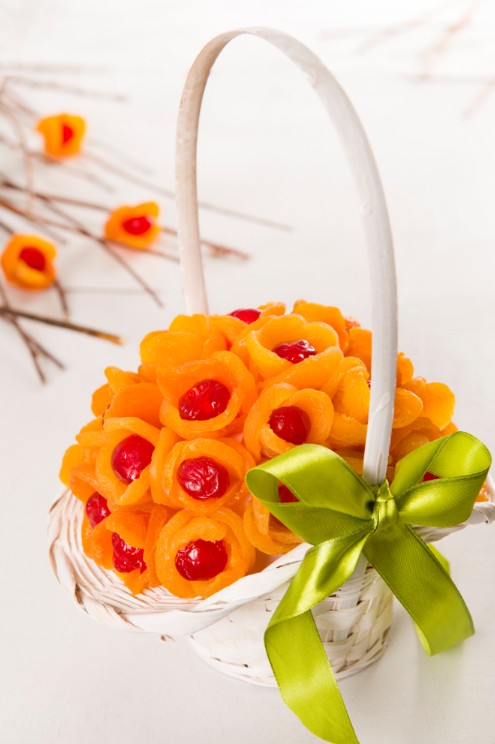
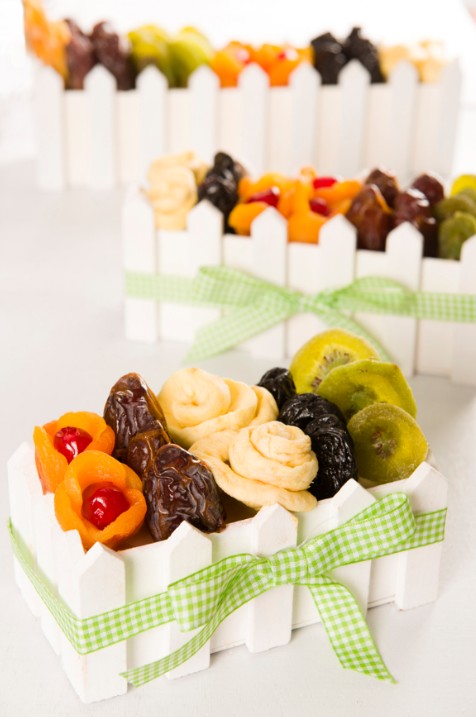
Ahead of Tu B'Shvat, Tzipi shares a beautiful idea that anyone can make at home — a fruit basket or a small planter decorated with dried fruits and floral shapes.
For the basket:
Dried apricots
Dried cherries
Dried apples
For the planter:
Dried apricots
Dried apples
Dried cherries
Plus additional dried fruits such as dates, prunes, and dried peaches
Making the flowers
Open a dried apricot halfway (not all the way). Take another apricot and open it the same way. Place one inside the other and insert a dried cherry in the center — you now have a flower. Prepare several flowers in advance.
Making the roses
Take two strips of dried apple. Shape one strip into a ring. Tear the second strip to create a long ribbon-like piece. Roll the long strip into a spiral shape, forming a rose, and insert it into the ring. You can secure it with a toothpick if needed.
Assembling the basket
Choose a suitable basket, place a piece of Styrofoam inside, and insert the flowers and roses using toothpicks.
Assembling the planter
Choose a small planter. Arrange clusters of flowers and roses, and add whole dried fruits between them until the planter is full. You can also add a ribbon for decoration — creating a charming Tu B'Shvat gift.