

Beginners Guide
What Does the Ketubah Really Ask of a Husband?
What a husband signs in the ketubah doesn’t stay on the wall. As Rabbi Dan Tiomkin teaches, it shows up in daily life, shaping love, respect, and harmony at home.
- Rabbi Dan Tiyomkin
- | Updated
Building a Peaceful Jewish Home
In this section, we delve into the obligations a husband has toward his wife and how fulfilling them creates a Jewish home filled with love, friendship, and peace.
It's important to note that women should not use this lesson to demand or pressure their husbands. Judaism teaches that each spouse should focus on their own responsibilities, not on correcting the other. When each partner concentrates on fulfilling their own obligations, much frustration and conflict can be avoided.
Understanding these commitments helps prevent misunderstandings and lays the foundation for lasting harmony.
The Husband’s Obligations
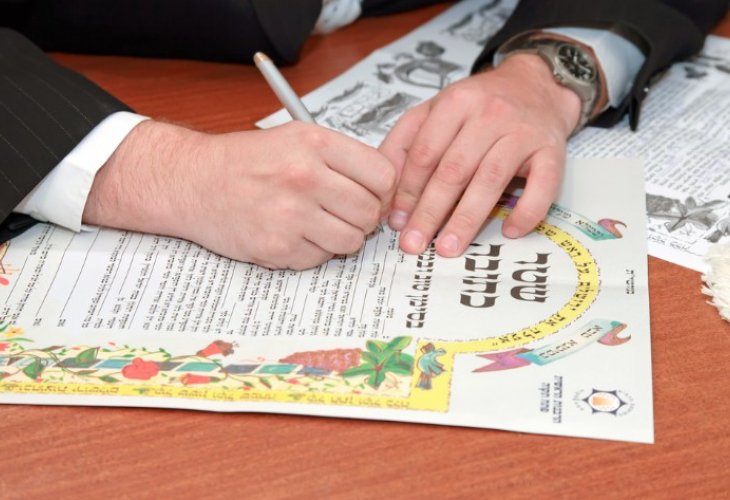
The Torah assigns a husband several obligations toward his wife. These commitments are not theoretical. A man formally accepts them in front of witnesses and writes them into the ketubah.
Knowing what these obligations are allows a husband to fulfill them properly. They align with human nature and emotional needs and are essential for genuine marital peace.
The Meaning of the Ketubah
The ketubah is not a decorative document or a symbolic tradition. It is a binding legal agreement and a cornerstone of Jewish marriage.
Jewish law teaches that a man may not live with his wife even briefly without a valid ketubah. If it is lost, a replacement must be written immediately. This highlights how essential it is to understand what one committed to.
Just as people consult professionals before signing an important contract, a husband must understand the obligations he accepted. Ignoring them harms marital peace in this world and carries spiritual consequences as well.
The ketubah states:
“I will work, honor, support, and provide for you according to the custom of Jewish husbands, who work for, support, and honor their wives faithfully.”
The Central Obligation of Respect
The first obligation listed in the ketubah is honoring one’s wife. This is not incidental. There is a specific commandment to respect one’s wife, and our sages teach that this obligation is even greater than honoring parents or teachers.
The Rambam writes that a husband must honor his wife more than himself. This is essential because a woman’s emotional well-being is deeply tied to feeling respected by her husband.
What Does Respect Look Like in Practice?
Although many people know that a husband must honor his wife more than himself, this idea often remains vague. Respect can look different from one woman to another, but general principles can guide daily behavior.
With awareness and divine assistance, respect can become a natural part of everyday life.
When Respect Is Undermined
One of the greatest threats to honoring one’s wife occurs when a husband tries to educate, correct, or supervise her.
Even when done with good intentions, taking on the role of instructor or disciplinarian often leads to resentment and future conflict. Criticism, even when softened with kindness, is frequently experienced as disrespect and can undo many positive efforts.
The deeper principle is this: rather than correcting one’s wife, a husband should see her reactions as a mirror reflecting areas within himself that need growth.
The Question of Holding Back
A common concern arises: how can a husband remain silent about irritations without eventually exploding?
The answer lies in perspective. When a husband understands that his wife’s behavior reflects areas he needs to refine, his focus shifts from frustration to self-improvement.
If criticism must be expressed, he should first pray for divine help so his words are received positively. He should wait for a calm moment and frame his words within genuine appreciation and affection.
When a wife senses her husband’s consistent effort to honor and support her, she naturally becomes more receptive to change.
Honoring Her More Than Himself
Honoring one’s wife means actively expressing appreciation on a daily basis.
Household work, child-rearing, and emotional labor are often undervalued because they do not carry titles or salaries. Recognizing these efforts sincerely fills a wife with the emotional strength she needs.
Understanding her specific needs and addressing them early is far more effective than waiting for frustration to build.
Who Comes First?
Respect is demonstrated through actions. Helping at home, offering encouragement, and prioritizing one’s wife during stressful times all communicate that she comes first.
A wife must feel that she is the most important person in her husband’s life.
When a husband fulfills this obligation, he gains as well. He strengthens his integrity, develops humility, benefits from rabbinic blessings associated with honoring one’s wife, and enjoys a relationship built on trust and mutual understanding.
When There Is Resistance
Sometimes a wife resists an idea that appears spiritually positive. This is often a sign that the husband is not yet ready for that step.
In such cases, allowing the wife to have the final say, accompanied by sincere prayer, can ultimately bring greater merit and lead to a better outcome later.
For example, if a husband wishes to attend a study session at a time that creates tension at home, honoring his wife’s needs may lead, in time, to a solution that benefits both.
A Path to Peace
A peaceful home is not built through demands or corrections. It is built through responsibility, respect, patience, and sincere effort.
When a husband focuses on fulfilling his obligations with care and humility, he creates an environment where love, friendship, and peace can flourish naturally.

