

World News
The Second Temple: Fascinating Facts You Might Not Know
Built after exile and expanded by kings, the Second Temple stood at the heart of Jewish life for centuries. Discover fascinating facts and key moments that shaped one of Judaism’s most sacred sites.
- Yonatan HaLevi
- | Updated
 (Photo: shutterstock)
The Second Temple period is filled with remarkable details that show how Jewish life, worship, and national identity were rebuilt after exile. These facts offer a window into one of the most formative eras in Jewish history.
1. Much of What We Know Comes from the Mishnah
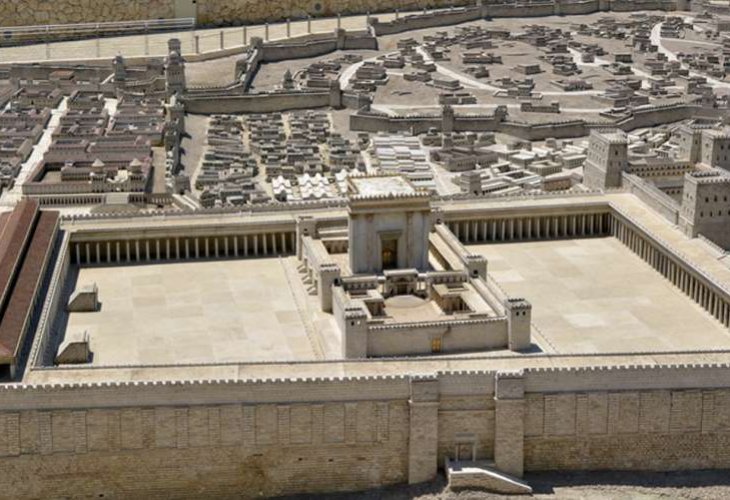
Much of our knowledge about the structure and layout of the Second Temple comes from the Mishnah, which includes a detailed section called Middot. This section carefully describes the Temple’s dimensions, courtyards, and overall design as it stood during the Second Temple period.
2. The Temple Had a Clear Hierarchical Structure
The Temple complex consisted of two main parts:
The Sanctuary, which stood at the highest point on the Temple Mount
Several courtyards that surrounded it at lower levels
These courtyards were enclosed by walls and housed various Temple functions, including administrative areas and workshops.
3. The Women’s Courtyard Was a Public Gathering Space
The outermost courtyard was known as the Women’s Courtyard. Despite its name, it was not limited to women alone. It served as a central gathering area and was used for public Torah readings and communal assemblies.
4. The Second Temple Was Built After Seventy Years of Exile
The Second Temple was built around 350 BCE and stood for 420 years. Its construction began seventy years after the destruction of the First Temple and the Babylonian exile, fulfilling prophetic promises of return and rebuilding.
5. King Cyrus Made the Rebuilding Possible
The rebuilding of the Temple became possible due to a historic decree by King Cyrus of Persia. He allowed nations under his rule to return to their homelands and worship their own gods. For the Jewish people, this meant permission to return to Jerusalem and rebuild the House of Hashem.
6. The Book of Ezra Records Cyrus’s Proclamation
The Book of Ezra describes how Hashem stirred the spirit of King Cyrus, leading him to publicly declare that the Jews should return to Jerusalem and rebuild the Temple. This moment marked a major turning point in Jewish history.
7. The Laying of the Foundations Was a National Celebration
When construction began, the laying of the Temple’s foundations was celebrated publicly. Priests stood in their sacred garments with trumpets, while the Levites played cymbals and sang praises to Hashem. The people responded with joy and gratitude for the restoration of Jewish worship.
8. Zerubbabel and the High Priest Led the Effort
The rebuilding was led by Zerubbabel, a descendant of the House of David, together with Joshua son of Jehozadak, the High Priest. Despite facing opposition and harassment from neighboring nations, the builders continued their work with determination.
9. The Builders Found Remnants of the First Temple
Many returnees still remembered the First Temple. They discovered remains of its original foundations, which helped them identify the exact location for the new structure.
10. The Second Temple Followed the Original Design—with Changes
The builders sought to reconstruct the Temple on the same site and according to the same basic dimensions as the First Temple. However, they expanded the courtyards and added additional chambers to meet new needs of the community.
11. The Temple Was Completed Under King Darius
The construction of the Second Temple was completed in the sixth year of the reign of King Darius I of Persia. The Temple was inaugurated on the third day of the month of Adar.
12. A New Chapter in Jewish Life Began
With the completion of the Second Temple, Jewish worship was restored in Jerusalem. This marked the beginning of a new spiritual era that would shape Jewish life for centuries to come.

