

Fast of Gedaliah
“I Am a Proud Arab and a Proud Israeli”: Nael Zoabi’s Fight for Truth After October 7
The Muslim school principal who challenges Arab media, exposes Hamas, and explains the Quranic link between the Jewish people and the Land of Israel
- Hidabroot
- | Updated
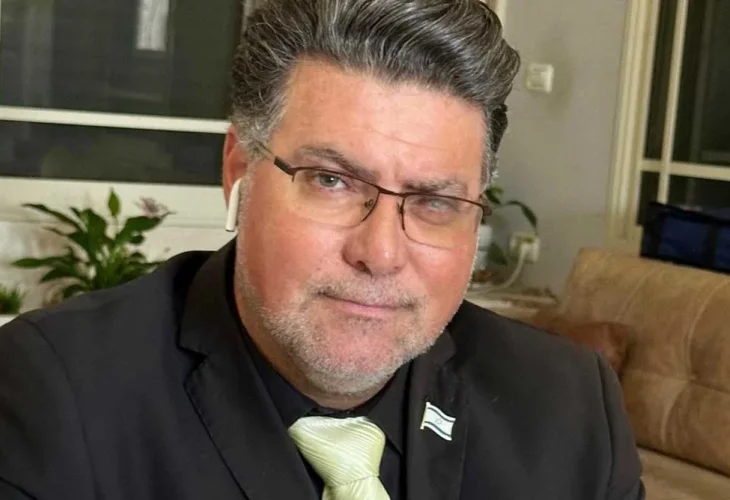 Nail Zoabi
Nael Zoabi, born in the village of Nin in the Jezreel Valley, where he still lives, defines himself as an “Israeli Arab Muslim.” By profession he is an educator who worked for thirty years in the education system, sixteen of them as a school principal.
“I grew up in an Arab family that raised us as Arab Muslims,” he begins. “We were brought up to observe the commandments of Islam, and we are very connected to the Quran.
“At the same time, we grew up with the awareness that we have Jewish neighbors. We always saw Jews in our home — friends of my parents — and among them were people in uniform. That was a normal sight for us. We didn’t see someone in uniform as something strange. This is our country, and we are part of it.”
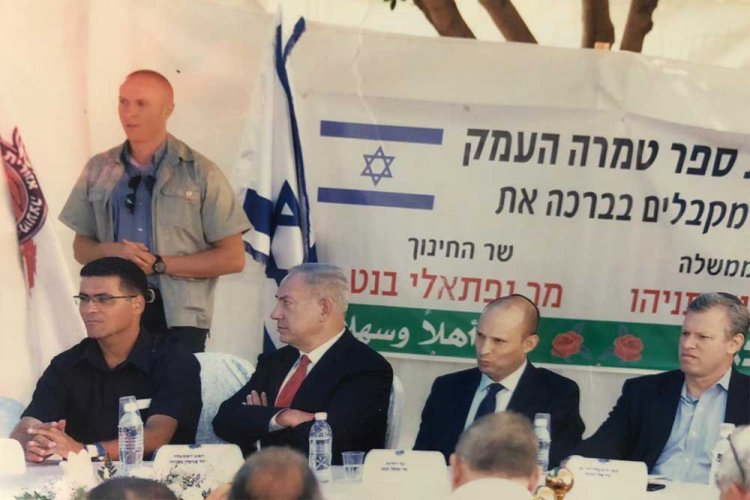 זועבי משמאל, כמנהל בית ספר בטמרה, בעת ביקור ראש הממשלה נתניהו ושר החינוך בנט
Did your neighbors in the village receive a similar kind of education to what you described?
“By and large, we are a village that maintained good neighborly relations with our neighbors from Afula and the surrounding kibbutzim. Even before the establishment of the state, in the 1930s, the heads of the family tied their fate with the Jews in the area, and that continued down the line with the Jewish settlement that arose and developed. That’s the education I received fifty years ago, and I continue to pass it on to my children.
“I’m a father of four, and all of them did either military or civil service.
“If you ask me who I am, I am a proud Arab and a proud Israeli. I have no other land, no other country, no other flag. I am part of the State of Israel. The good of the State of Israel is my own good; its misfortune is my misfortune. If there is inflation in the State of Israel — then I’m in inflation. If there is good security in the State of Israel, that is my security. If the social situation is good, then my social situation is good.
“And as a school principal, I educated my students that way. That’s how I tried to shape an entire generation throughout my many decades in the education system.”
Did the parents agree with your approach?
“For the most part, yes. Of course, like everywhere, there are people who don’t agree with what I say. But anyone who has his mind in his head knows there is no other truth and no other path. We were born and raised here, and we want to be here.
“Anyone who wants to be part of this must express some kind of will, action or declaration, and show that he is integrated and truly a piece of this place. Of course, there have always been people like this and like that, on both sides.”
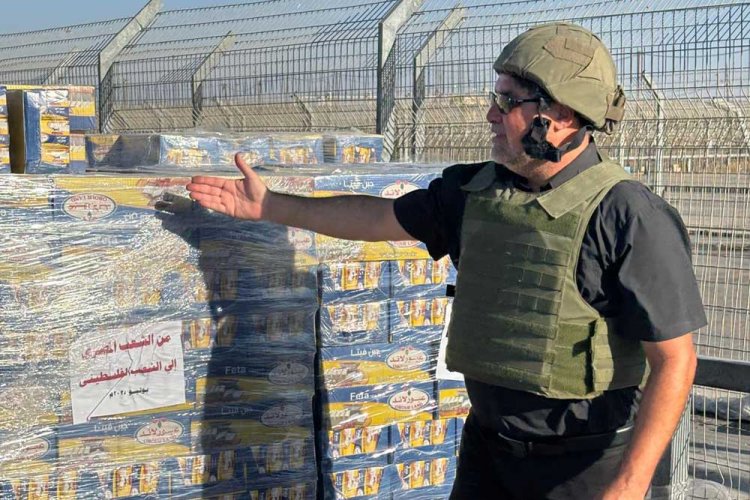 מראה את חבילות הסיוע שנשלחות לעזה ונשדדות ע"י החמאס
“Hamas acted in total contradiction to the Quran”
Zoabi began his public advocacy work during the kidnapping of the three boys, may God avenge their blood, in 2014. Since then he has quietly published articles and reflections expressing his perspective as an Arab citizen of the state.
“Before October 7, I dealt with what you might call education and current affairs,” he explains. “I wrote a few articles in Ynet, Israel Hayom, and Yedioth Ahronoth.
“In the 2021 elections, Prime Minister Netanyahu called on me to support his initiatives. He honored me as a senior educator in the Arab sector, reserved a spot for me with him, and spoke about appointing me as a minister. In the end, in those elections it was Naftali Bennett who succeeded, so that didn’t materialize.”
As an Israeli Arab who is well versed in what goes on in the country, were you surprised by October 7?
“I was very surprised. I never imagined something like that. In a way, this harsh and tragic event was a formative moment for me. It opened my eyes to the magnitude of the trade in religion, and to the merchants in human lives like Hamas.
“I distinguish between Hamas and anything Muslim,” he says firmly. “In truth, I distinguish between Hamas and anything human. Hamas acted in complete contradiction to the Quran, in the clearest way. They cannot be considered human beings and they cannot be considered Muslims. They are the devil incarnate, and their actions, with all the pain in saying this, are reminiscent of the deeds of the Nazis in the Holocaust.”
Zoabi’s media advocacy gained major momentum from the day of the massacre.
“From the very first day after the massacre, Arab networks reached out to me,” he recalls. “I was astonished by the pace of the inquiries; I don’t know exactly why they came specifically to me. Maybe because I was already somewhat known and had written articles, or because I was a senior figure in education. My exposure to the Arab world before October 7 was almost zero.”
To date he counts more than 530 interviews in a wide range of media outlets, including the largest news networks in the world.
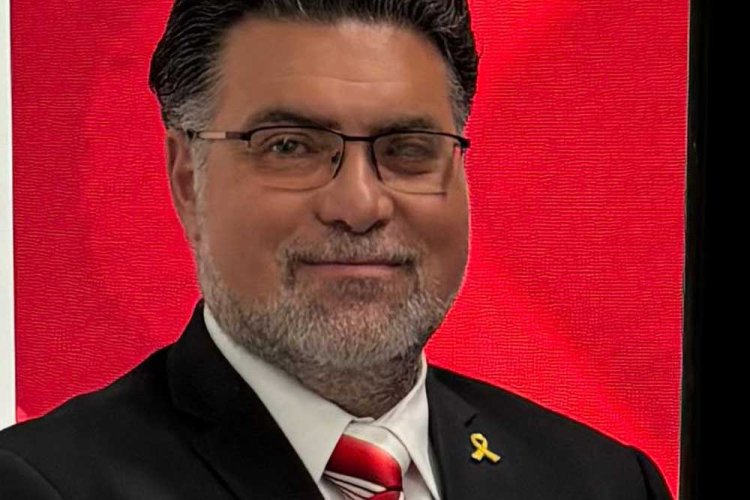 נאיל זועבי
What is your agenda when you go into these interviews?
“I want you to know that I don’t confront people just for the sake of confrontation. My goal is to persuade, to enlighten, to educate, and to bring different facts. So I try, as much as possible, to show respect to the interviewer and the panelists in the studio.
“There were times when panelists attacked me personally, in ways that don’t contribute anything, with words like ‘traitor’ and ‘Zionist.’ I would tell them, ‘What, you came here to do a program about Nael Zoabi? When you do a program about Nael Zoabi I’ll talk and share where I studied, what I eat, and what I drink. But today we’re talking about Hamas’s actions in Gaza. What does “traitor or not traitor” add to that?’”
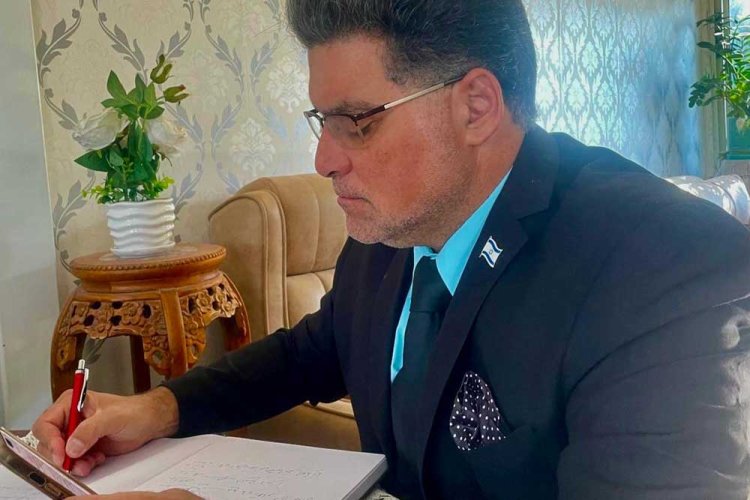 מתכונן לריאיון
“Wear the panelist down with facts”
Zoabi shares that there’s another kind of preparation he always does before an interview.
“I always come with a few facts — factual messages, things that can be quantified and measured.”
For example?
“For example: what happened in the Peel Commission in 1936, what happened in 1947, what the UN proposed regarding partition of the Land of Israel, and who agreed and who didn’t.
“I also remind people what the situation was like before 1967 — why didn’t you establish a Palestinian state then? Because the Palestinian leadership at that time wanted Haifa and Acre as well. That’s a fact.
What is your purpose in bringing those facts?
“When I bring facts, I wear down the panelist opposite me. One of the facts that really aggravates them is when I mention the Oslo Accords in 1993. Israel so greatly wanted to make peace with the Palestinians, brought Arafat, and founded the Palestinian Authority. And what did it get in return? Terror attacks.
“So here you go — that’s what you advanced. That’s a fact. No one can say there weren’t terror attacks. I, for example, was near the bombing in Afula — don’t tell me there was no attack.”
“I also speak about the connection between Judaism and the Land of Israel,” he adds, with a surprising point. “Is that a fact according to the Quran or not? Is it mentioned or not?”
Does the Quran mention a connection between the Jews and the Land of Israel?
“Definitely. There is a clear connection. In interviews I say that anyone who wants to move things forward and solve anything has to acknowledge that fact — because without it, nothing is resolved.
“You can go right now and search on Google what the Quran says about the connection between the Jews and the Land of Israel. You’ll find many verses, not just one.”
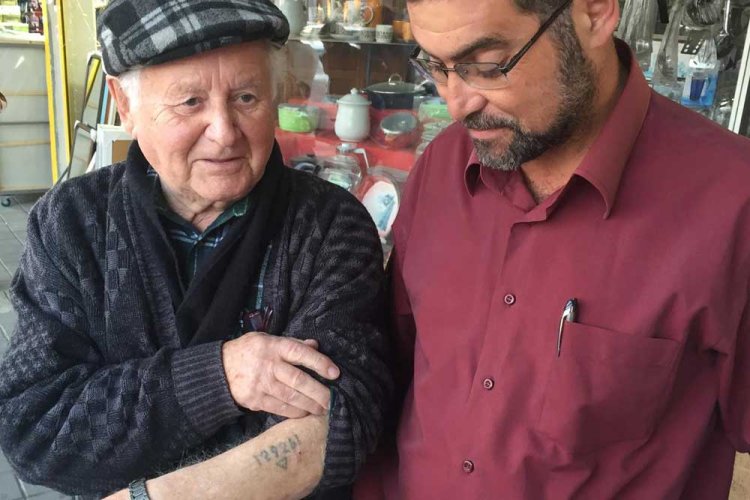 זועבי עם חבר ניצול שואה מעפולה
So how do you explain the Arab struggle over the land, presented as a ‘occupied territory’?
“The Quran states what we’ve just said — and yet we, as Arabs, don’t know how to explain ourselves and acknowledge that there is a connection between the Land of Israel and Judaism. I keep saying that the Jewish connection to the Land of Israel should not cancel my status as an equal citizen in the State of Israel, and should not erase my existence. It’s not supposed to come at my expense.
“I call on Arab citizens of Israel: friends, don’t be afraid. We have to live between these two points: there is a clear connection between Judaism and the Land of Israel, and there is the fact that I was born here and I am a native of this land.”
So you’re saying that those who deny that connection are acting out of fear — that their rights will be harmed?
“No. It stems from ignorance. We don’t talk about the topic, and we let others run our social and political lives for us. And I’m referring to movements and militias like Hamas, who cloak themselves in the garb of Islam. That’s false. They are not Islam. They are political movements that first and foremost want to take care of themselves.
“Look at how Hamas doesn’t care what happens now in Gaza. One of their leaders even said that our casualties, the Arabs, are ‘tactical casualties’ — in other words, part of a tactical maneuver. That’s an unthinkable statement. He forgot he’s talking about children and women.”
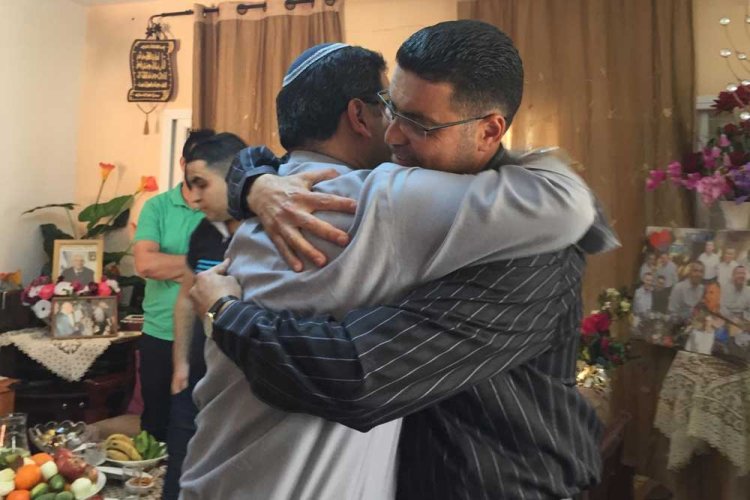 עם מנכ''ל הרשות לשירות הלאומי אזרחי לשעבר, שר שלום גרבי.
What do you think of the Arab Knesset members? How much do they represent the public?
“Arab Knesset members have caused huge damage — to the image and the strategic standing of the Arab sector. Their empty slogans and clichés have blocked its integration into Israeli society. They are experts at distancing it from Jewish society and from the state.
“I keep writing that we must make the State of Israel present and visible in the Arab sector. After all, it is our legal guardian — our mother and father — it, and no one else.
“Arab parties focus on the Palestinian issue because they live off that issue — it’s their oxygen. They focus on it instead of dealing with infrastructure, education, practical work and the burning social issues of our daily life. They talk about Gaza and the Palestinian Authority more than Abu Mazen himself.”
You touch on highly explosive topics. Do you pay a price for your positions and activities?
“Everything has a price. I prefer to look at the half-full glass. There are people in the Arab sector who encourage me, support me, and say, ‘Keep going, your voice is important, we think the same way, you’re expressing our voice.’
“But the media doesn’t like to hear normal, normative voices. They like to hear Knesset members yelling at each other ‘shut your mouth’ and ‘you’re a shoe.’ Insulting stuff.”
After the massacre, we saw shocking statements on social media from some Israeli Arabs. It seems the younger generation doesn’t think like you.
“First of all, anyone who voiced support for the massacre — in my opinion should be put on trial. Period. But we need to look at the half-full glass too. There were people who expressed strong opposition to this horrific act.
“The sympathy, love and empathy from Arabs inside the State of Israel toward the Jews and the State of Israel — we’ve never seen anything like it before October 7. Of course, as the war dragged on, that ‘umbilical cord’ stretched and tore — partly because of the propaganda from Hamas, the terrorist, ISIS-like organization, and partly because of people with an interest in making sure that bond doesn’t exist.”
Do you receive any financial support for your work?
“No. I live off my pension from the Ministry of Education. In addition, I work as a freelance lecturer. I give talks on Arab society in Israel and on other societies, on the Quran, on Islamic law (sharia), and on Islamic culture. Recently, I began lecturing about the image of the State of Israel in the Arab world.”
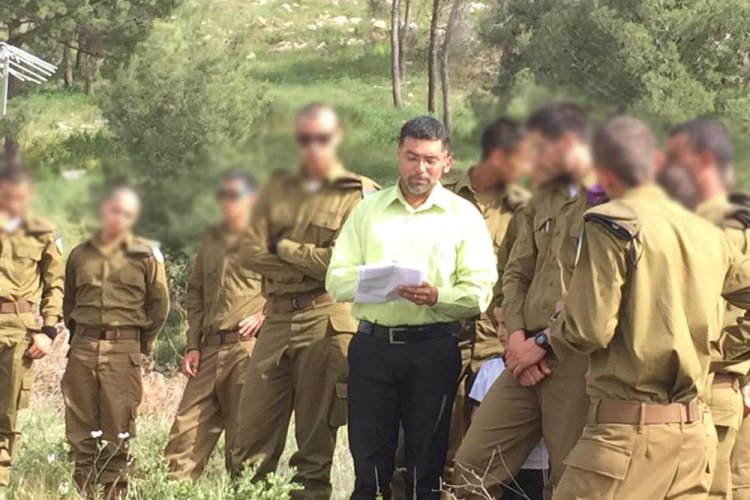 מדריך טירונים בכפר לפני כ-12 שנה
“Strengthen those who bear responsibility”
When I ask if there is one interview that stands out in his memory, Zoabi laughs and answers:
“In one interview, sitting across from me in the studio was Sufian Abu Zaida, who served as a minister in the Palestinian Authority. At the end of the interview he turned to the host and said, ‘I salute you for managing to bring Nael Zoabi here. Next time, please bring Avichay Adraee, the IDF spokesman in Arabic — it’s easier for me with him.’”
Putting the humor aside, the international arena worries Zoabi.
“This isn’t a game. Every threat that started as a declaration eventually materialized. Iran, Hezbollah, Hamas — they all threatened, and everything came true. In fact, Prime Minister Netanyahu’s speech in Congress in 2015 about the Iranian threat — every word of it came true.”
Beyond Iran, there is another country he believes we must keep a close eye on.
“I see peace with Egypt as something sacred, and in my opinion we must do everything to strengthen it. But I can tell you that I’ve had some very harsh Egyptian panelists. Harsh on a personal level. They had no mercy on me and used every derogatory term possible — criminal, murderer, supporter of murder, child killer, terrorist.
“Some of them also threatened the State of Israel, saying that they have the military ability to be in Tel Aviv within an hour. Other Egyptian panelists spoke about Egyptian honor being trampled in 1967 and 1973. It frightens me to think that these voices could one day reach power in Egypt.”
“I believe with all my heart that there are people in the State of Israel who bear personal, national, security and military responsibility — for each and every one of us, and for the existence of the State of Israel.
“Our role is to strengthen those people, who carry such a heavy responsibility on their shoulders, to present them properly and to give them everything they need. If the State of Israel is not a powerful military force — it will not exist.”

