

Magazine
From Mizrahi Music Star to Torah Scholar: The Remarkable Spiritual Journey of Uri Shevach
The legendary Israeli singer leaves the spotlight for a life of prayer, learning, and deep faith after decades on stage
- Chaim Gefen
- | Updated
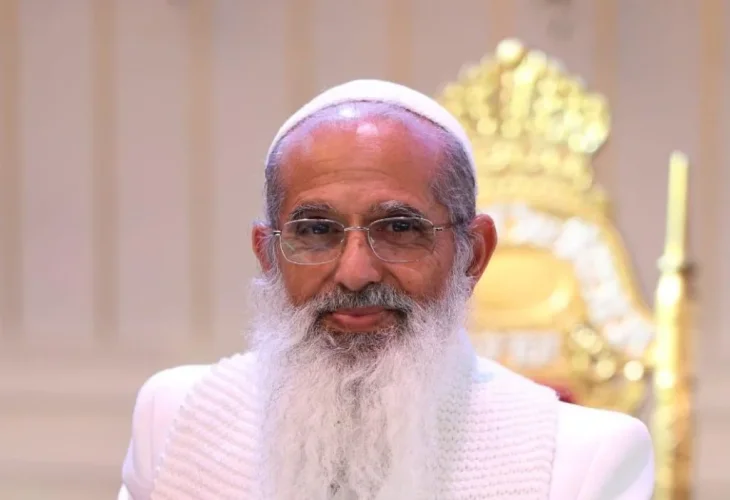 Uri Shevach
He had a successful career in the 1970s and 1980s. He conquered stages across Israel and around the world, recorded dozens of hits that were constantly played on the radio, and became one of the biggest stars of Mizrahi music. But in recent decades, Uri Shevach gradually disappeared. Now he breaks his silence, and in a special interview he shares his new life.
Uri, where did you disappear to?
“I disappeared to the Beit Midrash (House of Torah study). I’m already 75. We don’t live here forever. We’ll have to take something with us to the World to Come — to fill our scale of merit.”
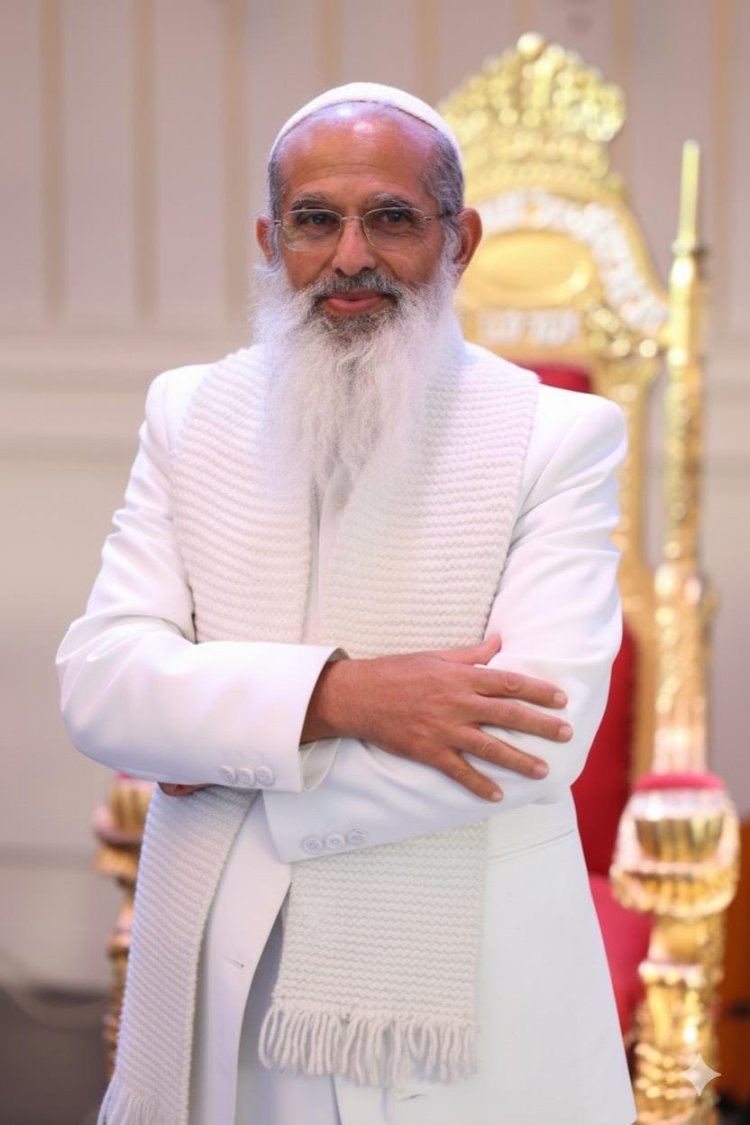
At first glance, it’s hard to believe that the man with the white beard is the same Uri Shevach of the past. “What, is that really you?” I ask to make sure. “Yes — what’s the problem? People change, don’t they?” he replies evasively. And yes — people do change, but his transformation is unbelievable. “Sometimes people stop me in the street and say, ‘Wow, you really look like Uri Shevach.’ Now go explain to them that I look like him because I am him. Who’s going to believe me?”
Shevach, one of the earliest and most prominent Mizrahi singers in Israel, began his musical career in an army band. “It was like commando,” he recalls. “We would perform at base after base, sometimes without any break at all. They laughed at us and called us ‘chocolate soldiers’. Chocolate? At most we ate sand.”
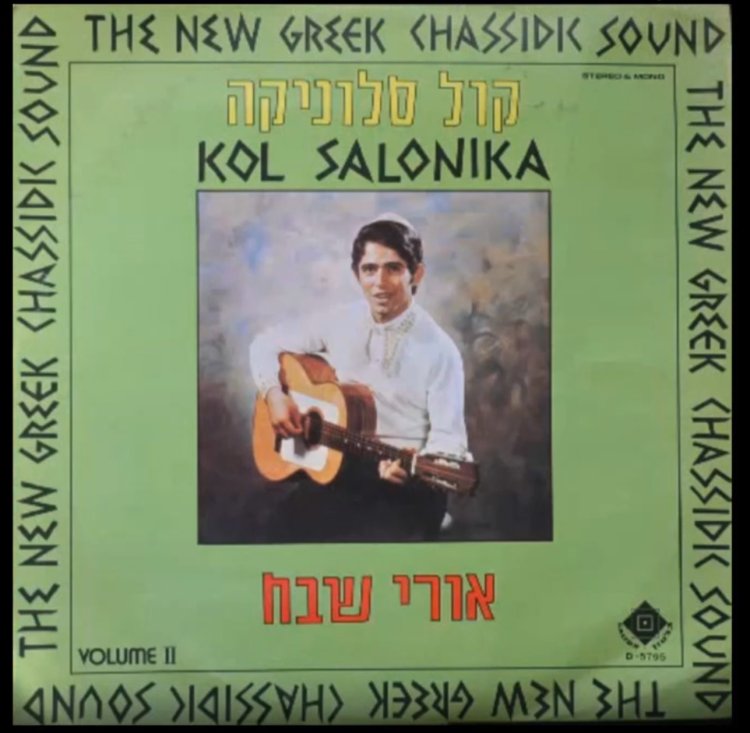 להיטי ענק. אחד האלבומים של שבח
When did you officially enter the music world?
“After the army. Back then, there was only the Mizrahi Song Festival. It was the first event that dared give a stage to rising Mizrahi music stars, parallel to the Israeli Song Festival, whose winner represented Israel in Eurovision.”
The Israeli festival sent its winners to Eurovision — and the Mizrahi festival sent you, at best, to perform in Rosh HaAyin.
“What can I say,” he laughs. “That’s how it was back then. Mizrahi music got one corner on the radio — like an animal-life segment. They played us on Reshet Bet between six and seven in the evening. Just one hour a day. They ignored us. But in the end — today everyone sings those songs.”
His big breakthrough came after winning first place in the third Mizrahi Song Festival in 1972.
“I competed with the song ‘Eretz Ahuva’ by Avihu Medina. It’s still a hit today, even though almost fifty years have passed.”
Who competed against you?
“Boaz Sharabi, Shoshana Damari, Yaffa Yarkoni, Chocolate Menta Mastic… there were twenty competing singers, with two full evenings of back-to-back performances. It was the biggest festival I ever took part in.”
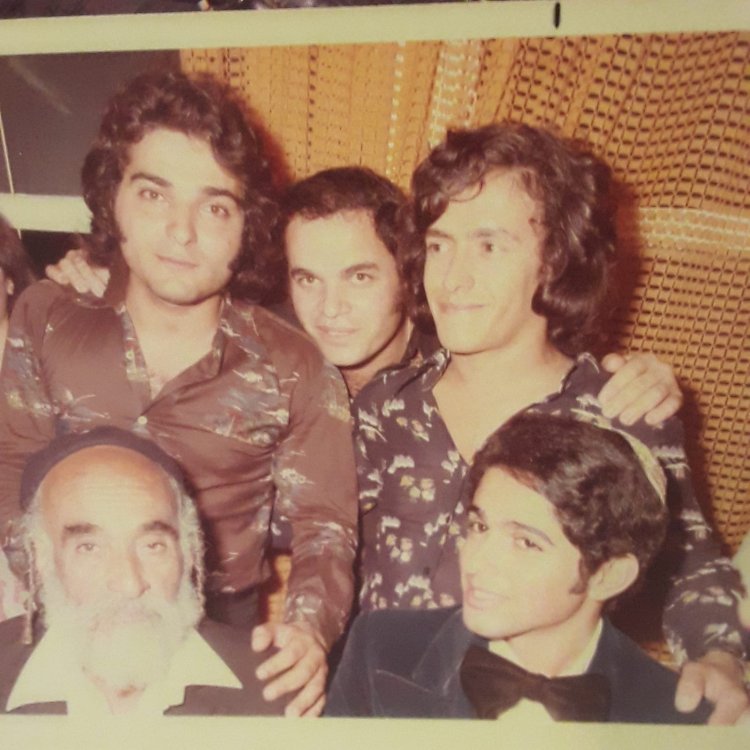 עם הזמרים בועז שרעבי וניסים סרוסי
Were you surprised by the win?
“No — it was expected. I knew it was going to happen. I still remember the first moment I walked onto the stage — the crowd went wild before I even opened my mouth. It was clear that song was going to win.”
But you competed against the biggest names in the industry.
“To be honest, I never chose songs for competitive reasons. I wanted to sing — not to compete. I fell in love with Eretz Ahuva the moment I heard it. From the first second, I knew that was the song I was taking to the festival.
Maybe this is the first time I’m saying this, but Avihu Medina didn’t want to give it to me at first. Don’t misunderstand — we were very good friends. We prayed together in synagogue every Shabbat. But because the previous year I didn’t win with his song, it took me time to convince him to give me this one.”
And in the end — you took first place.
“Yes,” he smiles. “See what the Creator of the World does.”
A singer who was also a technician
After a series of festival wins and successes, Shevach became one of the most recognized names in early-1980s Mizrahi music.
“My career reached its peak — I couldn’t breathe from all the craziness,” he recalls. “I had nonstop performances across the country — every night in clubs, cinemas, community centers… everywhere. And there were times I flew abroad to perform. I reached three shows a day — sixty shows a month.”
One of his most famous hits from that period is the piyut (Jewish liturgical poem) ‘Laner U’levsamim’. Although the piyut was written about 300 years ago, Shevach was the first singer to record and perform it with a new melody.
“At the time I was actually working as a technician at the Post Office,” he reveals. “One Sunday, a TV producer called me and said, ‘I want you to record Laner U’levsamim, but bring me a new melody. I scheduled rehearsals for Tuesday, filming Thursday, and the recording on Motzaei Shabbat.’ As soon as he hung up, I called Avihu Medina.
At that time Avihu was working in renovations. He told me, ‘Okay — let me finish painting this wall and I’ll write you a tune.’ Within half an hour he called back and said, ‘Listen to this.’ The moment I heard it, I knew the song was going to be an international hit.”
When I express surprise at the fact that both he and Medina worked manual jobs, he laughs: “That’s how it was back then. My father raised me to work — Avihu’s father did too. We both worked physical jobs. My father told me: Don’t rely on performances. Today you have — tomorrow who knows? It’s like the lotto — once you win, a thousand times you don’t. My luck was that I was a good kid, and I listened to him. I went to work as a technician.”
His father also kept him away from the nightlife scene: “He always said: ‘You finished the show — straight home. No clubs, no bars, no after-parties.’”
Recalculating life
After twenty years of success, Shevach realized he was living in a world of illusion.
“It’s a deceptive world,” he explains. “On one hand, the glamour pulls you in — on the other, deep inside you know it’s all one big lie. When my soul started to understand that, I began listening to Torah classes — and suddenly I discovered truth.”
And what did you do with that truth?
“I decided to start studying Torah half a day. I’d turn off my phone — disconnect from the world. I reduced performances. I didn’t take every gig. My songs changed too — I began focusing on sacred songs, songs of the Jewish people and the Land of Israel.”
He later met Rabbi Nissim Yagen, who convinced him to attend a Jewish outreach seminar — and eventually Shevach himself began performing piyutim at seminars.
He earned less, he admits — but: “The greatest profit was my family. I won my whole family thanks to Torah — thanks to deciding to sit and learn. Since then I’ve felt Hashem guiding me in every step — giving me joy and everything I need in life.”
For thirty years now, his daily schedule has been the same: dawn prayers, daily Talmud study, hours of learning until midday, later more prayer and learning — and today, after being widowed, he lives in Jerusalem.
Looking back, he says: “I see Hashem in every step of my life — hugging me again and again. When you know what your purpose is in this passing world — joy comes. You understand what truly matters in life."

