

Magazine
Orel Vachnish: The Teen Influencer Who Walked Away From Success to Embrace Spiritual Purpose
A former advertising prodigy shares his powerful story of inner struggle, personal growth, and choosing a deeper path
- Hidabroot
- | Updated
 Orel Wachnish today
Orel Vachnish had already fulfilled his dreams at a young age: at 12, he was walking backstage at big festivals and shows, close to the biggest names in the industry; at 15, he was running online campaigns; and at 16, he opened his own advertising agency. It looked like the perfect life. Money and gifts were pouring in from every direction, success and fame were with him – but then, right at the peak, a realization hit him: this isn’t what he’s really looking for. He was searching for something completely different.
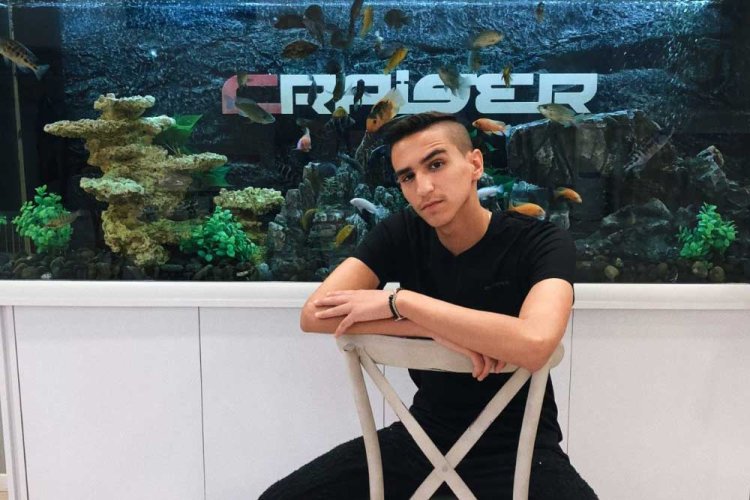 Orel Wachnish as a youth
The Talented Kid
“The truth is that already as a young child I felt connected to tradition, and the home I grew up in gave me a basic familiarity with Judaism,” Orel begins. “My parents aren’t religious, but they’re very traditional. We always kept kosher, observed the holidays, and tried at least partially to preserve the sanctity of Shabbat. As a child I was sent, until the age of six, to kindergartens of the ‘Bnei Yosef’ network, and I felt very connected to tradition – but as the years went by, it showed up less and less in my life.”
Orel notes that as he grew up, he realized he was very drawn to theater and acting. “My parents sent me to acting classes, and I also took part in school plays and community productions,” he shares. “At 12 I started going to lots of performances and big kids’ festivals, launch events, and other places where I knew celebrities and famous people would appear.
“I would ask permission, slip backstage, take pictures with them, then upload the photos to Instagram and enjoy seeing all the reactions from my followers. Those pictures reached a wide audience and became very popular. As time went on, my follower count grew very respectably, and then, as a young teen, barely 15, I started thinking that I could use that to run campaigns on social media by myself – promoting shows and series, brands, products, and so on.”
Orel had no idea where this would lead him.
“At first I did it just for fun, not thinking about money at all. But very quickly, and in a short time, I started working with all the big advertising agencies that were known in those days, asking them for payment in return for my promotion. With some agencies I even served as a middleman between online influencers who wanted exposure and companies looking for presenters to front campaigns. So I ended up being in touch with both sides of the equation.”
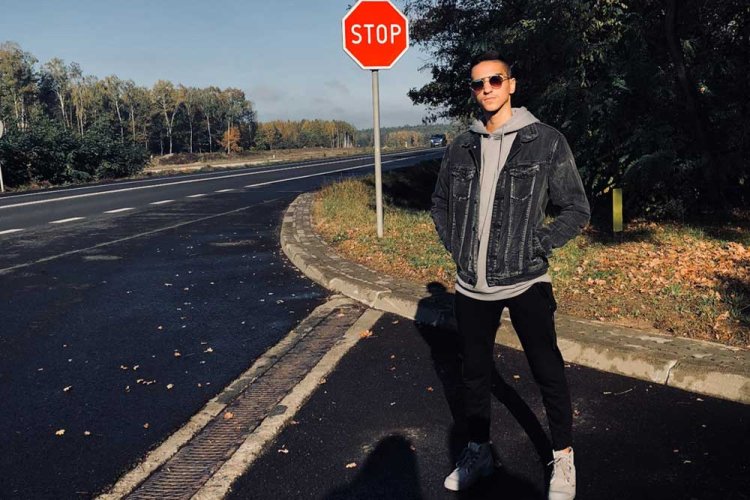
What did the executives say about how young you were?
“The funny thing is that my age actually worked as an advantage. I was young and energetic, with a huge network of friends through social media – over 50,000 followers on Instagram – and I knew a lot of influencers my age as well as many celebrities. By 16, I had already opened my own advertising office, managing marketing for brands, stores, and chains. At that time I was making about 20,000 shekels a month, and on top of that I was earning a lot of prestige: free participation in different productions, vouchers for restaurant meals, clothes, shoes, and endless products of all kinds – all given to me as gifts, as long as I promoted and marketed them.”
Between Two Worlds
At around 16 and a half, alongside his intense activity with campaigns and social media, Orel started attending Torah classes.
“I began the process thanks to my brother, who was also becoming more religious at the time. We would go together to Torah lectures, learn, listen to the rabbi, and talk between us about our desire to study in yeshiva.
“My brother did the army and afterward continued on to the Ohr HaChaim yeshiva. I came to visit him there from time to time, and when he invited me to spend Shabbat at the yeshiva, I didn’t hesitate. That’s when I really began to be exposed to Judaism – seeing up close what a properly observed Shabbat looks like, and feeling how strongly it pulled me in. I visited him in yeshiva almost every Shabbat, and during the week I attended the classes of the head of the yeshiva, Rabbi Reuven Elbaz, as well as the Selichot prayers during the month of Elul.”
The struggle was not simple.
“On the one hand, I felt very clearly where the truth was,” Orel explains. “And specifically as someone who had seen all the glitter and the idolization of fame, I understood that I was looking for something else – I wanted to live a life that are truly real and good, not just lives that look good on the outside. I also loved the yeshiva and connected to learning.
“But at the same time, I had to give up so many things – friends, publicity, fame, money, and more.
“My standing at school also changed. Until then I was in charge of social activities, ceremonies, big projects. I was considered a very active student with a noticeable personality. Once I began to let go of the spotlight, my friends also started seeing me differently. That created a lot of fears and doubts that were constantly with me.”
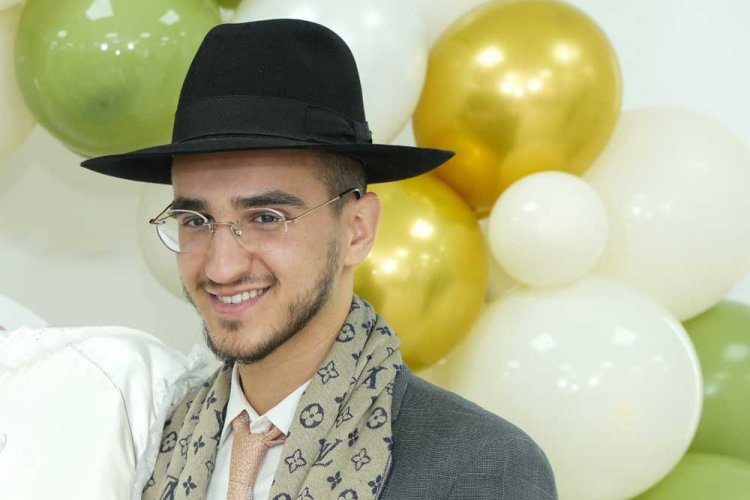 Orel Wachnish today
Not Forgetting the Past
“At the start of 12th grade I had already made a clear decision about the path I was choosing,” says Orel. “At that time I often spoke with the rabbi who was guiding me, and I also started keeping the laws of physical boundaries between men and women (shmirat negiah), which was totally not accepted in my high school.
“Gradually, I informed the clients whose marketing I was managing, and the advertising agencies, that I would soon be leaving them.
“My life changed completely. I left high school and moved to yeshiva, with help from my brother who already felt at home there and, above all, with a lot of Heavenly assistance. The fact that my brother had made this journey before me helped a lot with my parents, too. At first they were very worried about the change I was making – especially when I explained to them that I didn’t plan to enlist in the army. But when they saw how happy and fulfilled my brother was, they didn’t say a word and supported me throughout the process.”
And how did you personally feel about the change?
“The truth is that when I started learning in yeshiva, I felt like I was inside a documentary film, as if I were changing identities – until now I had been one person, and suddenly I was becoming someone else. There were moments of happiness and incredible satisfaction, but there were also many difficulties, even longing for what had been before.
“At that time I consulted a lot with Rabbi Uri Zohar, and mainly I asked him: ‘What do I need to do to stop thinking all the time about the past?’ His answer fascinated me. He told me: ‘To this day, there hasn’t been a day when I didn’t remember my past. But when I remember it, I wash my face with cold water, refresh myself, and thank God for where I am today.’
“I really connected to those words, especially hearing them from someone who left such a major, successful career and managed to completely detach from it and dedicate his life to Torah.”
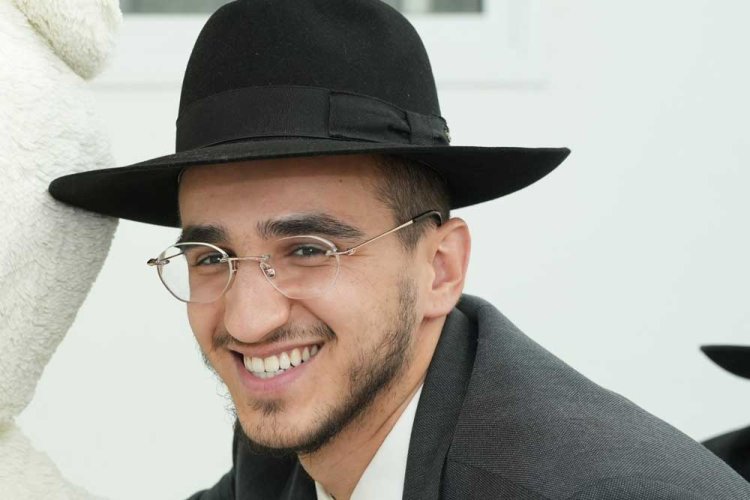
“Nothing Stands in the Way of Will”
Today, Orel lives in Kiryat Gat. He is married (his wife comes from an ultra-Orthodox home, in case you were wondering) and is a father to young children who study in the city’s Haredi institutions.
“I’m a kollel avrech and I study Torah from morning until late afternoon,” he says with satisfaction, “and there isn’t a day that I don’t thank God for the privilege of being able to sit and learn. It’s not that the difficulties don’t exist – and just as Rabbi Zohar told me, I still sometimes remember them and can’t help comparing my kollel stipend to the 20,000 shekels I used to earn.
“But each time, I remind myself of the great privilege I have – to run a Torah home and raise my children in the path of Torah and mitzvot. It may be surprising, but when I meet friends from my past – and that happens quite a lot – I see that many of them look at me with a lot of respect, because most of them still haven’t managed to build a family and are still searching for themselves.”
“I also give regular Torah classes,” he adds, “including lessons for teens who are becoming more observant. Specifically when I meet them, I’m able to speak their language and help them understand that I know exactly what they’re going through – because I went through the same things.
“But I also make something very clear to them: From my experience, there is nothing that stands in the way of genuine will. If you really want to make a change in your life – you’ll get there through desire, motivation, and effort. Every person can turn their life around. In the end, it depends only on you.’”

