Magazine
A Century-Old Siddur Brings Jewish History Back to Life
Chabad shaliach Rabbi Levi Kaminetsky leads the emotional restoration of a forgotten synagogue and the legacy of Jewish soldiers who held onto their faith
- Hidabroot
- | Updated
 Inset: Rabbi Levi Kaminsky with pages from the ancient prayer book
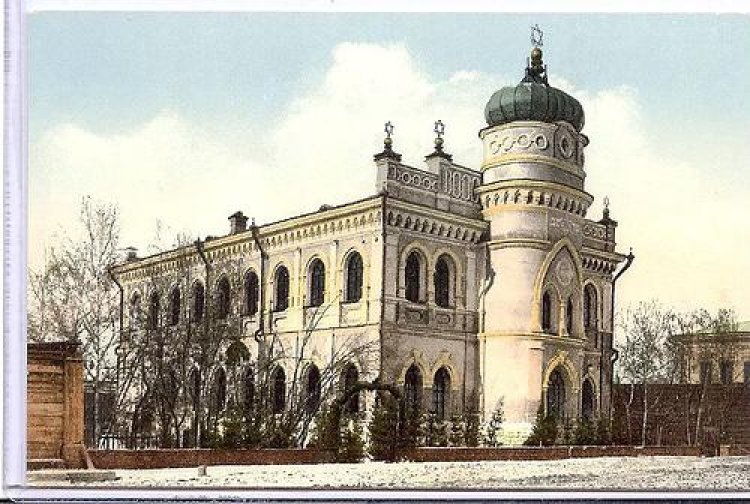
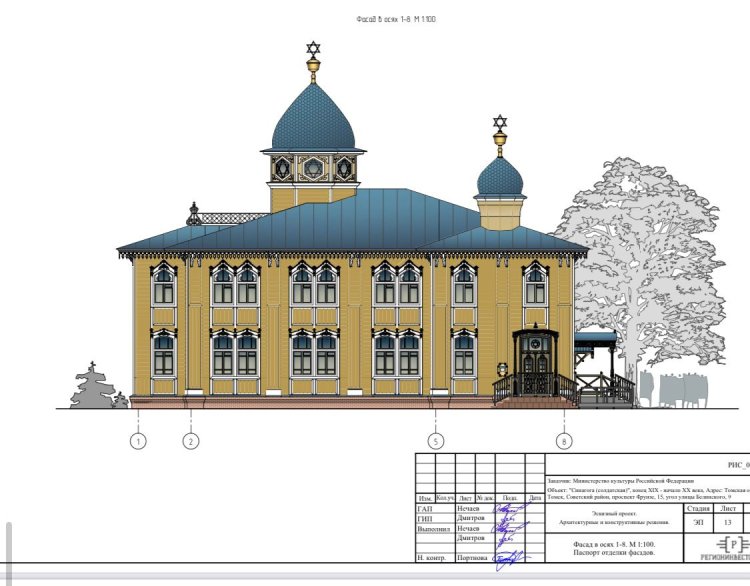
“It was one of the most emotional moments of my shlichut,” says Rabbi Levi Kaminetsky, Chabad shaliach in Tomsk, located in Russia’s Siberian Federal District. “We’ve been here on shlichus for 21 years and have done a lot of work, but recently we merited to advance a project we once could only dream about — the restoration of the ‘Cantonists’ Synagogue’, where the Jews who were kidnapped into the czar’s army prayed. With Divine help they survived the army years and remained Jewish. They prayed here, in this very synagogue — and we always dreamed of rebuilding it. This past year we received approvals and funding for the project, and we are now working on it with full energy.”
Rabbi Kaminetsky visits the construction site daily to watch the progress. One day he was surprised by something that led to a deeply moving and powerful moment.
“The workers showed me that they had found an old siddur, over 100 years old. It is certainly a siddur used by the Cantonists, because since their time — no one else prayed here. It gave me chills — like a greeting from the past,” he says emotionally.
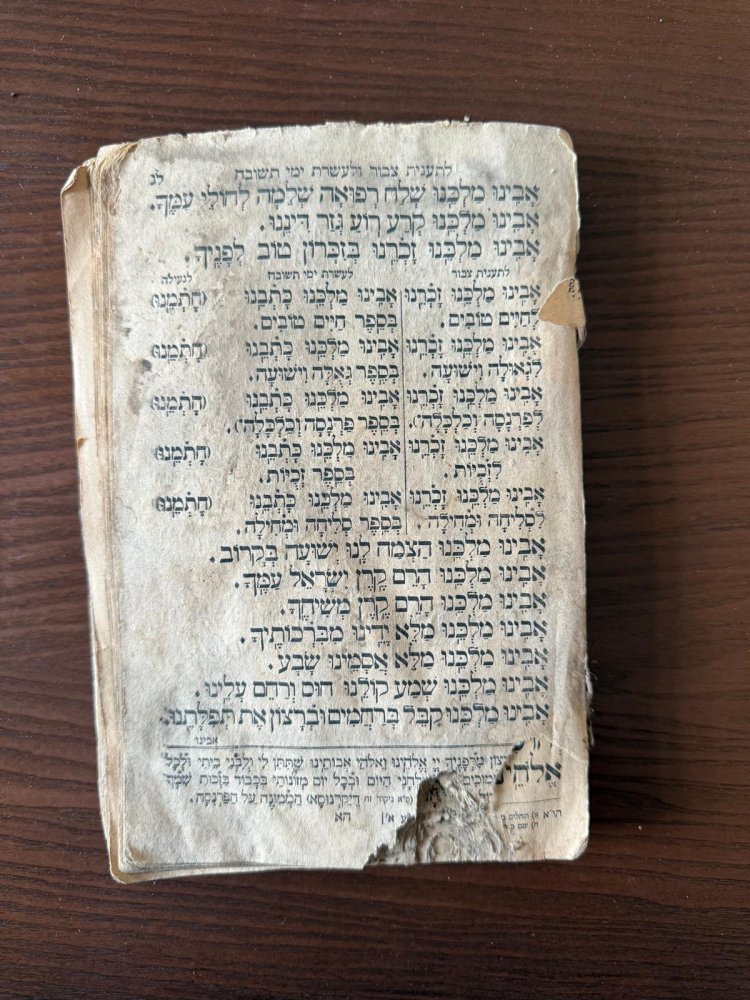 דפים מהסידור העתיק
 דפים מהסידור העתיק
דפים מהסידור העתיקJewish Courage in the Siberian Frontier
What comes to mind when you hear of Siberia? If you think of a frozen wasteland with subzero temperatures, to which unlucky opponents of the regime were exiled — then you probably don’t know Tomsk, where Rabbi Levi Kaminetsky has been running the Chabad House for the past 21 years.
“Tomsk is very far from central Russia — to give perspective, Moscow is actually closer to Israel than it is to us,” he explains. “Yes, it’s very cold here during parts of the year, but it is definitely a populated city, and we are privileged to run a broad and vibrant Jewish operation here. We have a local Jewish community of families — with more joining all the time, many of whom had no knowledge of their Jewish identity until our activities helped them reconnect. In addition, thousands of Jewish students from around the world come here to study, and we provide them with Jewish programs throughout the year, kashrut services, a mikvah, a preschool and kindergarten, a school, a synagogue, and other institutions.”
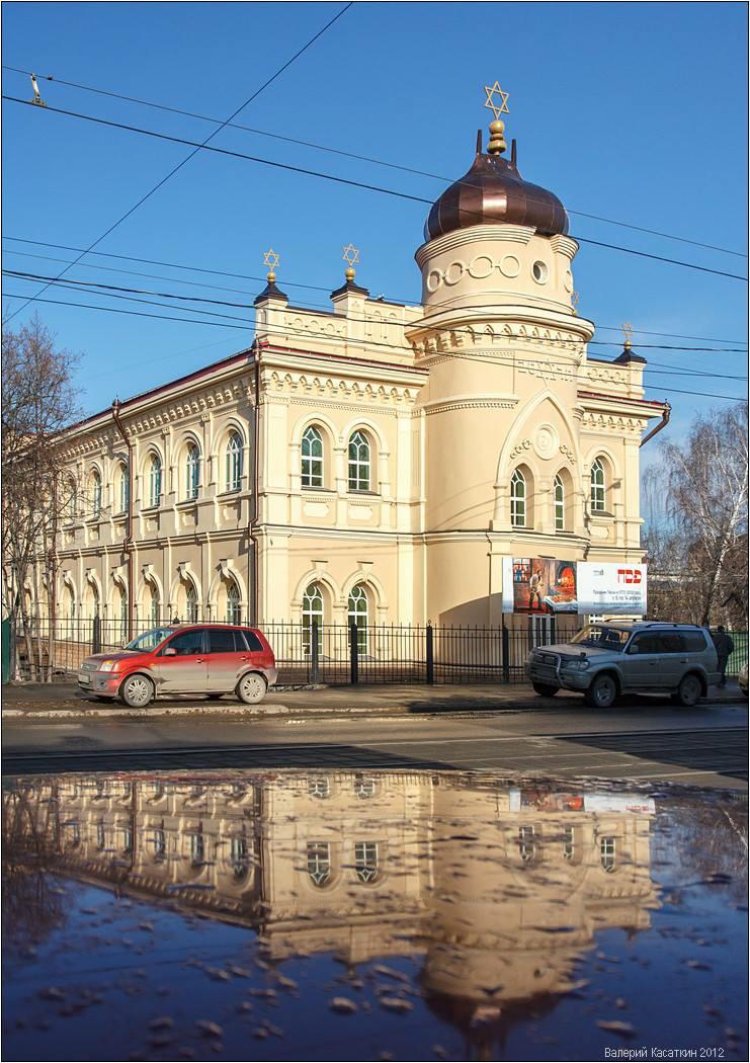
About 14 years ago, the ancient main synagogue of Tomsk was restored and now serves as the center of Jewish life, alongside a youth and children’s activity center.
But there was another historic structure — “the old synagogue,” where the Cantonists once prayed.
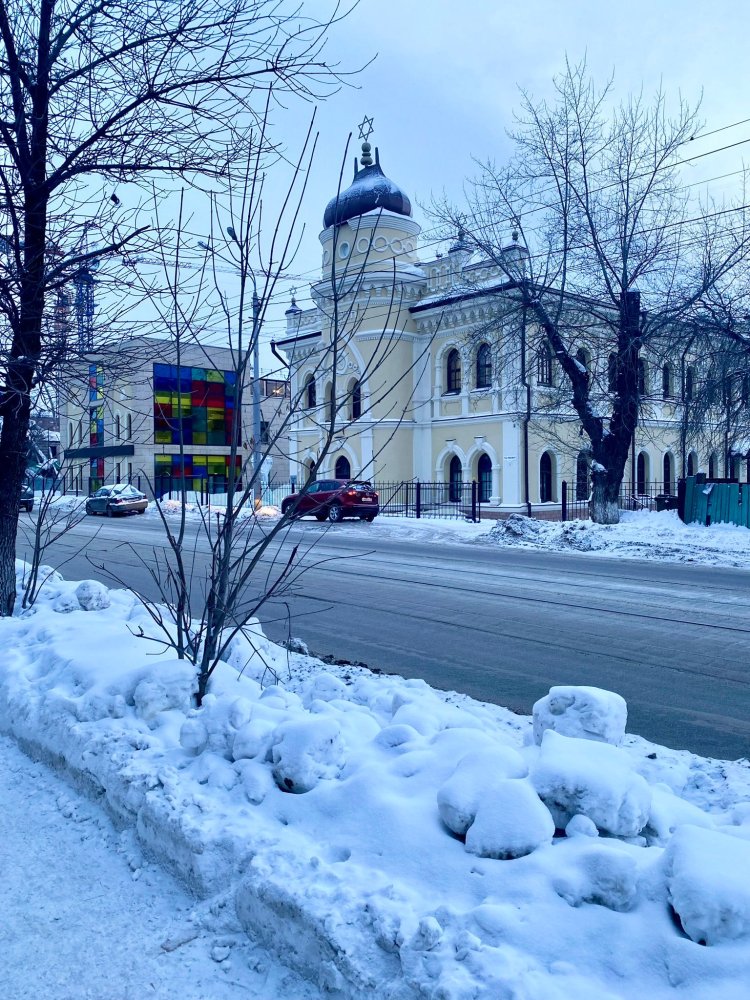 בית הכנסת העתיק של טומסק, בו מתקיימות כיום התפילות והפעילות היהודית
Who Were the Cantonists?
For historical context, Rabbi Kaminetsky explains: “In 1864, during the Czarist period, the ‘Cantonist decree’ was enacted. Young Jewish boys — some under age 12 — were taken from poor Jewish families in the villages of Ukraine and conscripted into the Russian army for decades. Their families had no money to bribe officials to spare them, and many served until the age of 50. Many converted over the years; but among those who somehow remained Jewish, a large group eventually reached Tomsk.
“One of them was an extraordinary Jew named Herzel Yankel Tzam, who served as an officer in the Czar’s army — something extremely rare for a Jew at the time. When he arrived in Tomsk, he was pained by the fact that he and his fellow Cantonists — already older men, did not know Hebrew and didn’t even know how to hold a siddur.
“He set out to bring them back to Judaism after decades of separation. He opened for them a type of cheder — a Jewish study school — where elderly Cantonists learned Torah. Over time, it became known as ‘The Cantonists’ Synagogue’.”
The synagogue became a central spiritual home for the Cantonists, who shared a common story and strong sense of identity. They even had rules — anyone could come pray there, but the gabbai and community leaders had to be Cantonists or sons of Cantonists.
In 1929, when almost no Cantonists remained, the synagogue stopped functioning and was converted into a residential dormitory building with 17 apartments.
Years later, when Chabad arrived in Tomsk, they were told there was no chance of regaining the building — but they never gave up hope.
Eventually the mayor declared the structure a protected heritage site and returned the keys to the Jewish community — on condition that the restoration be historically accurate. During the ceremony, a community member donated an old Torah scroll bearing the initials of Herzel Yankel Tzam — the very scroll he had originally donated to the synagogue and that had been preserved in his family for generations.
What are the plans for the restored building?
“Our greatest hope is to return the place to what it was — a synagogue — and also to add a museum displaying artifacts from the lives of the Cantonists, including the Torah scroll, the siddur we found, and more,” says Rabbi Kaminetsky.
“We want visitors to understand the extraordinary self-sacrifice these Jews lived with — their unimaginable efforts to hold onto their Jewish identity in such harsh conditions.”
The structure, however, was in poor condition, divided into tiny rooms with kitchens and bathrooms. Restoring it required major funding. After repeated refusals from the Russian Ministry of Culture, an unexpected message arrived this past Adar — the ministry had decided to fully fund the historical reconstruction of the building.
“This is the only synagogue in Russia that was approved for full restoration,” Rabbi Kaminetsky notes. “They understood its great historical value.”
The government restoration covers the structure — but the community still needs to fund the interior, including the Aron Kodesh, furniture, and seating.
The future synagogue and museum will be open both to the local Jewish community and to the general public, with the hope that it will inspire more Jews from Tomsk to reconnect.
“There are Jews here who drifted far away over the years, but they still know they are Jews,” says Rabbi Kaminetsky. “We believe that just as the Cantonists guarded their Jewish identity under impossible conditions — their story will ignite a spark in others as well. With G-d’s help, they too will return.”
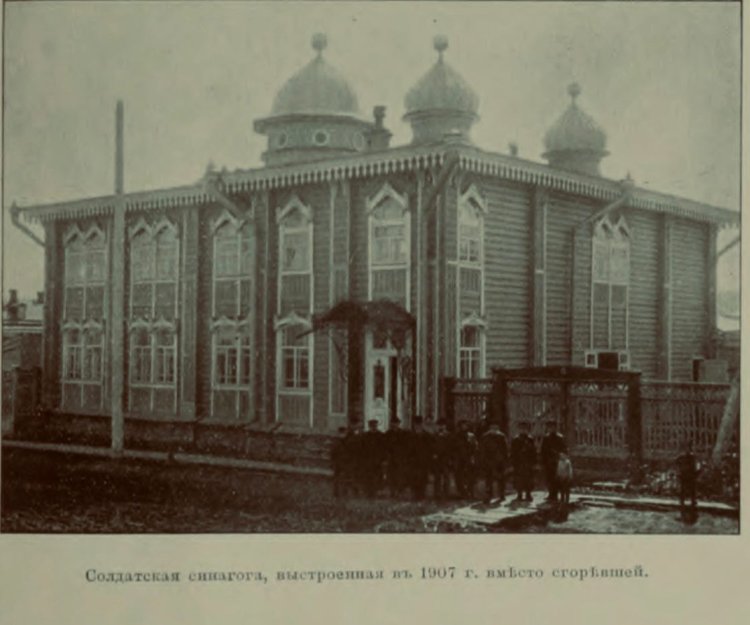 The Cantonist Synagogue over 100 years ago