

Interesting
From Habbān to Israel — The Remarkable Story of a Jewish Community Preserved Across Generations
A moving life story of faith, longing, and heritage, from childhood in remote Yemen to building a new home and cultural legacy in Moshav Bareket
- Hidabroot
- | Updated
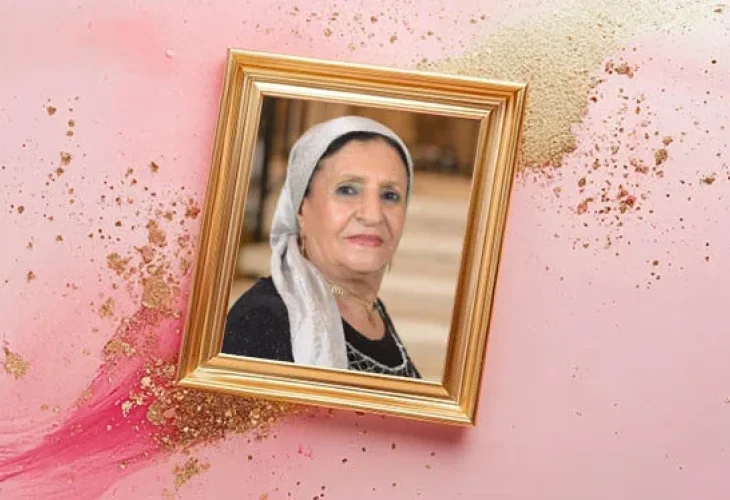 Shemesh Efrati
“When I hear these days that the last Jewish woman has left Yemen, I feel mixed emotions,” says Shemesh Efrati, who was born in the Jewish community of Habbān in the far east of Yemen. Today she lives in Moshav Bareket, where she arrived with her family back in the 1950s, yet she is still unable to forget her childhood years in Habbān.
“We don’t really see ourselves as ‘Yemenites’, because we lived in the city of Habbān, located in the Hadhramaut region in southeastern Yemen,” she recalls fondly. “The area was far from the large Jewish centers of Yemen, but that distance actually helped preserve a unique way of life and customs within our community — traditions that accompany us to this day. There is an ancient tradition that the Jewish settlement in Habbān began as early as the First Temple period. For generations we lived there together as a large community of several hundred Jews, in the Jewish quarter surrounding the king’s palace.”
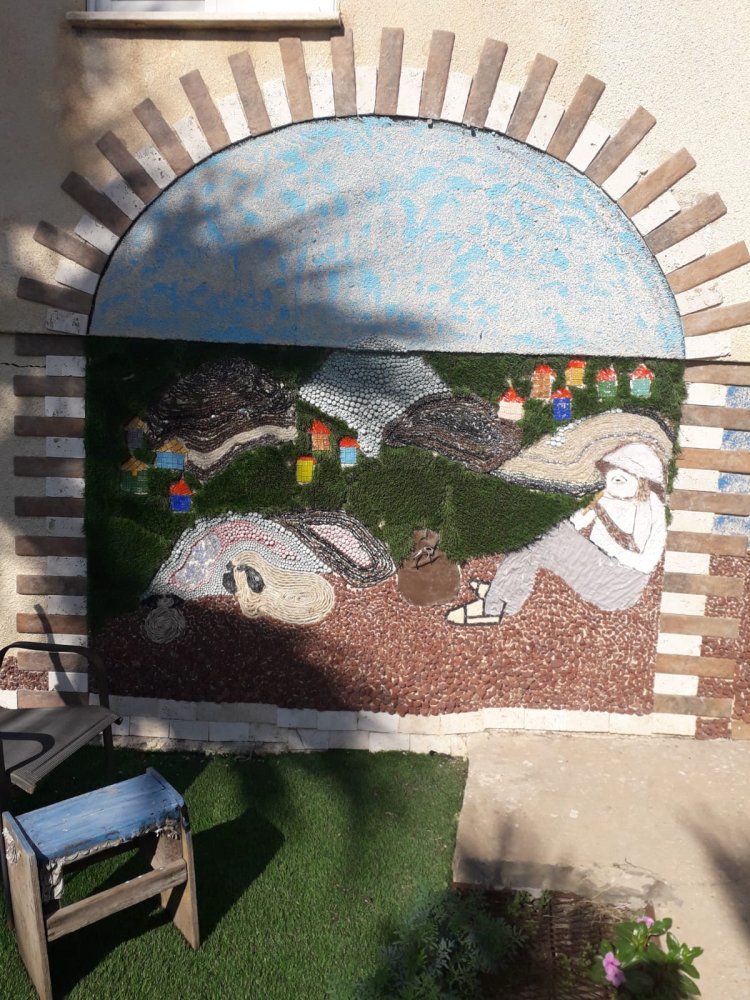 ביתה של שמש אפרתי, במושב ברקת
Life in isolation — and deep devotion
“I grew up as an orphan from a young age,” Shemesh shares. “My mother passed away while giving birth to my brother, and the baby died as well. So I grew up an only child, with my father and my stepmother, who was also from Habbān.”
Did they have contact with other Jewish communities in Yemen?
“Almost none. You have to understand — Habbān was extremely distant from them. To reach the central cities of Yemen, we had to cross Hadhramaut — a desert with dangerous, sinking sands. If someone fell asleep on the sand, by morning he could be completely covered and buried alive.
“We lived as a large, dignified Jewish community within ourselves, completely separate from the non-Jews. Most marriages took place inside the community, and family ties were very strong. For example, it wasn’t customary for each family to cook its own food — the mother-in-law was responsible for feeding all the descendants. She divided cooking tasks among her daughters and daughters-in-law, and after they brought her the prepared dishes, she distributed the food to everyone.”
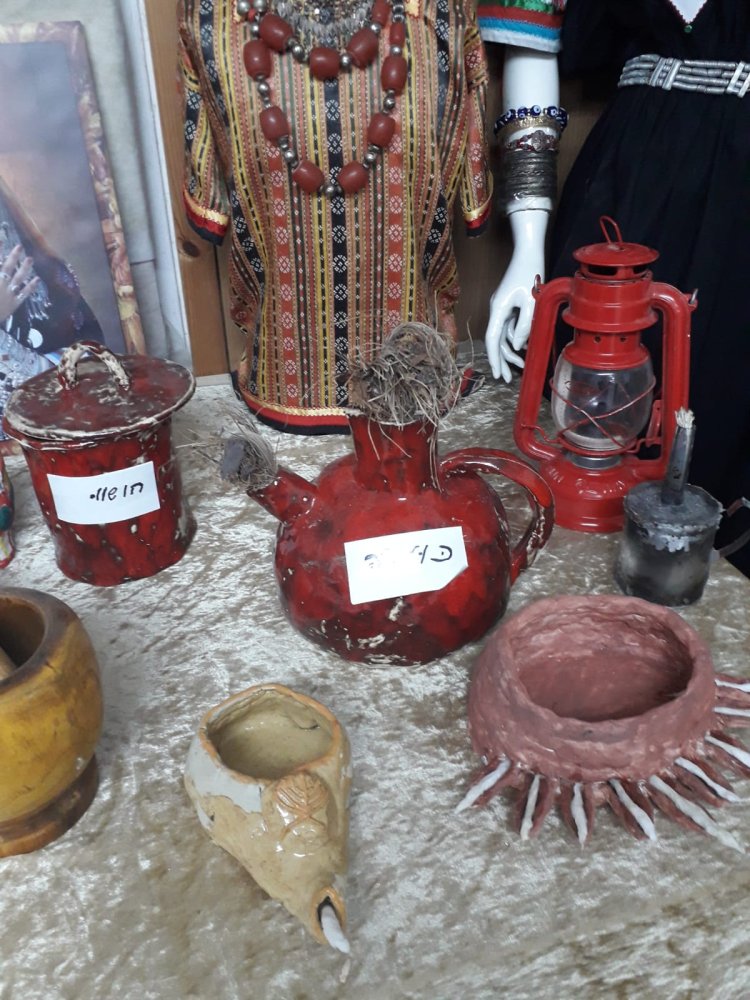 ביתה של שמש אפרתי, במושב ברקת
Was there a longing to immigrate to the Land of Israel?
“Of course. Everyone always prayed to merit reaching the Holy Land and the Beit HaMikdash. That is also why we preserved our Judaism so strictly — because we believed that one day we would immigrate, and it was important for us to remain a complete part of the Jewish people.”
Shemesh explains that they lived a devoted Jewish life with meticulous observance of halacha. “Many Torah scholars emerged from our community — shochtim, scribes, mohels, judges, and metalworkers. Our only connection to major cities was when major halachic questions arose, and then we would turn to the city of Aden. By the way, we had no kohanim or levi’im in our community at all, and until we arrived in Israel we never received the Priestly Blessing.”
From the desert — to Moshav Bareket
“In 1945, my husband’s uncle — Rabbi Yechiya ben Awad — decided to immigrate to Israel,” she recounts. “He was a great Torah scholar and made the long journey through what can only be described as miracles. Three years later, after the establishment of the State, he and other activists approached Ben-Gurion and reminded him: ‘There are still Jews in Habbān — we must not forget them. They too must be brought to Israel.’
“Israeli envoys arrived in Habbān disguised as Arabs. They entered the Jewish quarter and informed us that the State of Israel had been established and that immigration was now possible. I was only eight years old, but I still remember the tense atmosphere. The king opposed our departure, claiming he would not release the Jews because we owed him large sums in taxes. Even the local Arabs objected — our relations with them were good, and they would say: ‘The Jews are our blessing.’
“But Israel promised to pay the king all the debts — and he, of course, inflated the amount many times over and received a very large sum. After that, the emissaries told us to prepare, and even gave us a departure date.”
From that day onward, joy filled the streets. “We all knew we were going to the Land of Israel. We prepared and packed everything needed. When the day arrived, we wore festive clothing, and each family received a truck in which to load its belongings. There wasn’t enough room, so we had to leave some possessions behind — but Torah scrolls, holy books, and ritual objects, we made sure to take.
“To leave Habbān we had to pass through a gate near the home of a local Arab man, who demanded a rial from anyone who passed through his property. None of us had extra money — but Providence helped us. The day before our departure — that man died, and we were able to leave freely.”
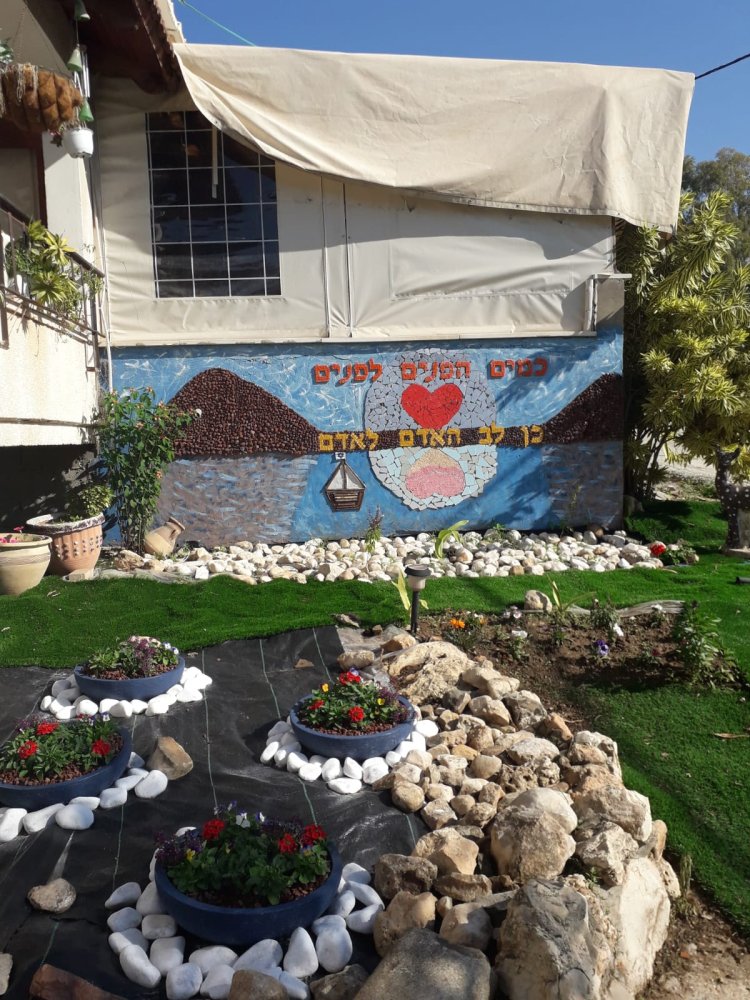 ביתה של שמש אפרתי, במושב ברקת
Were there Jews who remained behind?
“Almost none. Everyone understood that we were going to Israel. There was, however, another nearby Jewish community in Al-Khabāna that was closely connected to us. At first they hesitated and didn’t believe we were truly leaving. The next day they sent messengers — and when they realized we had indeed departed, they begged for additional trucks. They eventually joined, but unlike us, their journey was much harder — they were robbed along the way, and all their jewelry was taken. And Yemeni jewelry, as you know, is priceless.”
Preserving a heritage
The journey to Israel took time. After days of desert travel they waited for months in a central city until planes departed as part of Operation Magic Carpet.
“When our turn came, my family and I boarded the plane. I still remember the sandwiches we were given when we landed — it was the first time in my life I had ever tasted bread. In Yemen we ate only pita and lakhukh. By the way, the Habbān version of lakhukh is thinner and lighter than the well-known Yemeni one.
“At first we were housed in the transit camp at Ein Shemer, and later we moved to Moshav Bareket, where many strong and rooted families from Yemen still live to this day.”
Shemesh proudly describes her colorful home, which she built with her late husband. Over the years she decorated it with mosaics, artwork, and traditional motifs. “In recent years I turned the enclosed porch into a small ‘Museum of Habbān Jewish Heritage.’ I see it as a great mission — people know about Yemeni Jewry, but almost no one has heard of Habbān. Here you can see traditional women’s clothing, jewelry, tools, a coffee pot, a ritual knife, books we brought from Habbān, and documentation of our customs and weddings.”
Do you miss Habbān?
“Yes — there is longing,” she says gently, “but not for a moment would I want to return there. As I said at the beginning — it is difficult to accept that there are no more Jews left in Yemen — but ultimately, our place is not in exile. Our place is here, in the Land of Israel.”

